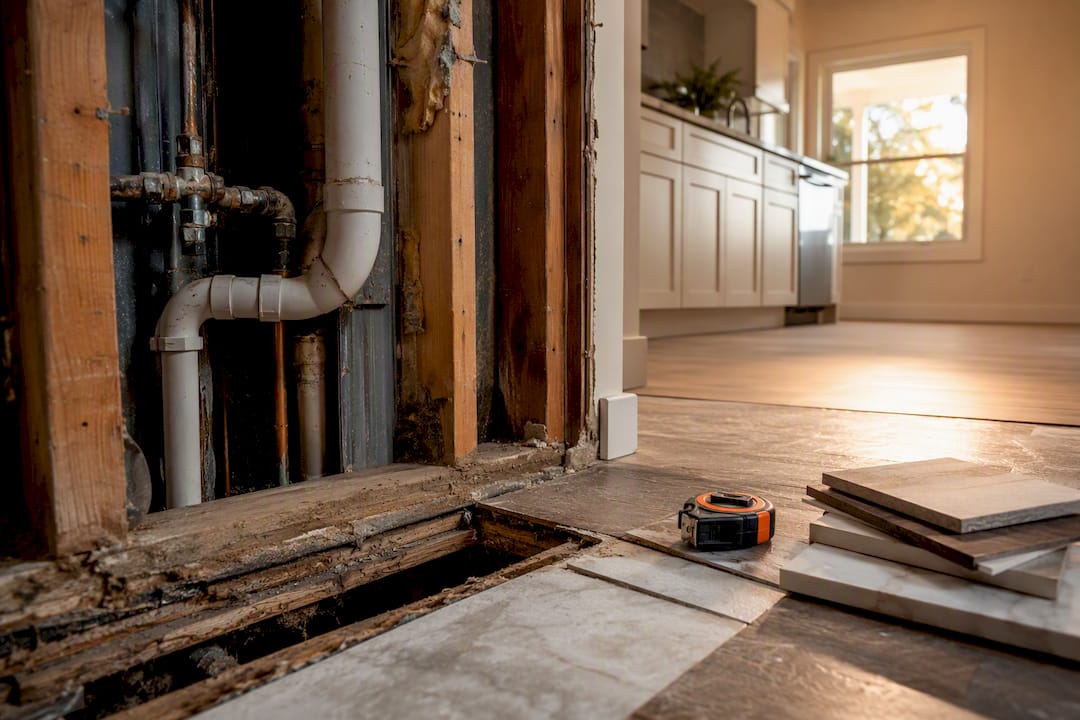


Licensed means the state has authorized the contractor to do this specific work. Bonded means a surety company guarantees the contractor’s obligations, backed by money the contractor has to pay back if there’s a claim. Insured means the contractor carries policies that cover accidents, property damage, and injuries on your job. Each one protects you differently, and none of them fully substitute for the other. Verify all three before you sign anything.
TL;DR:
- Verification of current licenses is essential because licenses can be suspended or revoked, affecting project legality and timeline.
- Bond types include license bonds for compliance, performance and payment bonds for project completion, and fidelity bonds against theft, each with specific claims processes.
- Insured contractors carry policies covering property damage, injuries, and environmental issues, with Certificates of Insurance needing careful review and matching project dates.
- Always ask for up-to-date documentation, contact surety companies regarding claims history, and re-verify credentials just before signing to prevent project disruption.
- Trustworthy remodelers manage design and construction together, provide clear pricing, and maintain organized job sites, reducing homeowner risk from start to finish.
Table of Contents
- What “Licensed Bonded Insured Contractor” Actually Means for the License Part
- What “Bonded” Means and the Bond Types You’ll Run Into
- What “Insured” Covers and Which Policies to Ask About
- A Homeowner’s Step-by-Step Verification Checklist
- Questions to Ask Before Signing, and Red Flags That Should Stop You
- How a Trusted Remodeler Reduces Your Risk From the Start
- Why I Tell Every Homeowner to Verify Twice, Not Once
- Ready to Hire a Licensed, Bonded, and Insured Remodeler in Tampa?
- Sources
- FAQ
What “Licensed Bonded Insured Contractor” Actually Means for the License Part
A contractor’s license is issued by a state or local licensing board and certifies that the person or company has met minimum standards to legally perform the work. It’s the baseline credential behind any claim of being a licensed, bonded, and insured contractor. Most boards require some mix of a trade exam, proof of financial stability, and a minimum number of years working in the field before they’ll issue one.
Requirements vary by state and by trade, but common threads include:
- A written and/or practical exam covering the trade (electrical, plumbing, general contracting, etc.)
- Proof of financial responsibility, sometimes including a credit check
- Verification of prior work experience, often two to four years
- Payment of licensing fees and, in many states, proof of the bond and insurance covered below
License status isn’t permanent. A contractor can be active one month and suspended the next, usually because of unpaid bond claims, lapsed insurance, or unresolved complaints. That’s why checking current license status right before you sign is not optional, even if you saw a clean record three months ago. The California Contractors State License Board flags suspended licenses publicly, and most other states run similar lookup tools.
An active license also affects your project timeline. Permits typically require a valid license number on file, and inspectors can hold up work if that number doesn’t check out. Skipping this step doesn’t just risk your money. It risks the legality of the work itself.
What “Bonded” Means and the Bond Types You’ll Run Into
A surety bond is a three-party financial guarantee, not insurance. The contractor (the principal) promises to meet certain obligations, the surety company backs that promise with money, and you or the state (the obligee) are protected if the contractor fails to deliver. If a claim gets paid out, the contractor is on the hook to reimburse the surety afterward, which is a distinction most homeowners never hear explained clearly.
Contractors typically carry one or more of these bond types:
- License bonds — required by many states just to hold an active license; they guarantee compliance with licensing laws
- Performance and payment bonds — guarantee the job gets finished per contract and that subcontractors and suppliers get paid
- Fidelity or business service bonds — protect against employee theft or dishonesty while workers are inside your home
If a contractor abandons a job or does substandard work covered by the bond, you can file a claim against it, and the surety pays out up to the bond’s limit. Bond claims tend to be project-specific, covering incomplete or noncompliant work, while insurance covers a broader range of accidental injury and property damage across a contractor’s operations.
Pro Tip: Ask for the contractor’s bond number and the name of the surety company, then call the surety directly to ask about prior claims history. Many state boards and surety companies track claim records and will tell you if a contractor has a pattern of disputes.

What “Insured” Covers and Which Policies to Ask About
Insurance works differently from a bond. Instead of guaranteeing that the contractor pays back a claim later, an insurer absorbs the financial risk directly. Insurance transfers risk to the insurance company, while a bond guarantees the contractor’s obligations and leaves the contractor responsible for reimbursing the surety after a payout. That’s the core difference between bonded and insured, and it’s the one most homeowners get backward.
A properly insured remodeling contractor typically carries several distinct policies:
- General liability insurance — covers accidental property damage and third-party injuries on your site
- Workers’ compensation — covers medical costs and lost wages if a worker gets hurt on your property
- Commercial auto insurance — covers vehicles used to haul materials and tools to your home
- Professional or pollution liability — covers design errors or environmental issues on specialized jobs
The document that proves any of this exists is the Certificate of Insurance, or COI. A COI is only useful if you actually read it. Check the policy numbers, the coverage limits, and the effective dates against your project’s actual start and end dates. Ask to be added as an “additional insured” on the policy for those dates specifically. That step matters more than people realize: a generic COI offers weaker protection than one naming you as additional insured for your project’s exact dates, since a generic certificate can technically exist without covering your job at all.
A Homeowner’s Step-by-Step Verification Checklist
Verifying credentials takes maybe twenty minutes, and it’s the cheapest insurance policy you’ll ever buy on a remodeling project.
- Look up the license number on your state’s licensing board database. The CSLB’s online license check is a good model for how these tools work, and most states, including Louisiana’s LSLBC, offer similar real-time search.
- Request a Certificate of Insurance and confirm the coverage dates line up with your project timeline, then ask to be named as an additional insured.
- Get the bond number and surety name in writing, then contact the surety to ask whether any claims have been filed against that bond.
- Confirm workers’ comp coverage for any employees on the job. If a contractor claims to be “workers’ comp exempt,” dig into what that actually means for your liability.
- Re-verify everything right before signing, even if you checked weeks earlier during your initial vetting.
Tools like the Washington L&I Verify system go a step further, showing risk classifications, safety citations, and lawsuit history tied to a contractor’s bond, not just a simple pass/fail license check.
Pro Tip: Screenshot or save PDF copies of every license, bond, and insurance document you verify. If a dispute arises later, having dated proof of what you confirmed, and when, makes any claim process faster.
Questions to Ask Before Signing, and Red Flags That Should Stop You
Before you sign anything, ask directly for the contractor’s license number, insurer name and policy number, bond number and surety company, a current COI, a written contract with a payment schedule, and a realistic project timeline. A contractor who’s genuinely licensed, bonded, and insured should hand over this information without hesitation.
Watch for these red flags:
- Insisting on cash-only payment or refusing a written contract
- Pressuring you for a large upfront deposit before any work has started
- Vague or evasive answers when you ask for license, bond, or insurance numbers
- A license that shows as expired, suspended, or revoked on the state lookup
- No COI, or a COI that doesn’t name you as additional insured for your dates
One overlooked risk: if a contractor claims to be “workers’ comp exempt” and that turns out to be false, or if they use uninsured day labor, you as the homeowner can become financially liable if a worker is injured on your property. That single gap can turn a bathroom remodel into a lawsuit. Realistic timelines and clear, up-front pricing are also worth pressing on. If a contractor won’t commit to either, that’s usually a sign the rest of the paperwork won’t hold up either. For a broader rundown of vetting questions, this guide on choosing a remodeler covers additional angles worth asking about.
How a Trusted Remodeler Reduces Your Risk From the Start
The credentials matter, but so does how a contractor structures the actual job once you’ve hired them. A few practices separate remodelers who reduce homeowner risk from those who just check the legal boxes:
- Handling design and construction under one roof cuts down on the miscommunication and scope creep that happens when separate designers and builders don’t talk to each other, a structure detailed in this home remodel overview.
- Up-front, itemized pricing paired with a single dedicated Lead Carpenter means you’re not chasing down different people for answers or discovering surprise costs mid-project.
- A defined system for controlling dust and job-site disruption, like a documented Work Clean System, reduces the friction and disputes that come from a chaotic work site.
… These operational details matter as much as the paperwork, because a contractor can be fully licensed, bonded, and insured and still run a disorganized, stressful job site.
Why I Tell Every Homeowner to Verify Twice, Not Once
Licensing, bonding, and insurance work as a system, not a checklist you complete once. Licensing filters out unqualified operators. Bonding gives you a financial backstop if the contractor breaks their word. Insurance covers the accidents that happen even when everyone’s acting in good faith. Skip any one leg, and the other two don’t hold as much weight as you’d think.
The mistake I see homeowners make most often isn’t skipping verification entirely. It’s verifying once, weeks before signing, then assuming nothing changed. Licenses can lapse. Bonds may have claims filed against them. Insurance policies can expire during the project period. Save your documents, ask for updated proof close to your start date, and treat transparency, like up-front pricing and a single point of contact, as a signal worth paying attention to, not just a nice bonus.
— MediaBeast
Ready to Hire a Licensed, Bonded, and Insured Remodeler in Tampa?
Some remodeling contractors handle design and construction under one roof, eliminating the need to relay information between separate designers and builders. Up-front, itemized pricing before work starts, a dedicated Lead Carpenter as a single point of contact, and a Work Clean System to minimize dust and disruption can improve project management and homeowner experience.
If you’re planning a bathroom project, you can get a sense of real costs on the bathroom remodel cost guide, which breaks down pricing by fixture count and scope. Kitchen projects work the same way through the kitchen remodel cost guide. Either page gives you a starting point for a consultation, where you can ask directly for license, bond, and insurance documentation before anything gets signed.
Sources
FAQ
Why should a contractor be licensed, bonded, and insured?
Licensing confirms the contractor meets state qualification standards, bonding gives you a financial remedy if they fail to complete the job properly, and insurance covers accidents and property damage. Together they cover the three main risks in any remodeling project: unqualified work, broken contracts, and physical harm.
Should I hire a contractor that isn’t bonded?
It’s risky. Without a bond, you have no direct financial remedy if the contractor abandons the project or does noncompliant work, since a bond claim is often your fastest path to recovering money for incomplete work.
What is the difference between bonded and insured for a contractor?
A bond guarantees the contractor’s obligations to you, and the contractor has to reimburse the surety after any payout. Insurance transfers risk directly to an insurance company, which pays claims for accidents and damage without the contractor owing that money back.
What does it mean if a company says it’s licensed, bonded, and insured?
It means the company has state authorization to perform the work, carries a surety bond guaranteeing its contractual obligations, and holds insurance policies covering accidents and liability on the job. Always verify the specific numbers and dates rather than taking the phrase at face value.