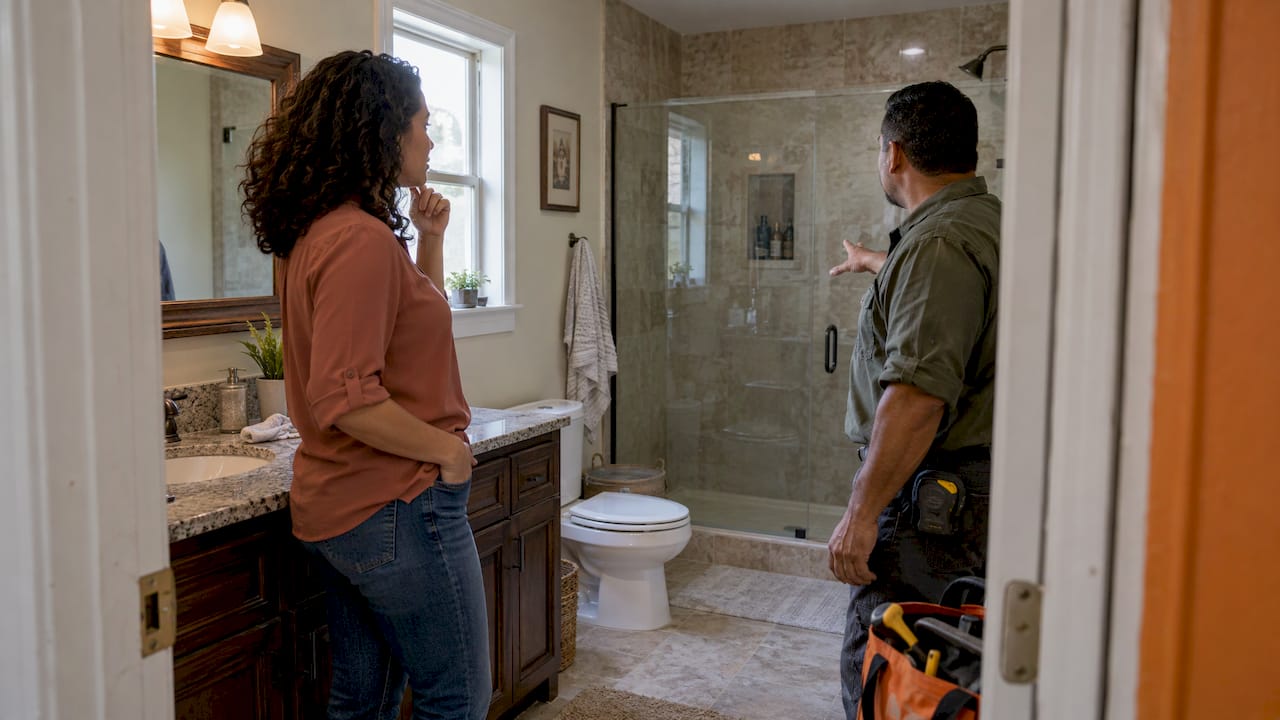

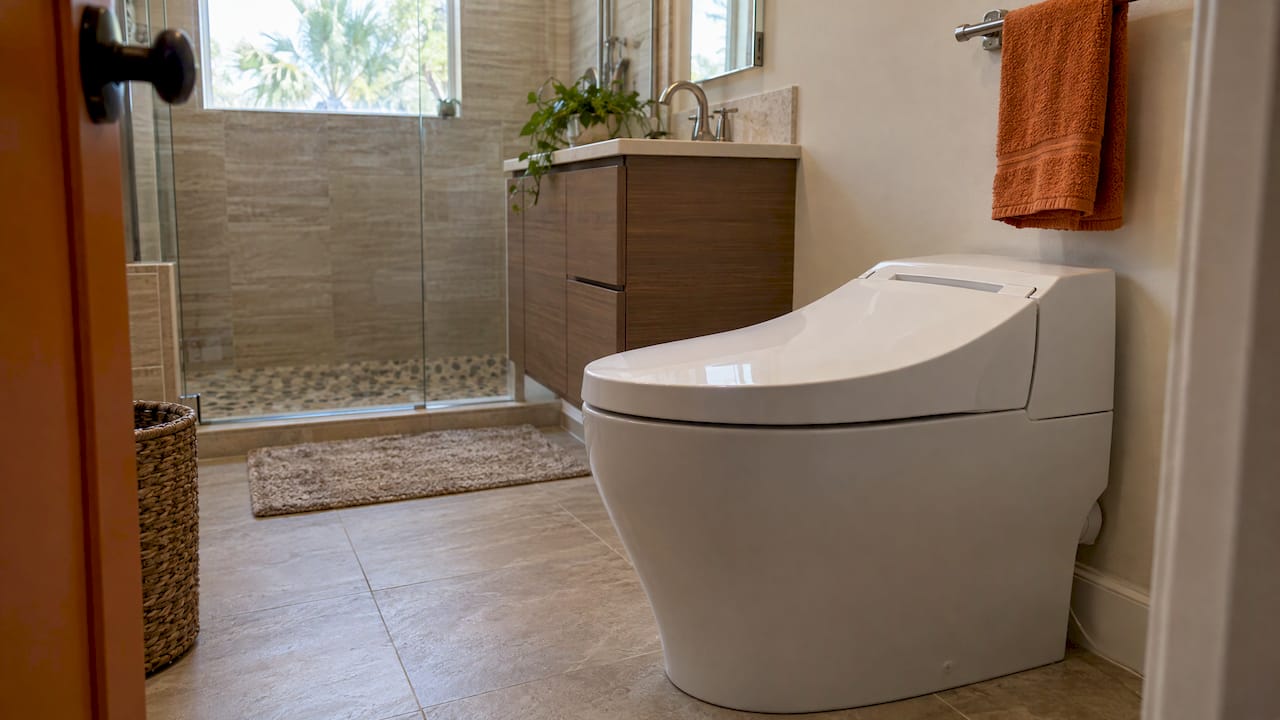
A bidet toilet is worth it when you plan for it. The benefits are real: a gentler clean, less toilet paper, easier toileting for family members with limited mobility. The drawbacks come from setup, not from the idea. An outlet in the wrong place, a bowl that doesn’t fit the seat, or a supply line that was never meant to be shared can turn a good idea into a headache. The easiest moment to get all of that right is during a bathroom remodel, when the walls, floor and wiring are already open. That is how we approach it at Bath & Kitchen Gallery, where bathroom design and construction happen under one roof.
TL;DR
- Main pros: a gentler water clean, less toilet paper, easier hygiene for older adults and people with limited mobility, and a smaller paper footprint.
- Main cons: higher upfront cost, a learning curve, and installation needs (power, plumbing, space) that are easy to miss.
- Seat or full toilet: a bidet seat bolts onto your existing bowl. An integrated bidet toilet replaces the whole unit and typically costs more.
- Use it gently. Short, moderate rinses are the safe pattern, and the spray should run front to back.
- Best timing: choose and plan it during a remodel, so the outlet and plumbing are in the right place from the start.
Table of Contents
- What a bidet toilet actually is
- The pros
- The cons, and how to handle each
- Bidet seat vs. bidet toilet
- What to check before you choose
- Are bidet toilets worth it?
- Where a remodel makes the difference
- Our approach to bathroom upgrades
- Our perspective
- FAQ
- Sources
What a bidet toilet actually is
A bidet rinses you with a stream of water instead of relying only on paper. In the US it comes in a few forms, and the cost and effort differ a lot between them.
- Underseat attachments and portable bidets. Small add-ons that sit under your existing seat. This Old House puts underseat attachments at $50 to $100 and portable bidets at $20 to $50.
- Bidet seats. A replacement seat with a built-in nozzle. The same guide lists bidet toilet seats at $100 to $1,000, with non-electric ones under $100.
- All-in-one bidet toilets. One piece, with the bidet function built into the toilet. This Old House gives $500 to $5,000 for these, with most options between $1,000 and $2,000, and notes they usually need a GFCI outlet (a safety outlet that cuts power if it detects moisture-related faults).
- Standalone bidets. A separate fixture next to the toilet, listed at $300 to $600, but needing its own plumbing: two shutoff valves, a drain, a P-trap and a backflow preventer.
When people search for a “bidet toilet”, they usually mean the second or third option. The rest of this article focuses on those.
The pros
A gentler, cleaner feel
Cleveland Clinic lists gentler cleaning on the skin as a leading benefit, especially for people dealing with hemorrhoids or fissures. Dermatologists writing in the International Journal of Women’s Dermatology make a similar case: water cleansing can help people with perianal skin conditions, where dry paper or wipes with irritating ingredients fall short.
If you or a family member has a skin or bowel condition, ask your doctor whether a bidet suits you. That is a medical question, and your doctor is the right person for it.
Less toilet paper
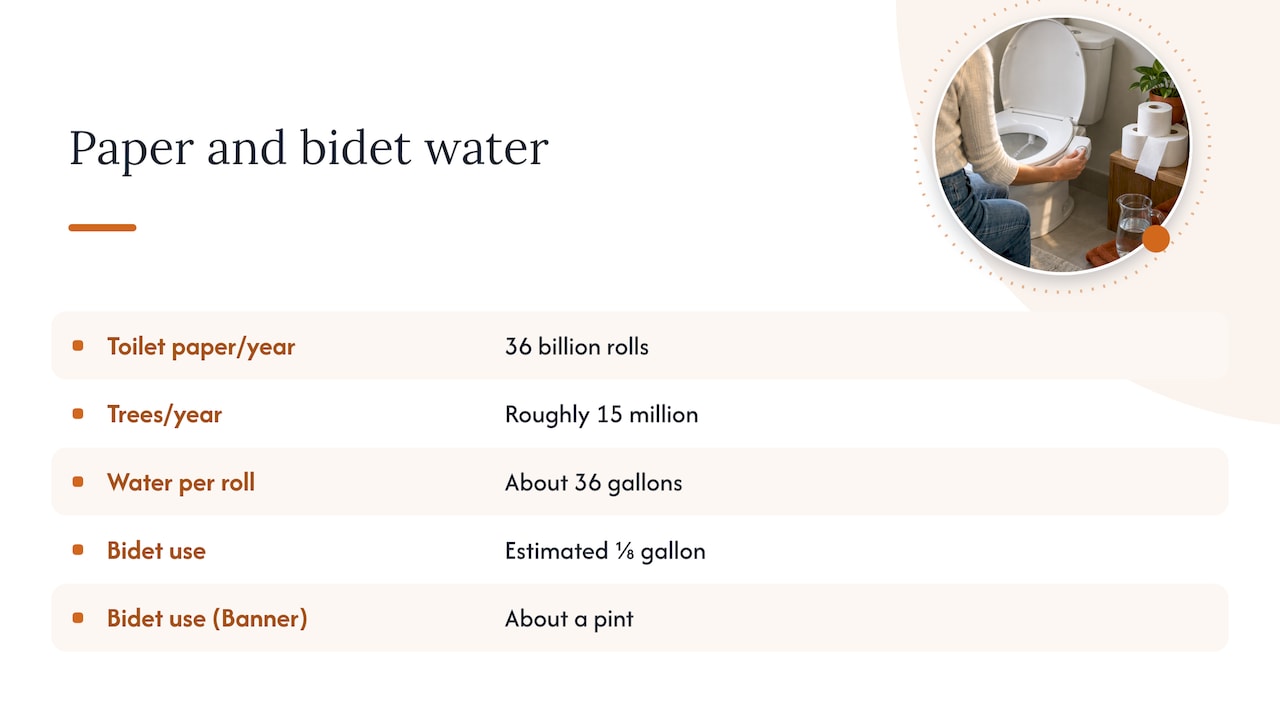
The same dermatology paper reports that Americans use about 36 billion rolls of toilet paper a year, which takes roughly 15 million trees and about 36 gallons of water per roll to produce, while a bidet uses an estimated one eighth of a gallon per use. Banner Health describes a bidet’s use at about a pint of water per use. Either way, the water used at the bowl is small compared with what goes into making paper.
You will probably still use a little paper to pat dry. Models with a built-in dryer reduce that further.
Independence and dignity
This is the benefit that matters most for many families. A 2024 scoping review of studies on older adults found that bidet technology supports toileting privacy and independence and reduces caregiver burden. In a small US feasibility study of automated bidets, all 10 installations worked and caregivers reported that toileting became easier. Banner Health’s physician calls bidets extremely useful for older adults and people with limited mobility.
If you are planning a bathroom for aging parents, or for your own long-term comfort, a bidet fits naturally alongside other accessibility choices.
Fewer clogs and a lighter load on the plumbing
Cleveland Clinic also lists fewer clogs among the benefits. Less paper going down the line means less to catch in a drain.
Features you can’t get with paper
Wirecutter notes that electric warm-water seats add heated seats, temperature and pressure control, dryers and deodorizers. In Tampa’s warm climate the cold-water supply is rarely very cold, but heated water and a heated seat are still the features people mention when they describe the upgrade.
The cons, and how to handle each
These are the points to plan around. Each one has a straightforward answer if you deal with it before the toilet is chosen.
Higher upfront cost
A basic seat can cost under $100, but a full integrated toilet usually runs $1,000 or more. Installation is on top of that when plumbing or electrical work is involved. The cost makes the most sense when you are already replacing the toilet, since you are not paying for a standard toilet you would then throw away.
A learning curve
Most people need a few uses to get comfortable with pressure, temperature and aim. Start on the lowest pressure setting and increase gradually. Many models have a remote or side panel, which is worth trying in a showroom before you commit.
Using it too much or too hard
A 2021 review in PMC noted that excessive use can cause anal itching and, in some cases, incontinence. Smithsonian Magazine’s reporting describes injuries such as burns and fissures, often linked to overuse. The practical lesson is moderation: a short, gentle rinse, not a long blast at high pressure, and warm rather than hot water.
For women, Banner Health advises that the stream flow front to back so fecal matter is not pushed toward the urethra and vagina. A good nozzle position and a self-cleaning nozzle function help with this.
Nozzle hygiene
The same PMC review notes that nozzles can carry bacteria, which is mainly a concern in shared or public settings. At home, the answer is routine: clean the nozzle regularly, wipe the seat, and inspect the hose. This Old House says all bidet types need regular nozzle cleaning and hose inspection. Models with a self-cleaning nozzle make that easier.
Compatibility and looks
Wirecutter points out that full-featured electric seats can change the toilet’s profile and reduce the seat opening, and that compatibility is not guaranteed, particularly with toilets that have a French-curve shape. An integrated bidet toilet avoids the fit problem because the bowl and the bidet are designed together.
Bidet seat vs. bidet toilet
This is the decision most readers are actually making. Here is how the two compare for a homeowner.
| Bidet seat | Integrated bidet toilet | |
|---|---|---|
| What it is | Replaces your existing seat | Replaces the whole toilet |
| Typical cost | $100 to $1,000 (This Old House) | $500 to $5,000, most $1,000 to $2,000 |
| Fit | Must match your bowl (round or elongated, curve shape) | Bowl and bidet are designed as one |
| Power | Warm-water models need a nearby outlet | Usually needs a GFCI outlet |
| Look | Adds bulk at the back of the bowl | Clean, one-piece lines |
| Best when | You like your current toilet | You are remodeling or replacing the toilet anyway |
If your current toilet is old, or you are already redoing the bathroom, the integrated toilet is the more complete answer. You get a single, tidy unit with the cords and hoses hidden, and a toilet that is matched to its bidet function. If you are keeping the toilet you have, a seat is the simpler route.
What to check before you choose
Wirecutter’s installation guide is a useful checklist for a seat, and the same thinking applies to a full toilet. Here is the homeowner’s version.
- Power. Warm-water models need a three-prong GFCI outlet within about 3 feet of the toilet’s rear. Many older bathrooms don’t have one at that spot. Adding an outlet is a wiring job, and it is far simpler before the wall is closed up.
- Water supply. The shutoff valve should work and not be corroded or seized, and the connection should be a flexible hose rather than a rigid tube. If the tank is built into the wall, a plumber is needed.
- Bowl shape and size. Round and elongated bowls need different seats, and the room around the toilet needs to allow for the unit’s depth.
- Drain and rough-in. Integrated toilets need the drain position (the rough-in distance from the wall, commonly 12 inches) to match the unit.
- Backflow protection. Standalone bidets need a backflow preventer so that dirty water can never return to the clean supply.
- Maintenance access. Plan where you will reach the nozzle and hose for cleaning.
Several of these are the sort of detail that gets missed when someone buys a toilet online and then calls a trade to fit it. A leak from a poorly installed connection is also the most expensive thing that can go wrong, so it pays to have the plumbing done properly.
Are bidet toilets worth it?
It depends on what you want from the bathroom.
Likely worth it if:
- You are remodeling the bathroom anyway, so the toilet swap and any new outlet are folded into one project.
- Someone in the household has limited mobility, arthritis or difficulty with independent cleaning.
- You want a gentler clean and value the comfort features.
- You want to cut down on paper and the clogs that come with it.
Worth thinking through if:
- You only want the water-saving angle. The savings from less paper are modest compared with the cost of an integrated toilet, so the comfort and accessibility benefits should be what drives the choice.
- Your bathroom has no outlet near the toilet and the wall is not otherwise being opened.
One fair note on the evidence: a 2022 systematic review found that current literature neither strongly supports nor discourages bidet use for perianal disease and called for better trials. The case for a bidet rests mostly on comfort, independence and everyday preference, and on those terms plenty of households find it worth the upgrade.
Where a remodel makes the difference
A bidet toilet is a fixture decision, and fixtures are best chosen together with the layout, the plumbing and the electrical plan. If you are comparing toilets, our guide to replacing a toilet step by step shows what the swap involves, and our piece on water-efficient fixtures covers the other fixtures worth considering at the same time.
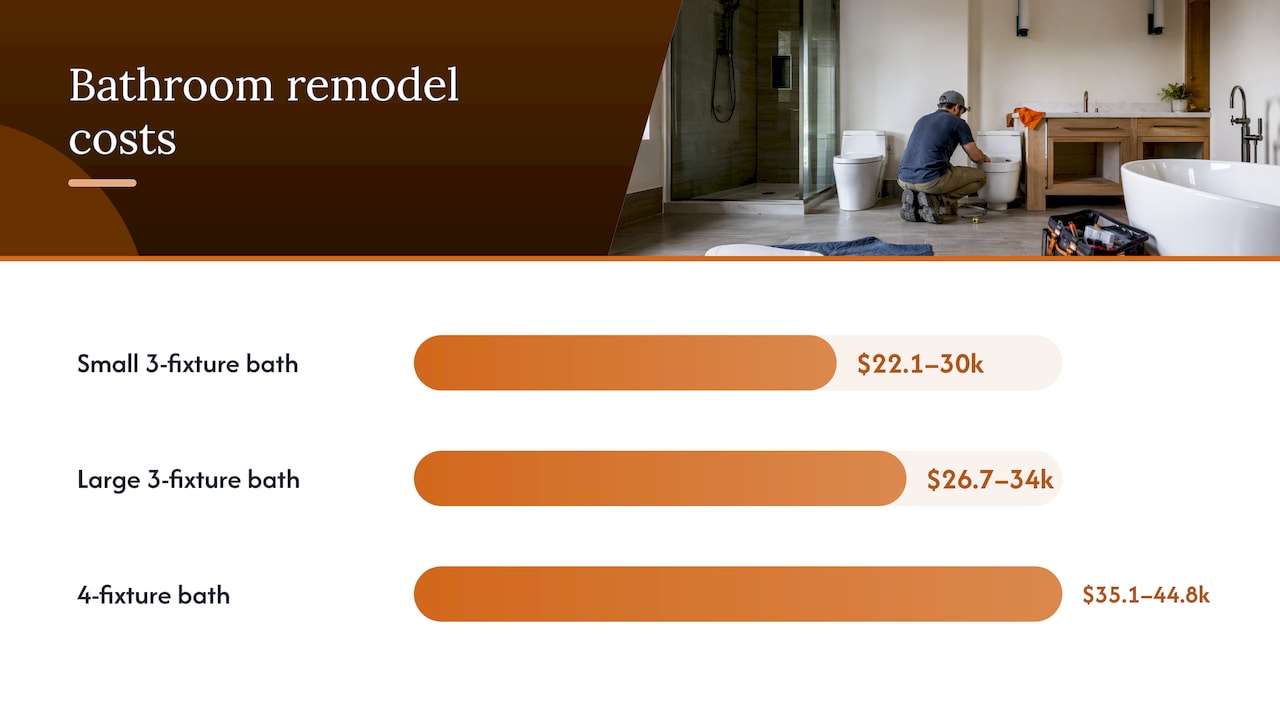
When you budget, remember the toilet is one part of the room. Our published ranges give a sense of the whole project: a small 3-fixture bath with a shower is $22,100 to $30,000, a large 3-fixture bath with a shower is $26,700 to $34,000, and a 4-fixture bath with a tub is $35,100 to $44,800. You can see the full list on our bathroom remodel cost page.
Our approach to bathroom upgrades
Bath & Kitchen Gallery handles bathroom remodeling in the Tampa area with design and construction in-house. You get up-front pricing with detailed item lists, a dedicated Lead Carpenter on your job, and a Work Clean System that minimizes dust and disruption. Fixture upgrades and a local showroom for material selection are part of what we offer, so you can see the fixtures in person while you plan the room.
If you are considering a new toilet as part of a bathroom update, start with our bathroom remodeling page.
Our perspective
We think of a bidet as a bathroom-planning decision, not a gadget.
The families who are happiest with one are the ones who decided early. They knew where the outlet would go, which toilet would carry the feature, and how the room would work for everyone who uses it, from kids to grandparents. Those choices are easy to make when the room is being designed and hard to make afterward.
That is why we pair design and construction. A fixture choice affects the wiring, the plumbing and the layout, and one team can account for all three. Our up-front pricing and itemized lists mean a toilet upgrade shows up on paper before work begins, and a dedicated Lead Carpenter keeps one person responsible for how it all fits together.
If a bidet toilet is on your wish list, tell us at the start. It is a simple addition to a remodel when it is part of the plan.
MediaBeast
FAQ
Are bidet toilets worth it?
For many households, yes, especially when the toilet is being replaced as part of a remodel. The main gains are comfort, a gentler clean, and easier toileting for older adults or people with limited mobility. The paper savings are a bonus rather than the main reason.
What is the difference between a bidet seat and a bidet toilet?
A bidet seat replaces the seat on your current toilet. A bidet toilet is a one-piece unit that replaces the whole toilet. Seats are generally cheaper, while integrated toilets give a cleaner look and a matched fit. This Old House puts seats at $100 to $1,000 and all-in-one toilets at $500 to $5,000.
Do bidet toilets need an electrical outlet?
Warm-water seats and most integrated toilets do. Wirecutter advises a GFCI outlet within about 3 feet of the toilet’s rear. If your bathroom lacks one, it is best added before the walls are finished.
Is a bidet safe to use every day?
Yes, when used gently. Keep the pressure low, the water warm, the rinse short, and the spray running front to back. Reviews of the medical literature link problems mostly to overuse. If you have a bowel, skin or pelvic condition, check with your doctor first.
Sources
- Understanding Bidets: Plumbing Requirements and Types, This Old House
- Why Bidets Are Sanitary (and Safe) To Use, Cleveland Clinic
- The dermatologists’ case for the bidet, International Journal of Women’s Dermatology
- The Pros and Cons of Bidets and How They Work, Banner Health
- Technology-assisted toileting by older adults: a scoping review
- Feasibility of an Automated Bidet Intervention, American Journal of Occupational Therapy
- Bidet Toilet Use May Cause Anal Symptoms and Nosocomial Infection, PMC
- The Bottom Line About Bidets, Smithsonian Magazine
- The 6 Best Bidet Toilet Seats of 2026, Wirecutter
- Bidet installation tips, Wirecutter
- Be Kind to Your Behind: A Systematic Review, PMC