
A shower glass coating is a thin, clear layer that changes how water behaves on the glass, so droplets bead and run off instead of drying into spots and film. It makes daily cleaning easier and slows mineral buildup. It does not clean the glass for you, and it cannot undo damage that has already happened. The best time to decide is while the shower is still being designed, because the right type depends on the glass, the door style and how the glass is ordered. That is a decision we walk through with homeowners in every shower remodel.
TL;DR
- A coating (also sold as a protectant or glass treatment) makes water bead and roll off, so spots and soap film wipe away more easily.
- There are three families: permanent coatings fused at the glass plant, factory-applied coatings from a fabricator, and hand-applied products you put on after installation.
- No coating replaces a squeegee. Coated glass still needs a quick wipe after each shower and gentle weekly cleaning.
- Etching, the permanent roughening of glass by minerals, cannot be coated over or cleaned away, so protection works best on new or well-kept glass.
- If you are remodeling, choose the coating when you choose the glass, not after the first stains appear.
Table of Contents
- How a shower glass coating works
- Coatings, protectants and treatments: the three families
- Are shower glass coatings worth it?
- Which option fits your situation
- Preparing and applying a treatment
- Cleaning coated glass the right way
- What about glass that is already cloudy?
- Where a remodel changes the answer
- Turning the glass decision into a finished shower
- Our view on shower glass protection
- FAQ
- Sources
How a shower glass coating works
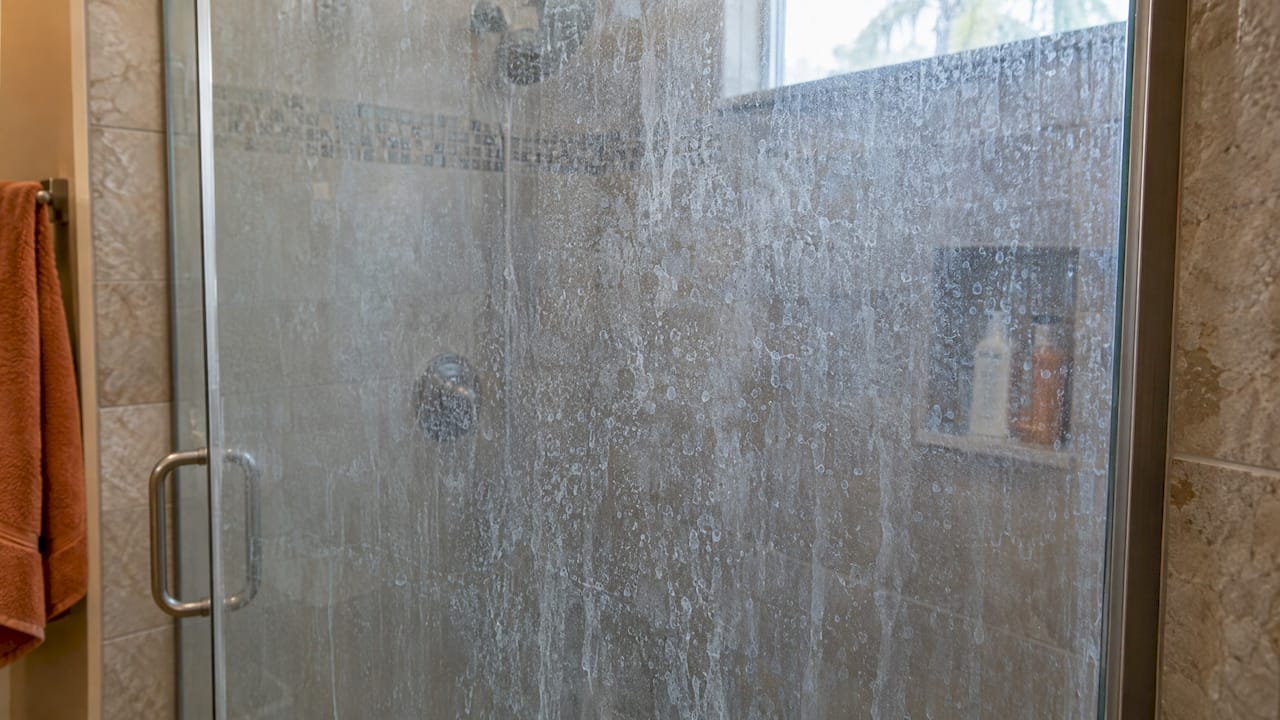
Bare glass is hydrophilic, which means water spreads out on it in a flat film. When that film evaporates, the dissolved minerals stay behind as white spots. Over months, soap scum and minerals settle into the microscopic pores of the surface, and the glass turns cloudy.
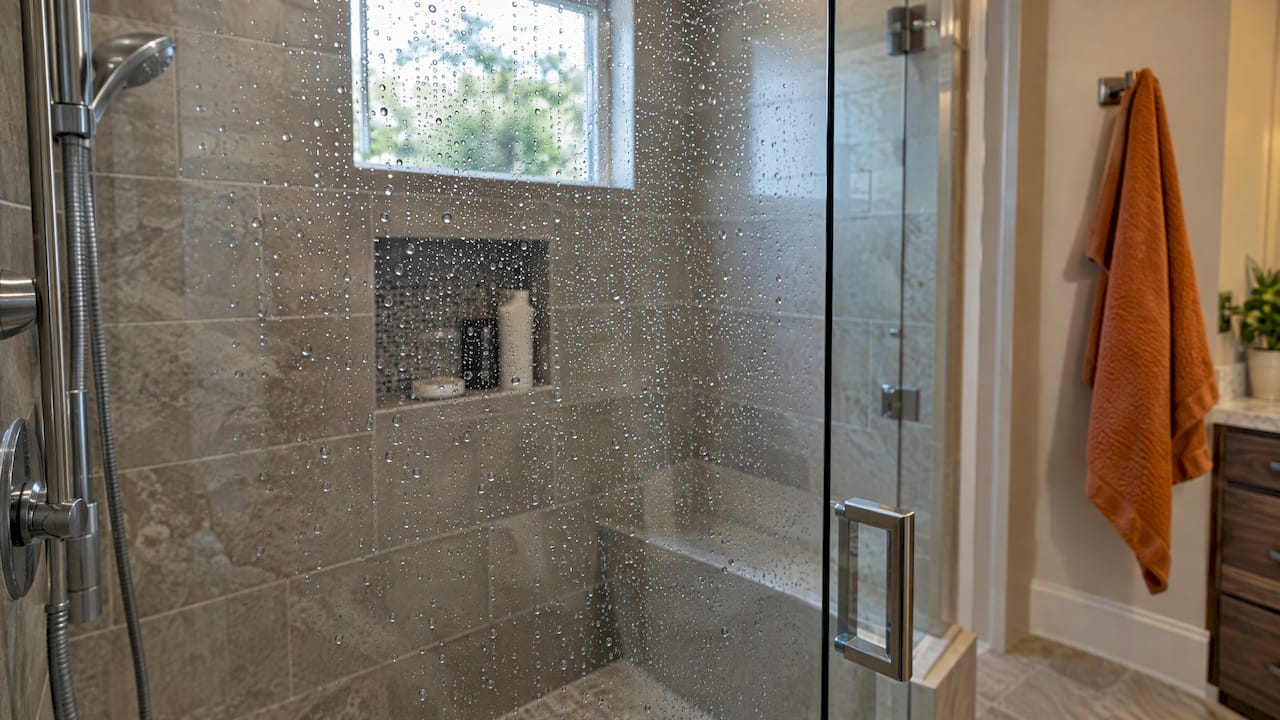
A hydrophobic (water-repelling) coating flips that behavior. Water pulls into tight beads that roll off at a slight tilt, so far less liquid is left to dry on the panel. What does dry leaves smaller, looser deposits that come off with a soft wipe.
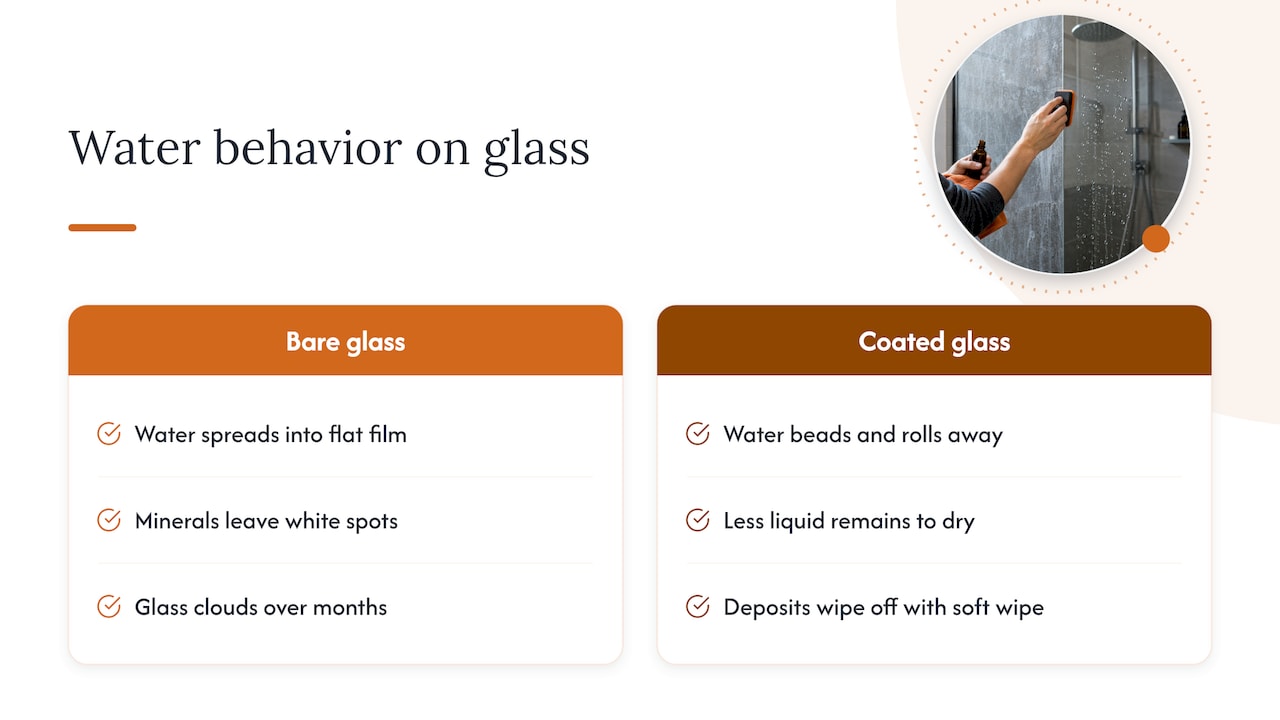
It helps to be clear about what a coating is not. It does not dissolve minerals, disinfect or make glass self-cleaning. Glass Magazine makes the same point: coated products are not self-cleaning and should not be confused with antimicrobial glass. They change how water sits on the surface, and every benefit follows from that one change.
That is why a coating pays off most in a shower used daily by a busy family. The glass takes a lot of water, and the time you have to maintain it is short.
Coatings, protectants and treatments: the three families
The three terms you see online, coating, protectant and treatment, mostly describe the same idea. The useful distinction is where and how the layer gets onto the glass. Glass Magazine sorts shower glass protection into three families:
| Type | How it is applied | Typical warranty or lifespan | What to know |
|---|---|---|---|
| Permanent coating | Fused into the glass at the float-glass manufacturer | Limited lifetime warranty | One side only, and the glass must be tempered |
| Factory-applied coating | Applied by a certified fabricator after tempering, using specialized machinery | Typically a 10-year limited warranty | Can go on one or both surfaces of most glass types |
| Hand-applied aftermarket product | Sprayed or wiped on at home or on site | Periodic reapplication | Lower upfront cost, with some risk of an uneven finish |
The first two are decided when the glass is made and ordered. The third can be added to glass that is already hanging. Factory options need to be specified at the ordering stage, which is one more reason to settle the question early in a remodel rather than after the install.
Why the glass type matters
Shower glass is tempered, meaning heat-strengthened so it breaks into small pieces rather than shards. Tempered panels are cut and finished before treatment, so a coating cannot be added by a fabricator once the panel is drilled and installed. If you are choosing a frameless enclosure, glass thickness and hardware are part of the same conversation, and our guide to shower glass thickness covers the questions to ask. Our page on the benefits of frameless shower doors explains why that style shows off glass care so clearly: with no frame to hide behind, every spot is visible.
Are shower glass coatings worth it?
For most households, yes, if easier upkeep matters to you. Here is the reasoning, step by step.
You have hard water. Hard water carries more dissolved calcium and magnesium, so there is more to leave behind when droplets dry. A coating that sheds water quickly reduces what is left to scrub. Much of the Tampa Bay area is served by water that leaves visible mineral marks, which is part of why shower glass here gets cloudy faster than owners expect.
Your schedule is tight. A coating cuts the time you spend scrubbing. The squeegee habit still matters, but the glass forgives a missed day far more than uncoated glass does.
You want the glass to look good for years. Mineral deposits that sit on glass can turn into permanent damage. A coating keeps water from sitting there long enough to do it, and it gives deposits a smoother surface to release from.
What a coating will not do. It does not stop water from reaching the glass, so you will still see droplets after a shower. It does not fix a leaking door, because leaks come from the door configuration, seals and installation, not from the glass surface. And it does not make the glass maintenance-free. Treat it as a head start that makes your habits more effective, and you will be pleased with the result.
The honest framing is this: coating plus a 30-second squeegee gives you the best-looking glass over the long run. Households that squeegee every day see a smaller difference, but the coating still makes weekly cleaning quicker.
Which option fits your situation
- New shower or full bathroom remodel: Specify a factory-applied or permanent coating when the glass is ordered. It is part of the glass from day one and carries a manufacturer warranty.
- Existing glass in good shape: A hand-applied treatment on freshly deep-cleaned glass can restore easy cleaning. It works best when the glass is not already etched.
- Glass already cloudy or rough: A coating will not repair etching. It is worth deciding whether the glass should be replaced as part of a bathroom update.
- Shower you plan to keep for decades: Weigh a factory-applied or permanent option, because there is no reapplication schedule to remember.
Preparing and applying a treatment
If you are treating glass after installation, preparation decides how long the result lasts. A coating applied over invisible soap or mineral residue bonds to the residue instead of the glass, and it fails early.
The manufacturer’s technical data sheet for EnduroShield, a widely used applied treatment, gives a realistic picture of what proper application involves:
- Start with spotlessly clean, streak-free glass. Any previous coating must be fully removed.
- Check the conditions. The sheet calls for temperatures between 10 and 35°C (50 to 95°F), with 15 to 25°C (59 to 77°F) as the optimum, and humidity between 30 and 70 percent.
- Allow cure time. Initial cure takes 30 to 60 minutes, and full cure takes at least 7 days. Keep the glass dry and uncleaned during that time.
- Treat every panel evenly. Missed patches show up later as spots that never bead.
A bathroom in the middle of a remodel is a poor place for this step. Dust, humidity swings and plaster residue all interfere with a clean bond. That is one reason a coating decision belongs in the project schedule, timed after construction is finished and the room is clean.
Do not stack products on factory glass
If your glass already has a factory coating, leave it alone. Guardian, the maker of ShowerGuard glass, says aftermarket wipe-on coatings are not necessary or recommended on its glass because they may not bond properly or be compatible with the existing layer. Its inorganic coating is permanent and needs no reapplication, and water droplets still remain after a shower, so a squeegee stays the best upkeep habit.
Cleaning coated glass the right way
The routine is short, and it is the part that determines how long the coating looks new.
- After every shower: Squeegee or towel-dry the glass. Guardian recommends this for ShowerGuard glass, and it applies to any coated panel.
- Weekly: Wipe with a damp microfiber cloth and a mild detergent. EnduroShield’s FAQ recommends this routine for its coating.
- In hard-water areas: Use a vinegar and water mix at 1 part vinegar to 4 parts water, or stronger if needed, to keep dissolved salts from building up, per the same FAQ.
- Avoid: Rough, gritty, highly acidic, alkaline or abrasive cleaners. The FAQ names cerium oxide, a polishing compound, as one that wears the coating back. Scouring powders and heavy descalers fall in this group too.
The coating is only two molecules thick and transparent, according to the manufacturer, so abrasive wear is invisible. What you notice is patches that clean less easily. Gentle tools protect it.
For day-to-day wipe-downs, a non-abrasive invisible foaming glass cleaner is the kind of product that suits the routine, since the routine is about light, regular cleaning rather than scrubbing. Always check that anything you use is labeled safe for coated glass.
How long coatings last
Lifespan depends on the type, the water, your cleaning habits and above all the preparation at application. Manufacturers’ figures are their own claims: EnduroShield states an expected lifetime beyond 10 years on new glass and reports accelerated testing that simulated 10 years of shower-screen cleaning, after which the coating still beaded water and stayed easy to clean. Hand-applied consumer sprays are generally treated as periodic products, which is the trade-off for their lower upfront cost.
What about glass that is already cloudy?
This is the question we get most from owners of older showers. Hard-water damage moves through three stages, according to the 2025 IWCA Glass Restoration Standards handbook:
- Deposits sit on the surface and can be removed with solvents or polishing.
- Staining bonds more tightly and needs mechanical polishing.
- Etching removes silicate material from the surface and leaves an orange-peel texture. This is the stage where cleaning cannot restore the glass; it requires abrasive resurfacing.
Here is a simple check: run a fingernail across a cloudy spot. If it catches on a rough texture, you are likely dealing with etching, not film. A coating cannot hide that, and no cleaner will remove it.
The practical decision for older showers is whether restoration is worth the cost or whether new glass makes more sense, especially if you are already planning updates to the shower. Replacing the glass is also the chance to choose a factory-applied coating from the start, so the problem does not return.
Where a remodel changes the answer
If you are remodeling a bathroom, the glass is one of several decisions that reinforce each other: door style, glass thickness, waterproofing, tile and ventilation. A shower that dries well, with good airflow and a sensible layout, makes any coating work harder in your favor. If you are planning a new shower, our guides to planning a shower remodel for Tampa’s climate and shower waterproofing show what else should be settled before the glass goes in.
For a busy family, the real value of settling the glass early is fewer surprises. The order is placed once, the details are in the up-front price, and there is no second visit to treat the glass after the project is done.
Turning the glass decision into a finished shower
Bath & Kitchen Gallery handles design and construction in-house, so the glass choice is made alongside the tile, fixtures and layout rather than as a separate errand. Each project has a dedicated Lead Carpenter, pricing is up-front with detailed item lists, and our Work Clean System is built to minimize dust and disruption while the work is under way. Our local showroom is where you can see materials before you commit.
Published project ranges give you a starting point. A Large 3-Fixture Bath with Shower runs $26,700 to $34,000, and a 4-Fixture Bath with Shower runs $35,000 to $46,000, with scope and materials setting the final figure. See the full list on our bathroom remodel cost page, or read about our shower remodeling services to start planning.

If the shower is only one part of a larger plan, our bathroom remodeling page shows how the whole project fits together.
Our view on shower glass protection
We design and build showers, and we think about glass the way we think about everything else in a remodel: it should be easy to live with on an ordinary Tuesday, not only on the day we finish.
A coating is one of the simplest ways to get there. It does not replace good habits, but it makes good habits count for more. A family with a full schedule gets clearer glass for less effort, and that is the kind of result we aim for on every project.
That is why we want the glass conversation to happen during design. The door style, the glass thickness and the protection all work together, and each is easier to get right when one team is responsible for the whole shower. Our Lead Carpenter sees the project from the first measurement to the final walk-through, so decisions made at the planning stage carry through to the finished room.
Our advice is simple: choose the glass and its protection together, keep a squeegee in the shower, and clean with gentle products. The result is a shower that still looks the way you pictured it years later.
MediaBeast
FAQ
Are shower glass coatings worth it?
For most homes, yes. A coating makes routine cleaning easier and slows the buildup of hard-water minerals and soap film. It works best alongside a quick squeegee after each shower, and it is most noticeable in households that use the shower daily.
How do I make shower glass look brand new?
Surface deposits and soap film can usually be cleaned off, and a coating then helps keep the glass clear. Etching, where minerals have roughened the glass itself, cannot be reversed by cleaning. The IWCA handbook says it needs abrasive resurfacing, and replacing the glass is sometimes the better route.
Can I put a protectant on glass that already has a factory coating?
It is not recommended. Guardian advises against aftermarket wipe-on coatings on its ShowerGuard glass because they may not bond or be compatible with the existing layer. Care for it with a squeegee and mild, non-abrasive cleaning instead.
What should I avoid cleaning coated glass with?
Avoid rough, gritty, highly acidic, alkaline or abrasive products, including cerium oxide. A damp microfiber cloth with mild detergent each week is the standard routine, and a diluted vinegar solution suits hard-water areas.
Sources
- The Benefits of Protective Glass Coatings, Glass Magazine
- 2025 Glass Restoration Standards Reference Handbook, IWCA Edition
- EnduroShield Professional Technical Data Sheet, Glass
- EnduroShield FAQ: Protective Coating Solutions and Maintenance
- Caring for your ShowerGuard glass, Guardian