
Apron sinks give you a deep, ergonomic basin and a strong farmhouse look, but they often demand heavier cabinets and a bigger installation budget. They fit homeowners who cook with oversized pots or want a kitchen focal point built around the sink. Before you fall for the style, you still need to check your cabinets, countertop material, and plumbing layout, since those three things decide whether the switch is simple or expensive.
TL;DR:
- Finalize the sink before ordering cabinets; prepared cabinet retrofits cost less, while a nominal 36 inch sink base may still need cuts or replacement.
- Cast iron sinks often exceed 150 pounds, and a 200 pound unit needs a written support plan to protect cabinetry.
- Quartz and granite support undermount installation, while laminate generally suits top mount sinks because its edges cannot be cut as precisely.
- Stainless steel and granite composite weigh less than cast iron and need less upkeep than fireclay; copper needs mild, nonacidic cleaners.
- Seal the apron to the cabinet face with a drip edge or continuous professional grade sealant, since gaps can cause finish failure.
Table of Contents
- What Is an Apron Sink, and How Does It Install?
- Why Homeowners Love the Capacity and Look
- The Trade-Offs: Weight, Space, and Long-Term Costs
- Choosing a Material: Fireclay, Cast Iron, Stainless, Composite, or Copper
- Getting Cabinets and Countertops Ready for Installation
- Keeping an Apron Sink in Good Shape for Years
- What Apron Sinks Typically Cost to Buy and Install
- How to Decide: A Checklist Before You Commit
- When We’d Recommend an Apron Sink and When We Wouldn’t
- Let Bath & Kitchen Gallery Handle Your Apron Sink Remodel
- FAQ
- Sources
What Is an Apron Sink, and How Does It Install?
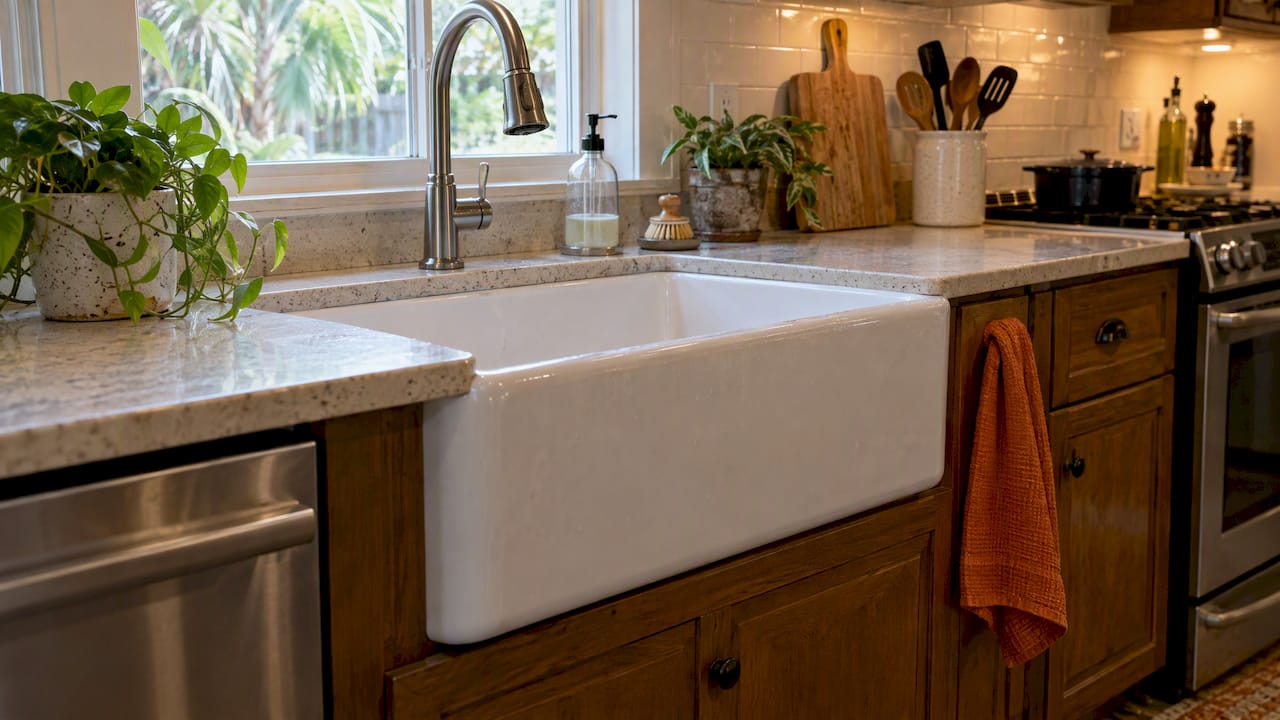
An apron sink, often called a farmhouse sink, has a front panel that sits exposed instead of tucked behind a cabinet face. That exposed front is the defining feature, and it’s why the terms “apron sink” and “farmhouse sink” are used interchangeably in most kitchen showrooms and product guides.
These sinks come in three installation styles. Undermount versions sit below the countertop edge, so the counter overhangs slightly at the front and sides except where the apron shows through. Flush mount versions sit level with the countertop surface, creating a clean, continuous line. Top mount, or drop-in, versions rest on top of the cabinet and countertop, which is the easiest retrofit but the least sleek look.
Each style changes how the counter meets the sink and how water drains off the apron face. More importantly, an apron sink changes the geometry of your cabinet front. A standard base cabinet has a full face frame and sometimes a false drawer above the sink. An apron sink needs that section cut away or removed entirely, which is why swapping in a farmhouse sink is rarely a drop-in replacement for an existing undermount or drop-in model.
Why Homeowners Love the Capacity and Look
The biggest draw is simple: more room to work. A single oversized basin holds a stockpot, a sheet pan, or a full dish rack without the awkward juggling that comes with a divided double bowl.
The ergonomic benefit matters just as much. Because the sink sits forward and the basin is deeper, you don’t have to lean over the counter edge to reach the bottom, which reduces strain during long cleanup sessions after a big family dinner.
Style is the other half of the appeal. The exposed front becomes a visual anchor in the kitchen, and it’s available in enough materials and finishes to match almost any design, from a rustic fireclay basin to a sleek stainless panel.
- Capacity: one large basin fits oversized pots, baking sheets, and full-size dish racks without rearranging.
- Ergonomics: the forward-set, deep bowl reduces hunching and reaching compared with a standard sink.
- Style range: available in fireclay, cast iron, stainless steel, granite composite, and copper to match different kitchen looks.
- Accessories: many models pair with fitted cutting boards, bottom grids, and drying racks that turn the basin into a working station.
The Trade-Offs: Weight, Space, and Long-Term Costs
The upsides come with real costs that show up in your budget and your cabinet plans. A fireclay or cast iron apron sink can weigh significantly, often requiring reinforced cabinet support, and that weight has to rest on something sturdier than a typical particleboard cabinet base, which usually means added support or full cabinet reinforcement.
Storage takes a hit too. The sink’s depth and width eat into the cabinet below, often shrinking or eliminating the space you’d normally use for cleaning supplies or small bins.
- Weight: heavier materials require reinforced framing or a support platform, adding labor and material cost.
- Lost storage: the deep basin reduces or removes usable cabinet space underneath.
- Higher cost: apron sinks generally cost more to buy and install than standard drop-in or undermount models, and replacing one later adds complexity if cabinets were built around it.
- Material wear: fireclay and cast iron can chip, while copper develops a patina that some homeowners love and others find inconsistent.
Consumer Reports notes that farmhouse and apron-front sinks generally cost more than standard sinks, and that the material you choose affects both durability and how much upkeep the sink demands over time, which is worth weighing against the storage you’ll give up.
Choosing a Material: Fireclay, Cast Iron, Stainless, Composite, or Copper
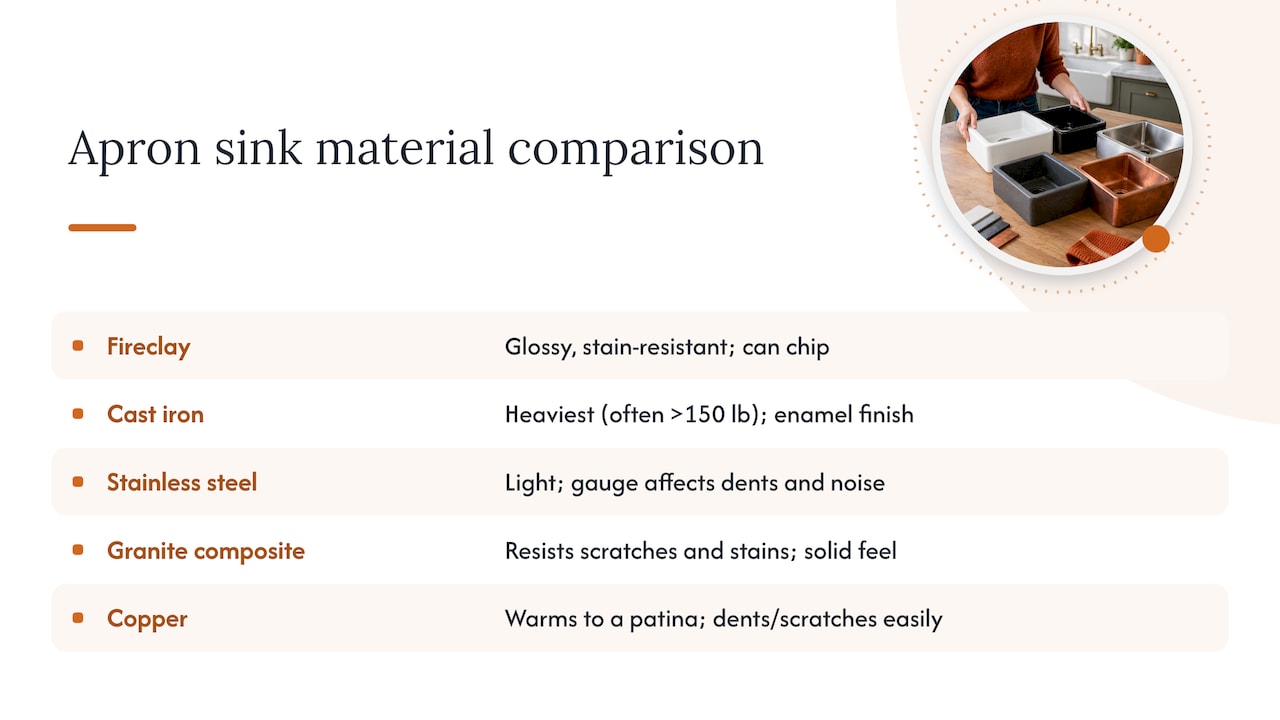
Material drives most of the differences in weight, upkeep, and price among apron sinks.
Fireclay delivers the classic farmhouse look with a glossy, non-porous surface that resists stains well, though a hard impact can chip the glaze. It’s moderately heavy, so most installations still call for solid support underneath.
Enameled cast iron is the heaviest common option, often exceeding 150 pounds before installation. The enamel finish holds up to daily use, but the sheer weight means your cabinet base has to be built or reinforced to carry it safely.
Stainless steel is the lighter, more modern alternative. Gauge matters here: thicker steel (lower gauge number) resists dents and dampens noise better than thin stock. It’s also the easiest of the group to wipe clean and keep sanitary.
Granite composite splits the difference well. It resists scratches and stains, comes in matte finishes that hide water spots, and weighs less than cast iron while still feeling solid underfoot.
Copper brings warmth and a living patina that changes with use, but it’s a softer metal that dents and scratches more easily, and it needs specific, non-abrasive cleaners to avoid stripping the finish. According to Sinkology’s farmhouse sink guide, homeowners who want the farmhouse look without the upkeep of fireclay or cast iron increasingly choose stainless steel or granite composite instead, since both deliver similar resilience to chips, dents, and stains with less maintenance.
Getting Cabinets and Countertops Ready for Installation
Before you order anything, confirm your cabinet base can carry the sink you want. Here’s the sequence that avoids costly surprises:
- Weigh your sink choice against your cabinet base. Heavy fireclay or cast iron sinks often need a support platform or reinforced framing rather than a standard particleboard floor.
- Finalize the sink before ordering cabinets. A standard 36 inch sink base cabinet is not automatically ready for a 36 inch apron sink. This is one of the most common and costly remodel mistakes, since cabinets ordered too early frequently need cabinet modification or replacement once the sink arrives.
- Match your countertop material to your installation style. Solid surfaces like quartz or granite support undermount installs cleanly, while laminate counters generally work better with top mount sinks since they can’t be cut as precisely at the edge.
- Bring in a professional for the install. This Old House’s installation guidance recommends a professional for apron sink work specifically because incorrect support for a heavy sink, such as a 200 pound cast iron unit, can damage cabinetry that wasn’t built to carry that load.
Labor costs typically climb when a cabinet needs custom modification rather than a straightforward swap, so getting the support plan right the first time saves money later.
Keeping an Apron Sink in Good Shape for Years
Care routines vary by material. Fireclay and cast iron tolerate most household cleaners but can chip if you drop something heavy directly on the rim. Stainless steel resists almost everything except abrasive scouring pads, which can scratch the finish. Copper needs mild, non-acidic cleaners to protect its patina, and granite composite holds up to daily wear with simple soap and water.
The apron-to-cabinet interface is the spot most prone to water damage. The Spruce recommends either a built-in drip edge or continuous professional-grade sealing between the sink apron and the cabinet face, since skipping this step is a small gap that leads to finish failure over time.
Chips in fireclay or enamel are sometimes repairable with touch-up kits for cosmetic damage, but a deep crack or structural chip usually means replacement. With proper sealing and care, most apron sinks last well beyond a decade, though softer materials like copper show wear sooner under heavy daily use.
What Apron Sinks Typically Cost to Buy and Install
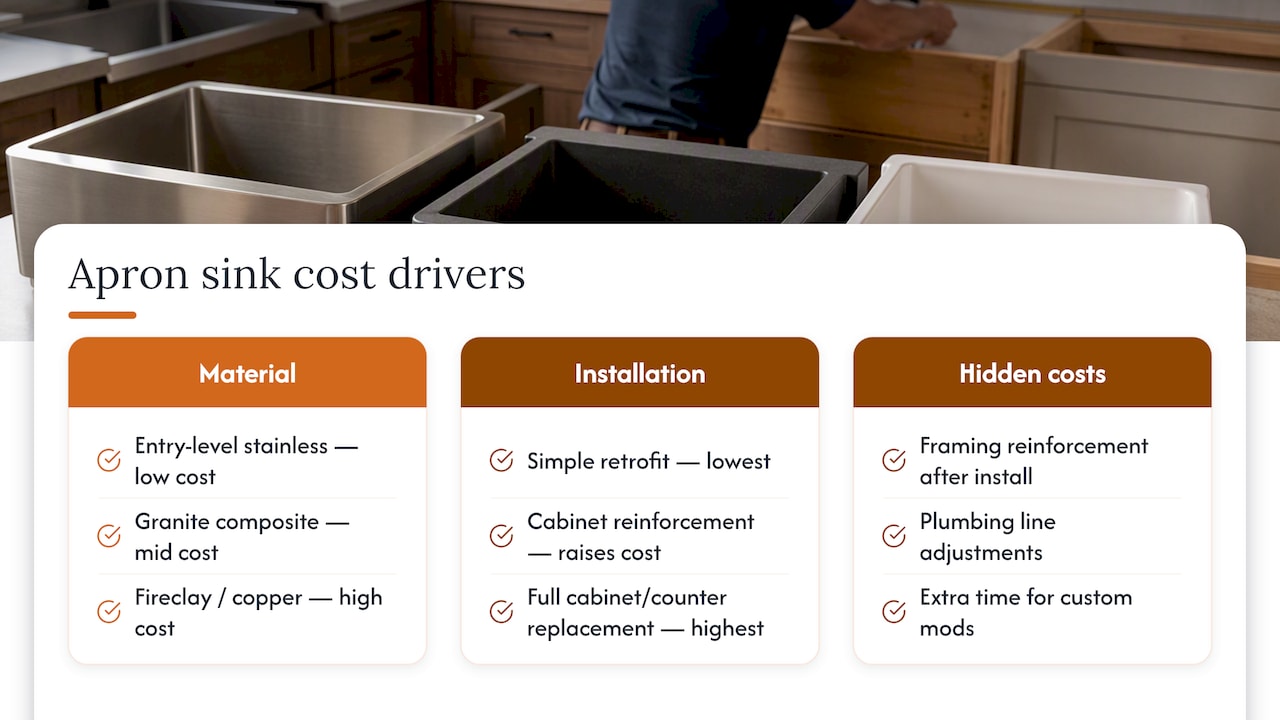
Budget expectations shift quickly once you factor in both the sink and the installation. Entry-level stainless steel apron sinks sit at the lower end of the price range, while custom fireclay and copper sinks land at the high end, a pattern Consumer Reports confirms when comparing sink materials and price ranges across standard, farmhouse, and specialty options.
Installation costs scale with scope. A simple retrofit into an already-prepared cabinet costs the least. Adding cabinet reinforcement for a heavy fireclay or cast iron sink raises the price, and a full cabinet or countertop replacement, often necessary when converting from a standard sink, adds the most to the project.
Hidden costs tend to come from reinforcing framing after the fact, adjusting plumbing lines to match the new basin depth, and the extra time a custom modification adds to the schedule. You can trim costs without sacrificing function by choosing a lighter material like stainless steel or granite composite, or by selecting a model designed for retrofit into an existing cabinet opening. For a fuller breakdown of what drives kitchen project costs, our kitchen remodel cost guide walks through typical budget ranges by scope.
How to Decide: A Checklist Before You Commit
Run through this list before you place an order:
- Match the sink to how you actually cook. If you regularly wash oversized pots or bakeware, the large basin earns its keep; if storage is tighter, a standard undermount may serve you better.
- Check cabinet readiness. Confirm whether your base cabinet needs reinforcement or a full rebuild to support the sink’s weight.
- Verify countertop compatibility. Solid surfaces handle undermount cuts; laminate often needs a top mount sink instead.
- Pick a material that fits your maintenance tolerance. Stainless and granite composite ask less of you day to day than fireclay or copper.
- Confirm the budget covers the whole scope, not just the sink itself.
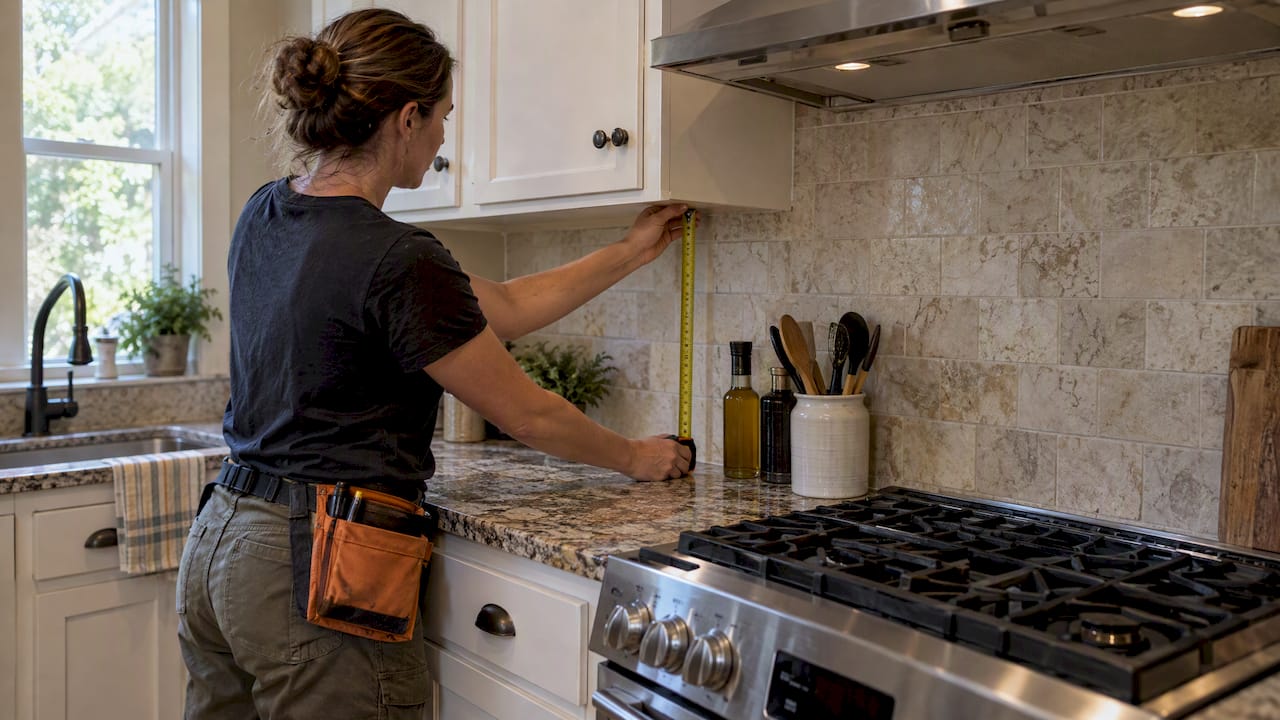
Measure before you buy: check the apron reveal against your cabinet face, confirm the cabinet opening aligns with the sink’s width, and verify the sink depth leaves enough clearance under the counter for the drain and disposal.
Ask your contractor directly: What support method will you use for this sink’s weight? What’s the warranty on both the sink and the installation? Who handles the countertop cutout, and on what timeline? How will you seal the apron-to-cabinet gap against water intrusion?
Pro Tip: Finalize your sink choice before you order cabinets, and ask your contractor for a written support plan so there’s no guesswork once the sink arrives.
When We’d Recommend an Apron Sink and When We Wouldn’t
Apron sinks earn their cost when you cook often, wash oversized cookware regularly, or want the sink itself to anchor your kitchen’s design. For those homeowners, the ergonomic depth and visual payoff outweigh the extra planning.
We’d steer most small-kitchen owners and tight-budget remodels toward a standard undermount instead. The lost storage and higher installation cost rarely pay off when square footage or cash is already stretched. If you do move forward, finalize the sink selection before cabinets go on order, and get a written support plan from whoever installs it. That single step prevents most of the problems homeowners run into later.
— MediaBeast
Let Bath & Kitchen Gallery Handle Your Apron Sink Remodel
We coordinate design and construction, so your apron sink choice, cabinet support, and countertop cutout stay aligned instead of getting lost between separate contractors. Our pricing approach aims to lay out costs before work starts, and a Lead Carpenter oversees the sink support and installation from day one. We use a system to keep dust and disruption contained while cabinets are modified or rebuilt.
If you’re ready to see what an apron sink upgrade could cost in your kitchen, visit our kitchen remodel costs page or explore our kitchen remodeling services to schedule a consultation.
FAQ
What are the downsides of an apron sink?
The main downsides are weight, lost storage, and cost. Heavy materials like fireclay or cast iron often need cabinet reinforcement, and the deep basin reduces the storage space available underneath.
Are apron sinks in style in 2026?
Apron sinks remain a popular design choice for farmhouse and transitional kitchens, with materials like stainless steel and granite composite offering the look in a lower-maintenance form. Their popularity tends to track broader farmhouse and modern-rustic design trends rather than fading quickly.
Is a farmhouse sink a good idea?
A farmhouse sink is a good idea if you regularly wash oversized pots or want a strong visual focal point in your kitchen. It’s a weaker fit for small kitchens or tight budgets, since the installation and storage trade-offs add real cost.
Is there a difference between a farmhouse sink and an apron sink?
No, the terms describe the same design: a sink with an exposed front panel instead of one hidden behind the cabinet face. Both names are used interchangeably across manufacturer and retailer guides.
Sources
- Apron Sink vs. Farmhouse Sink: Everything You Need to Know
- Kitchen Sink Installation: A step-by-step guide
- Stylish sinks that stand up to years of abuse
- The Ultimate Guide to Farmhouse Sinks | Sinkology