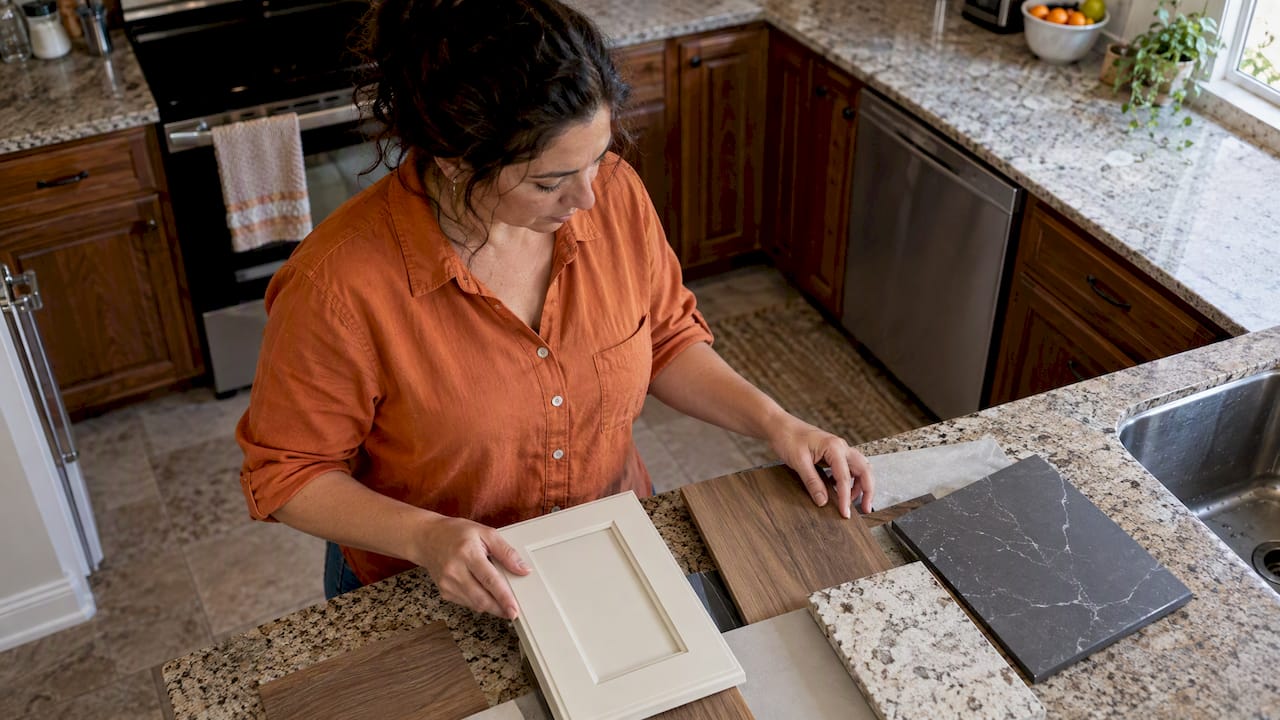


A remodeling allowance is a placeholder dollar amount built into your contract for an item you haven’t picked yet, such as tile or a faucet. Once you choose the actual product, the contract sum adjusts up or down through a change order to reflect the real cost.
TL;DR:
- Identify whether each line is lump sum, unit cost, cash, or contingency, because measured quantities can change unit cost totals after demolition.
- Ask what quantity and material grade each allowance assumes, then obtain written supplier quotes and confirm whether delivery and tax are included.
- Compare the supplier invoice with the allowance, and require a formal change order for any increase or credit before approving the adjustment.
- Confirm the allowance covers delivered materials and equipment, since labor, handling, overhead, and profit are typically included elsewhere in the contract sum.
- Keep contingency funds separate for hidden damage, and set selection deadlines and written closeout rules so allowance overruns do not consume emergency reserves.
Table of Contents
- What an allowance is and where it shows up in your contract
- The four types of allowances you’ll run into
- How allowance adjustments actually play out
- Allowances vs contingencies: a clear homeowner comparison
- How to review allowances on your estimate before you sign
- Why clear allowance language saves everyone time
- How Bath & Kitchen Gallery helps you manage allowances
- FAQ
- Sources
What an allowance is and where it shows up in your contract
An allowance exists because some decisions can’t wait for the ink to dry on your contract, but the budget still needs a number to work with. Contractors build these placeholder figures into the contract sum, and they typically track them on a schedule of values, often formatted using AIA’s G703 document. When you select the actual cabinets, tile, or fixture, any difference between the allowance and the real price gets reconciled on a G701 change order form.
You’ll usually see allowances attached to items that come down to personal taste rather than structural necessity:
- Cabinet hardware, pulls, and knobs
- Tile for showers, backsplashes, or flooring
- Plumbing fixtures like faucets and showerheads
- Light fixtures and ventilation fans
- Countertop material and edge profiles
A sample specification like Section 012100 lays out exactly how these line items get administered and closed out, which gives you a reference point if your own contract language feels vague. If your estimate just says “tile allowance” with no further detail, ask what that figure assumes about square footage or grade of material before you sign.
The four types of allowances you’ll run into
Not every allowance works the same way, and knowing which type you’re looking at changes how you should plan around it.
- Lump-sum allowances set a flat dollar figure for an item, like $2,500 for light fixtures, regardless of quantity.
- Unit-cost allowances price per unit, such as per square foot of tile, so the final number shifts if your measured quantity changes.
- Cash allowances function like lump-sum figures but carry specific administrative rules for reimbursement and documentation, as shown in sample addenda from public construction bids.
- Contingency allowances are owner-directed reserves tracked separately from selection allowances, meant for unforeseen conditions rather than known decisions.
Your contract should specify which type applies to each line item, because a unit-cost allowance for flooring behaves very differently once your contractor measures the actual square footage after demolition.
How allowance adjustments actually play out
The reconciliation process follows a predictable sequence. You select a product, your contractor gets the actual invoice from the supplier, and that invoice gets compared against the allowance figure in your contract. If the real cost is higher, you sign a change order adding the difference to your contract sum. If it’s lower, the difference gets credited back.
Say your contract carries an allowance for countertops. You choose a quartz slab that costs more than the allowance amount once installed. Your contractor issues a change order for the difference, and your contract sum increases accordingly. Choose a less expensive laminate instead, and you get a credit for the difference.
What often confuses homeowners is what the allowance actually covers. Under A201-2017 guidance, the allowance typically covers material and equipment cost delivered to the site, while labor, handling, overhead, and profit are already baked into your contract sum rather than the allowance itself. AIA guidance on overhead and profit explains that contractors calculate markup differently depending on whether a change order increases or decreases the contract sum, which is worth asking about before you sign anything.
- Ask for the actual supplier invoice before approving a change order.
- Confirm whether your allowance figure already includes delivery and tax.
- Request that every adjustment be documented on a formal change order, not a verbal agreement.
Pro Tip: Keep copies of every G701 change order and G703 schedule update in one folder so you can track your running total against the original contract sum.
Allowances vs contingencies: a clear homeowner comparison
Allowances and contingencies solve two different problems, and mixing them up is one of the fastest ways to blow a budget. Think of allowances as known unknowns: you know you need a faucet, you just haven’t picked one yet. Contingencies cover unknown unknowns, like rotted subfloor discovered after demolition starts, a distinction practitioner guidance on allowances and contingencies lays out clearly.
- Use allowances for anything you’ll eventually select from a catalog or showroom.
- Use contingency funds for structural surprises behind walls or under floors.
- Keep the two pools separate in your budget spreadsheet, never combined into one number.
Our contingency budgeting guide walks through sizing that reserve with a spreadsheet you can adapt to your own project. Disputes tend to arise when homeowners draw from contingency to cover an allowance overrun, which leaves nothing left if a real surprise turns up later.
How to review allowances on your estimate before you sign
Before you approve any remodeling estimate, run through the allowance line items the same way you’d review any other contract term by learning how to compare bids to avoid allowance overruns. Identify every allowance listed, confirm what it includes, and request vendor quotes or spec sheets so you know whether the number is realistic for the products you actually want.
- Flag every allowance line item and ask what quantity or grade it assumes.
- Request written vendor quotes before committing to a selection.
- Set a selection deadline in writing so choices don’t stall your schedule.
- Ask how unused allowance funds get credited at project closeout.
Ask your contractor directly who purchases allowance items, how markup is calculated on overages, and how quickly change orders get processed once you make a selection. A budgeting walkthrough for bathroom and kitchen projects can help you frame these questions before your first estimate meeting. Our up-front pricing model and dedicated Lead Carpenter on every project exist partly to answer these questions before they become disputes, since one person tracking selections and change orders tends to catch discrepancies faster than a project split across multiple supervisors.
Pro Tip: Reserve your contingency fund separately from allowances from day one, and confirm in writing how any unused allowance balance gets applied to your final invoice.
Why clear allowance language saves everyone time
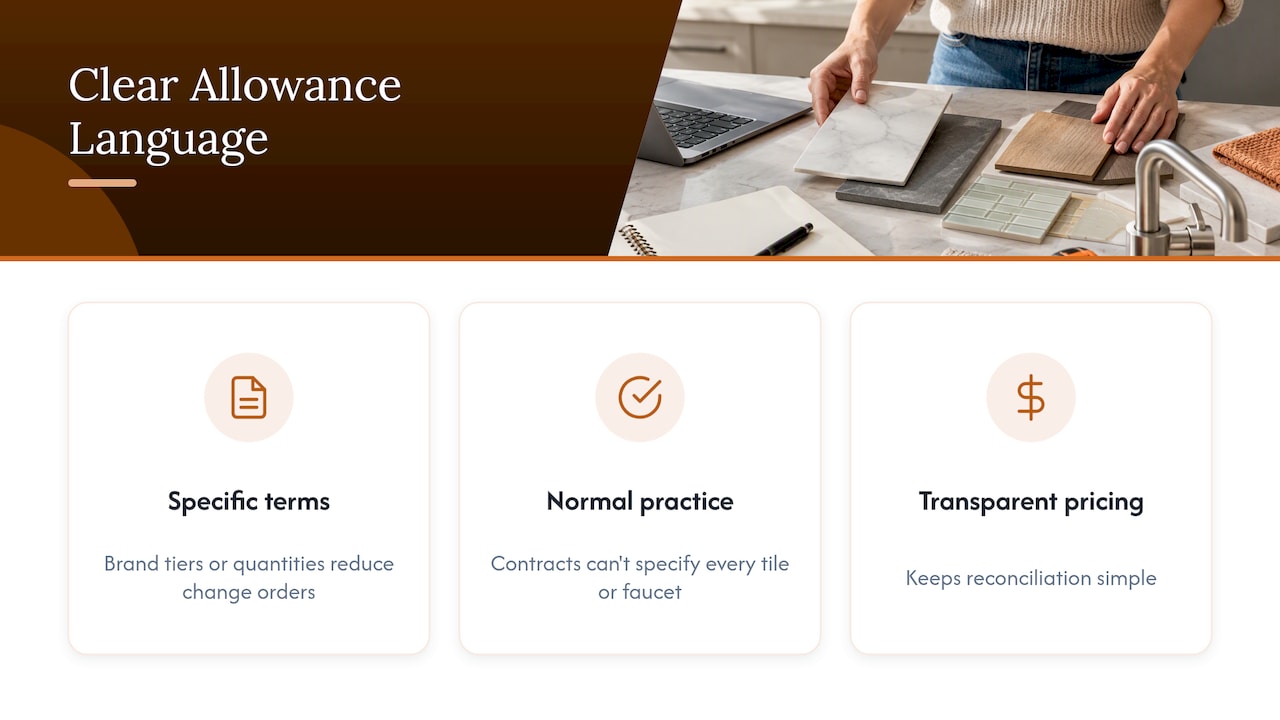
Contractors who spell out allowance language in detail, down to the brand tier or quantity assumed, tend to avoid the repeated change-order cycles that frustrate homeowners and slow down a job site. When a selection gets made quickly and the invoice matches expectations, the change order is a formality rather than a negotiation.
Well-managed allowances aren’t a red flag. They’re a normal, expected part of remodeling, since no contract can specify every tile and faucet before the project starts. The goal isn’t eliminating allowances, it’s making sure selection support and transparent pricing keep the reconciliation simple when the time comes.
— MediaBeast
How Bath & Kitchen Gallery helps you manage allowances
If reviewing allowance line items on your own estimate feels like more homework than you expected, we built our process to handle that for you. We combine design and construction under one roof, so the same team that specs your allowance items is the team installing them, which cuts down on the back-and-forth that drives change-order delays.
- We provide up-front pricing with detailed item lists to increase transparency in product cost assumptions.
- Every project is overseen by a dedicated lead team member who tracks selections and change orders in one place.
- Our approach focuses on minimizing dust and disruption to help keep your project moving smoothly while selections get finalized.
Browse our bathroom remodel cost guide or kitchen remodel cost breakdown to see how allowances factor into real project pricing, or reach out to schedule a consultation on your next bathroom or kitchen project.
FAQ
What are construction allowances?
A construction allowance is a placeholder dollar amount written into your contract sum for an item whose exact cost isn’t known when you sign. Once you select the actual product, your contractor adjusts the contract through a change order to reflect the real price.
Are allowances good or bad?
Allowances aren’t inherently good or bad, they’re a normal tool for pricing decisions you haven’t made yet. Problems only arise when the allowance figure is unrealistic for the products you actually want or when the contract language around adjustments is vague.
What are the 5 essential elements of a construction contract?
Contract requirements vary by project and jurisdiction, so there’s no single universal list, but most residential remodeling contracts include the scope of work, contract sum, payment schedule, allowance and change-order procedures, and timeline. Reviewing sample allowance clauses can help you see how these elements are typically structured.
What does “cash allowance” mean?
A cash allowance is a dollar figure set aside in your contract for a specific item or scope, functioning similarly to a lump-sum allowance but often carrying specific documentation and reimbursement rules. Public bid addenda show how these clauses typically spell out approval and crediting procedures.
Sources
- Construction Allowances Explained: How They Work in AIA Contract Documents
- The use and misuse of allowances and contractor contingency
- Section 012100 – Allowances (sample specification)