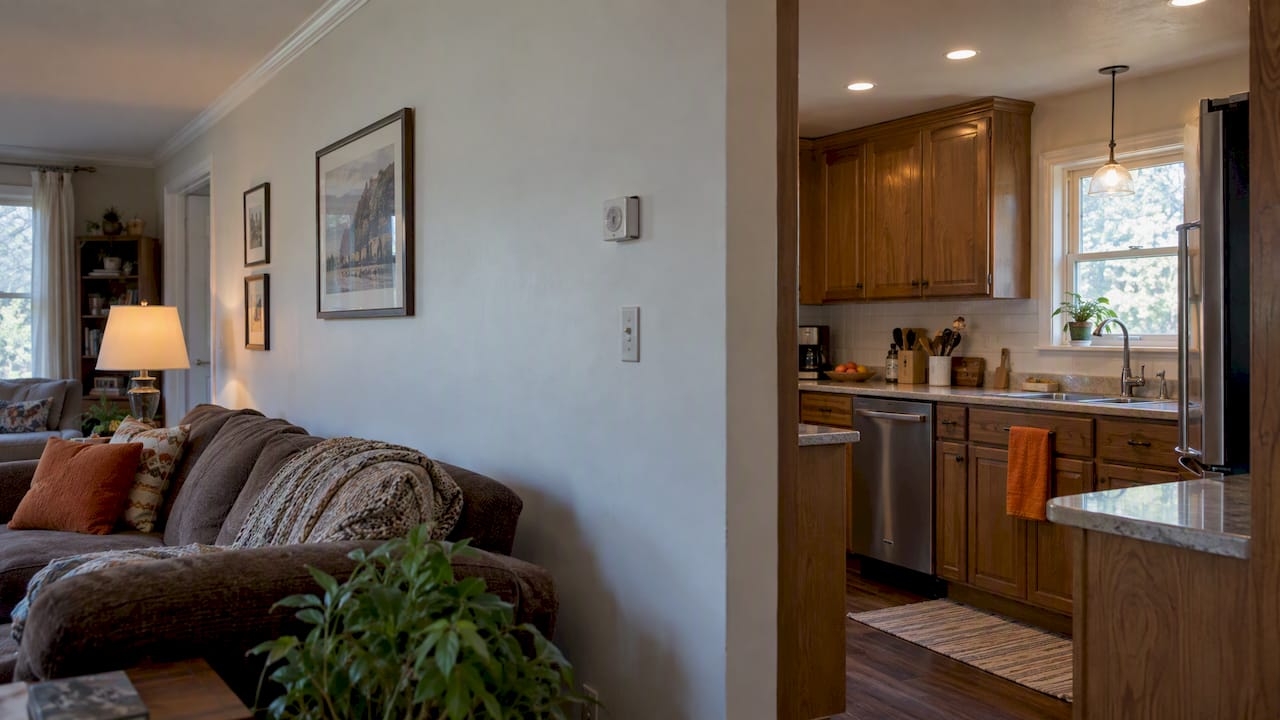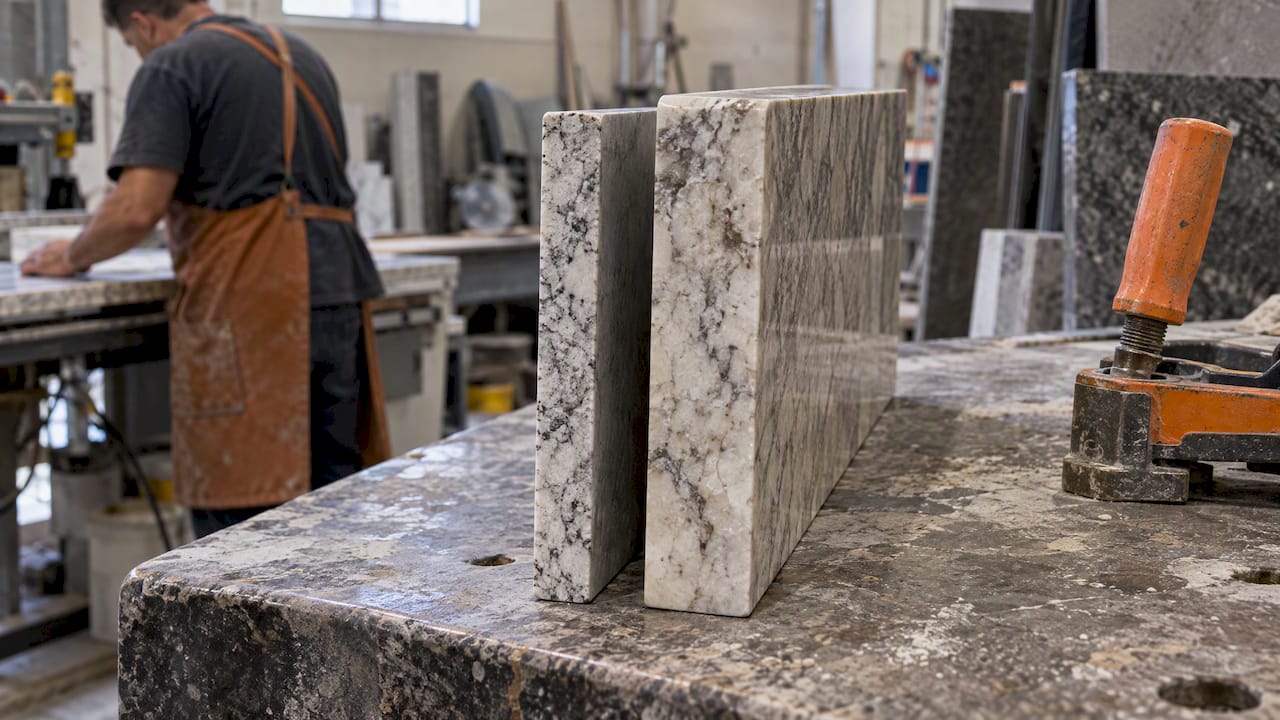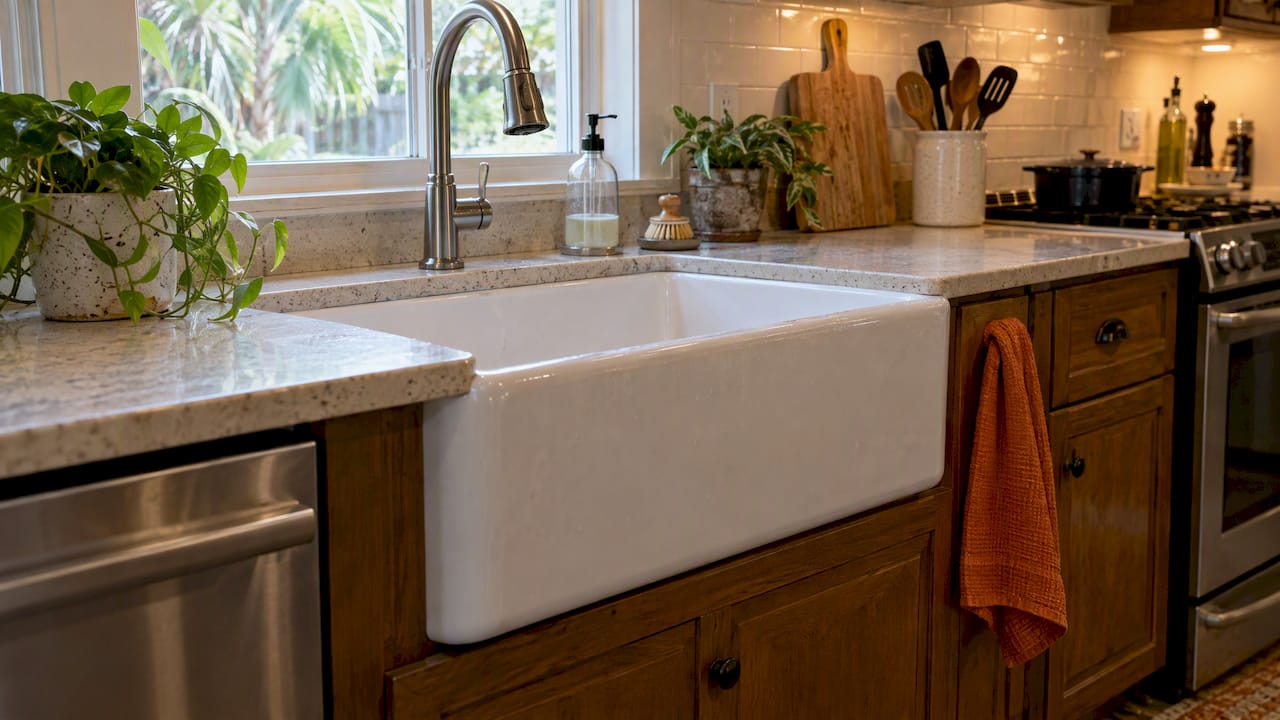

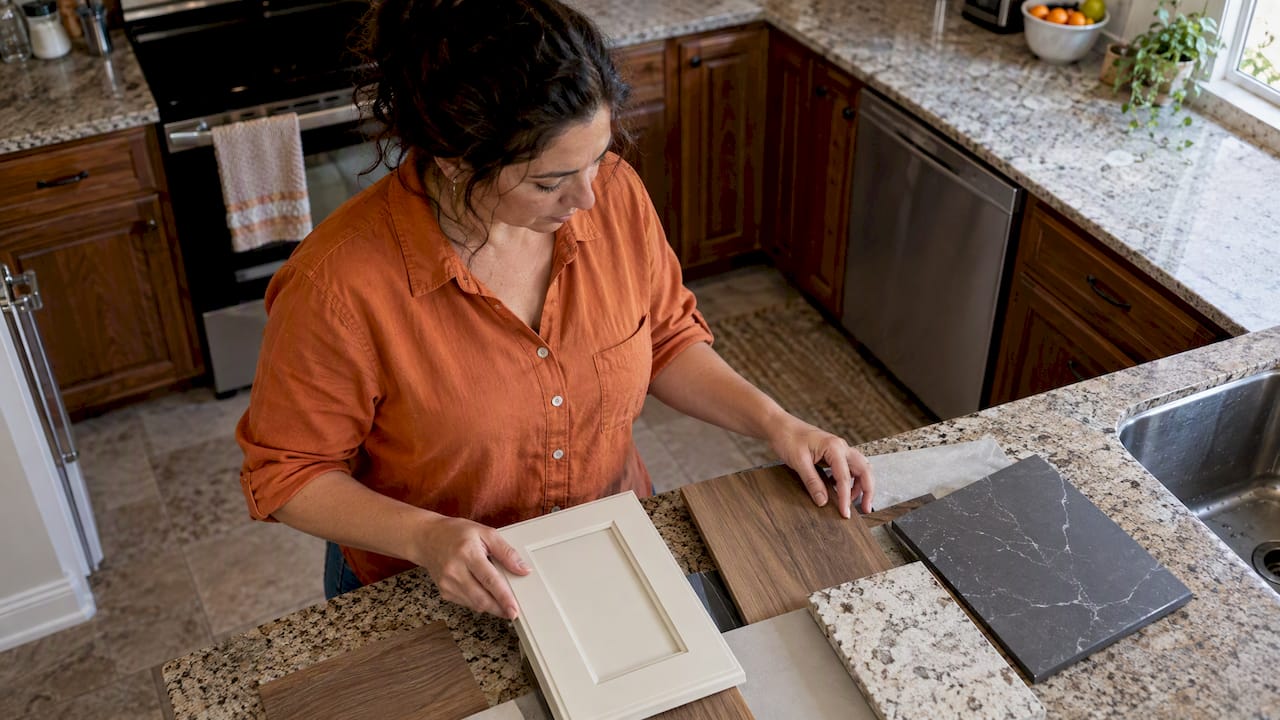
Quartz or porcelain countertops paired with plywood or veneered cabinet boxes and low-emitting finishes give most homeowners the best mix of looks, durability, and easy upkeep. Natural stone and solid wood still earn their place when the look matters more than maintenance. The right mix depends on how hard your kitchen works day to day, so read on for the tradeoffs before you order samples.
TL;DR:
- Composite wood cabinets face federal formaldehyde limits: hardwood plywood is capped at 0.05 ppm, MDF at 0.11 ppm, and particleboard at 0.09 ppm.
- Quartz avoids sealing and resists stains, while porcelain handles heat and scratches especially well; granite and quartzite tolerate heat but need periodic resealing.
- Before ordering, confirm seam placement, edge profile, and cutout clearances with the fabricator, because poor planning can undermine performance regardless of countertop material.
- Undermount sinks need support around the cutout, so quartz, granite, and solid surface suit them better than laminate, which typically works with drop in sinks.
- Bring full size samples home and compare them in your kitchen’s lighting; finalize cabinet layout and countertop material before choosing easier to change finishes.
Table of Contents
- Why Cabinetry, Countertops, and Finishes Work as One System
- Choosing Cabinet Face and Box Materials That Last
- Comparing Countertop Materials by Durability and Upkeep
- Coordinating Colors and Textures Across Your Kitchen
- A Showroom Checklist for Choosing Kitchen Materials
- How a Design and Build Remodeler Reduces Material Decision Fatigue
- The Environmental Side of Kitchen Material Choices
- Allergens and Safety Considerations in Kitchen Materials
- Matching Materials to Appliances and Fixtures
- Trends and Innovations Shaping Kitchen Materials
- Choose Materials for How You Actually Cook, Not How the Showroom Looks
- Let Us Handle Your Kitchen Material Selection From Start to Finish
- FAQ
- Sources
Why Cabinetry, Countertops, and Finishes Work as One System
Cabinet boxes, countertops, and finishes are not three separate shopping trips. They are one connected system, and a decision in one area limits your options in the others. A thick countertop edge changes how a backsplash tile meets the counter. A dark cabinet finish shifts which countertop veining will not look muddy next to it. Seam placement on a countertop depends on cabinet layout, and both depend on appliance cutouts you may not have measured yet.
Lock the big-ticket, hardest-to-change items first: cabinet layout and countertop material. Backsplash tile, hardware, and paint sheen are easier to adjust later and cost less to change your mind about.
Throughout this guide, we judge each material against the same criteria:
- Appearance and how well it ages visually over years of use
- Durability against scratches, heat, moisture, and daily wear
- Maintenance demands, including sealing, oiling, or special cleaners
- Relative installed cost compared to other options in its category
- Suitability for specific households, from avid cooks to low-maintenance families
Keeping these five factors in view as you compare options prevents the common mistake of choosing a material for its showroom appeal, then discovering it does not fit how your household actually cooks.
Choosing Cabinet Face and Box Materials That Last
Cabinet decisions split into two parts: the visible face material and the hidden box material, and both affect how long your cabinets hold up.
Face materials range widely in look and resilience. Solid wood offers the richest grain and can be refinished, but it moves with humidity and shows dents more readily than engineered options. Veneer wraps a thin layer of real wood over a stable substrate, giving a similar look with better dimensional stability at a lower cost. Painted MDF delivers a smooth, modern finish that resists warping, though chips can expose the substrate underneath. Thermofoil is budget-friendly and easy to wipe clean, but it can peel near heat sources like ranges. Laminate holds up well to daily wear and costs less than wood veneer, though its edges can be visible up close.
Box materials matter even when hidden behind doors. Plywood resists moisture and holds screws better over time, making it a strong choice for sink base cabinets. MDF offers a smoother surface for painted finishes but can swell if it stays wet. Particleboard is the most budget-friendly option but has the lowest tolerance for humidity and weight.
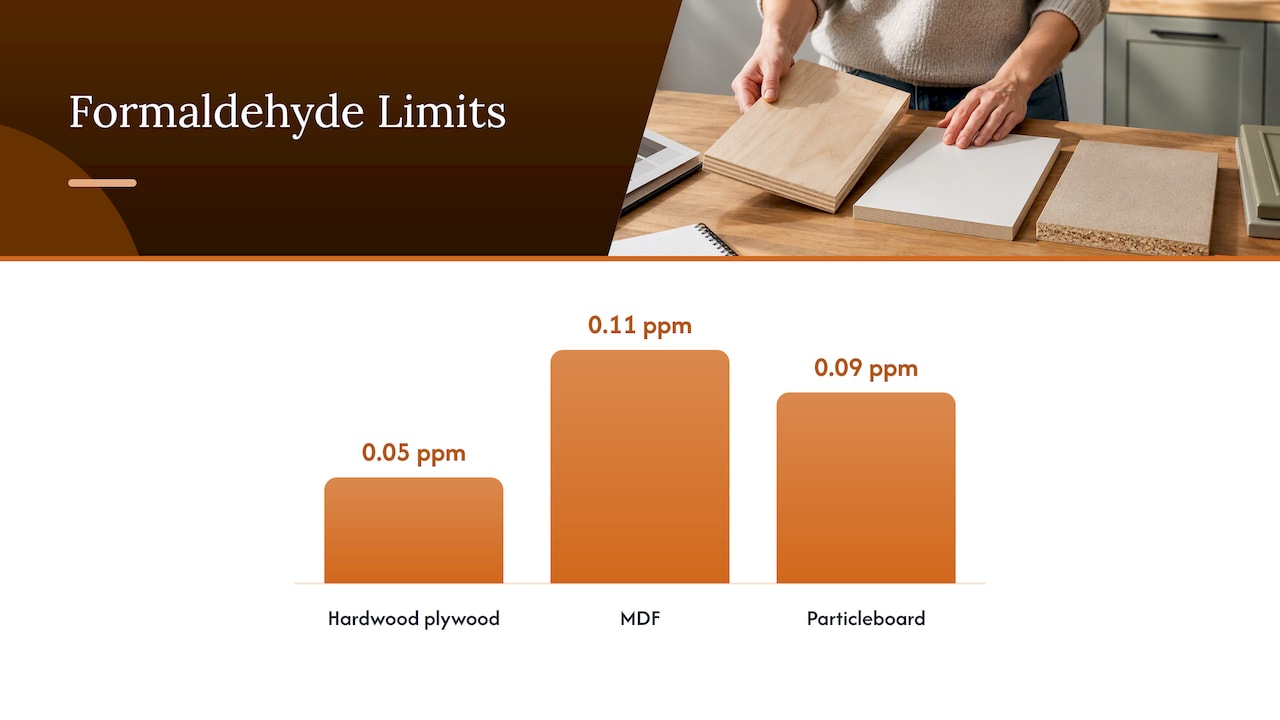
Formaldehyde emission limits for composite wood used in cabinets are federally regulated: under TSCA Title VI, hardwood plywood is capped at 0.05 ppm, MDF at 0.11 ppm, and particleboard at 0.09 ppm. Checking for NAF or ULEF certification on cabinet labels, as outlined in the EPA’s consumer guidance, is a reasonable step before you commit to a cabinet line.
A few showroom checks tell you more than a sales sheet:
- Open and close a door sample to feel hinge resistance and check for soft-close hardware.
- Look at the back panel thickness; thin panels flex and can warp over time.
- Check the door reveal and alignment on a full display unit, not just a sample door.
If you want a deeper look at cabinet material tradeoffs, our cabinet materials guide walks through each option in more detail, and this breakdown of solid wood doors is worth a look if you are weighing solid wood against engineered alternatives.
Comparing Countertop Materials by Durability and Upkeep
Countertops take the most daily abuse in a kitchen, so matching the material to your cooking habits matters more here than almost anywhere else.
Quartz is engineered stone bound with resin, and it resists staining better than natural stone according to Consumer Reports testing, which also found it performs well against abrasion and cuts. It never needs sealing, which makes it a strong fit for households that want one less maintenance task. Porcelain slabs are gaining ground for similar reasons; Homes & Gardens ranks porcelain among the easiest-to-live-with countertop materials, citing especially strong heat and scratch resistance that suits a busy kitchen where pans land straight from the stovetop.
Granite and quartzite are natural stone options that handle heat better than quartz because they are not resin-bound, but both need periodic resealing to resist staining. Butcher block brings warmth and is easy to refinish by sanding, though it demands regular oiling and is vulnerable to water damage near sinks. Solid surface material is seamless and repairable by light sanding, but it scratches more easily than stone and can discolor near heat. Laminate remains the most budget-friendly option and has improved in appearance, though it cannot be repaired once chipped or burned. Recycled glass surfaces offer a distinct look and decent durability, while metal countertops like stainless steel resist bacteria and heat well but show scratches and dents over time.
Fabrication details often matter as much as the material itself: Homes & Gardens notes that seam placement, edge radius, and cutout clearances frequently determine how well a countertop performs over the years, regardless of which material you pick.
Installed cost tiers generally run laminate and solid surface at the budget end, quartz and granite in the mid-to-upper range, and quartzite and some specialty metals at the top. Templating takes extra time for stone and quartz because fabricators cut each slab to your exact layout, while laminate and butcher block can sometimes be installed faster.
A short maintenance routine keeps any countertop performing well:
- Use cutting boards and trivets even on scratch- and heat-resistant materials.
- Wipe spills promptly, especially on natural stone and butcher block.
- Reseal granite, quartzite, or butcher block on the schedule your fabricator recommends.
For more on matching a countertop to your layout and local fabrication options, see our guides on choosing the right kitchen countertops and selecting the perfect surface for your remodel.
Coordinating Colors and Textures Across Your Kitchen
A kitchen reads as cohesive when one material or color leads and the rest support it, rather than every surface competing for attention.
- Pick one dominant material, often the cabinets or the countertop, and let the others respond to it.
- Limit your palette to two or three tones across cabinets, counters, and backsplash to avoid visual clutter.
- Balance matte and glossy textures so the kitchen does not feel flat or overly reflective.
Two-tone kitchens work well when one tone anchors the island as a focal point and a lighter or complementary tone covers the perimeter cabinets. A statement countertop with bold veining pairs best with simpler, solid-color cabinets so the eye has one clear focal point rather than two competing patterns.
Finish choice affects both looks and upkeep. Satin or matte sheens on cabinet paint hide fingerprints and minor imperfections better than high gloss, which shows every smudge but gives a sleeker look. Lacquer finishes resist moisture well but can show scratches more visibly than oil-based finishes, which age with a softer patina. If you are testing colors before committing, testing and matching cabinet colors against your countertop and flooring samples in your own kitchen lighting avoids a mismatch that only shows up after installation.
Pro Tip: Bring your countertop and flooring samples together in your kitchen’s actual lighting before finalizing a cabinet color, since showroom lighting rarely matches home lighting.
A Showroom Checklist for Choosing Kitchen Materials
Turning all these comparisons into a decision gets easier with a structured approach rather than picking by eye alone.
- Ask yourself how your household uses the kitchen: heavy daily cooking, occasional meals, or frequent entertaining.
- Rank your priorities between low maintenance, natural material look, and budget, since few materials win on all three.
- Narrow your shortlist to two or three countertop materials and two cabinet options before visiting a showroom.
- Take large samples home rather than small chips, since color and veining can look different under your own lighting.
- Ask your fabricator or remodeler about seam placement, edge profiles, and substrate labeling before ordering.
A short list of questions keeps suppliers accountable:
- Does this composite wood product carry NAF or ULEF certification under EPA emission standards?
- What warranty covers staining, chipping, or seam separation?
- What is the expected lead time from template to installation?
- Is the cost breakdown itemized by material, fabrication, and installation labor?
When layout changes, plumbing relocations, or structural questions enter the picture, bringing in a remodeler or designer earlier avoids costly mid-project changes.
How a Design and Build Remodeler Reduces Material Decision Fatigue
Comparing dozens of cabinet and countertop combinations on your own is where most remodels stall. We handle design and construction under one roof, which keeps material decisions, fabrication timing, and installation sequencing aligned instead of split across separate vendors.
A few specifics shape how we work with homeowners on material selection:
- We provide up-front pricing with detailed item lists, so you see what each material and labor line actually costs before signing anything.
- We assign a dedicated Lead Carpenter to your project for personalized oversight from material delivery through installation.
- We use a Work Clean System to minimize dust and disruption while cabinets, counters, and finishes come together.
That combination means fewer surprises between the showroom sample and the finished kitchen.
The Environmental Side of Kitchen Material Choices
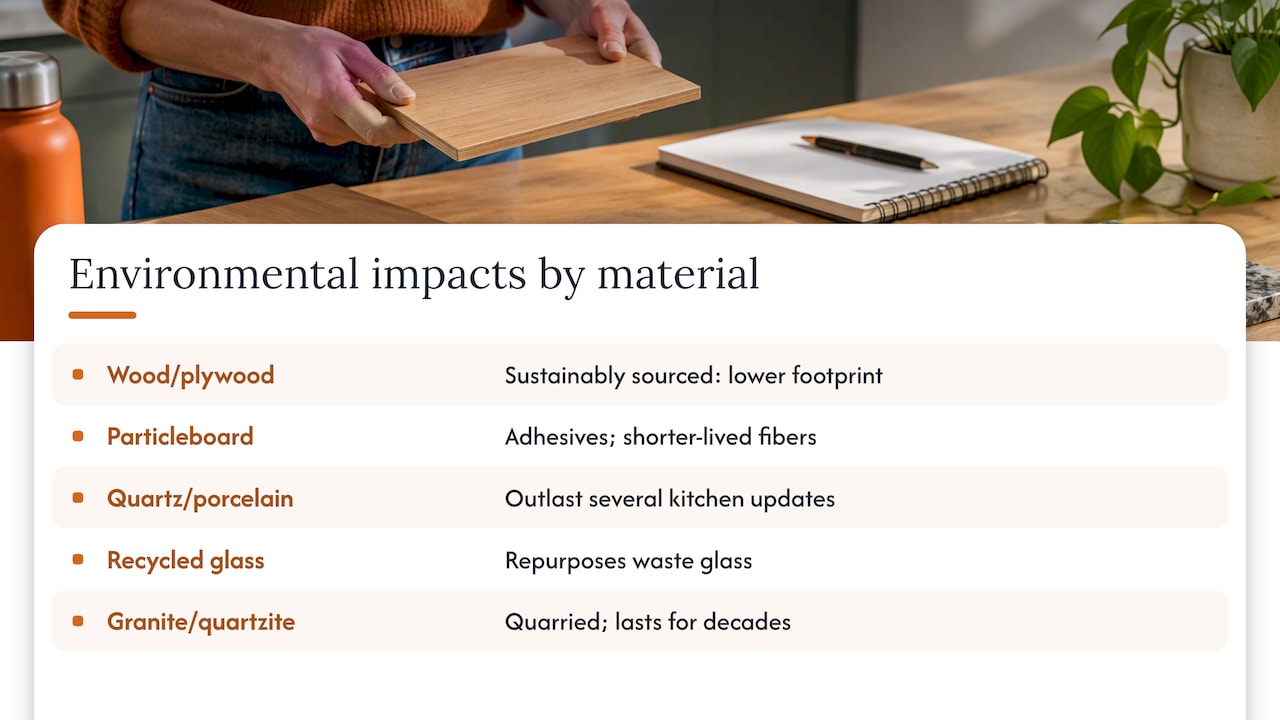
Sustainability in kitchen materials comes down to a few practical factors: how the material is sourced, how long it lasts, and what happens to it at the end of its life. Solid wood and plywood with sustainably sourced cores tend to have a lower manufacturing footprint than particleboard, which relies more heavily on adhesives and shorter-lived fibers. Quartz and porcelain countertops are durable enough to outlast several kitchen updates, which reduces landfill waste even though their manufacturing process is resource-intensive.
Recycled glass countertops repurpose waste glass into a usable surface, offering a lower-impact option for homeowners who prioritize recycled content. Natural stone like granite and quartzite is quarried, which carries its own environmental cost, but the material itself can last for decades without replacement.
Low-emitting finishes and NAF or ULEF certified composite wood, discussed earlier under EPA standards, also reduce indoor air quality concerns tied to off-gassing in a newly finished kitchen. Choosing materials built to last reduces the frequency of full remodels, which is often the simplest way to lower a kitchen’s long-term environmental footprint. For homeowners who want this factored into their remodel planning, our guide on sustainable design choices covers additional options beyond materials alone.
Allergens and Safety Considerations in Kitchen Materials
Indoor air quality is the main safety concern tied to kitchen materials, particularly with composite wood products used in cabinet boxes. Formaldehyde off-gassing from particleboard and MDF is the reason the EPA regulates emission limits under TSCA Title VI, and checking for NAF or ULEF certification on product labels is a practical way to reduce exposure in a newly built kitchen.
Natural stone countertops are generally inert once sealed, though unsealed stone can harbor bacteria in porous surfaces, which is one reason sealing and resealing schedules matter beyond just stain prevention. Butcher block carries a similar consideration: unsealed wood surfaces used for food prep need regular oiling to stay sanitary as well as attractive.
Some homeowners have sensitivities to specific adhesives, resins, or finishes used in cabinetry and countertop fabrication. If anyone in your household has known sensitivities to formaldehyde or VOCs, asking suppliers directly about resin type and finish composition before ordering is a reasonable precaution, and choosing low-VOC paints and sealants for finishes adds another layer of protection during and after installation.
Matching Materials to Appliances and Fixtures
Countertop and cabinet choices need to work with the appliances and fixtures they surround, not just look good on their own. Undermount sinks require a countertop material strong enough to support the cutout without cracking, which is why quartz, granite, and solid surface are common choices for undermount installations while laminate typically pairs better with drop-in sinks.
Cabinet box material matters most near water-exposed fixtures. Plywood’s better moisture resistance makes it the stronger choice for sink base cabinets and areas near dishwashers, where occasional leaks are a real risk over the life of the kitchen. Heat-generating appliances like ranges and wall ovens also narrow countertop options near those zones. Thermofoil cabinet panels, mentioned earlier, can peel if installed too close to heat sources, which is a detail worth flagging to your installer during layout planning.
Faucet and fixture finishes should coordinate with hardware finishes across the kitchen, since mismatched metals between a faucet, cabinet pulls, and lighting can undercut an otherwise well-chosen material palette. Measuring appliance cutouts and clearances before finalizing countertop templates avoids the costly mistake of a slab that does not fit once delivered.
Trends and Innovations Shaping Kitchen Materials
Porcelain slab countertops continue gaining ground as an alternative to quartz, prized for their combination of heat resistance and a wide range of printed finishes that mimic natural stone or concrete. Matte and textured cabinet finishes are replacing high-gloss looks in many new kitchens, partly because they hide fingerprints and daily wear better in busy households.
Mixed-material kitchens, where a wood island sits alongside painted perimeter cabinets, let homeowners combine warmth and durability without committing to one material throughout. Moisture-resistant engineered cabinet cores are also becoming more common in markets with higher humidity, giving buyers an alternative to standard particleboard where swelling has historically been a concern. For a broader look at moisture-resistant cabinet cores used in humid climates, this overview of HMR cabinet materials covers the core types gaining traction internationally.
Larger-format tile and slab backsplashes that run uninterrupted from counter to upper cabinets are also showing up more often, reducing grout lines and giving a cleaner, more unified look across the whole wall.
Choose Materials for How You Actually Cook, Not How the Showroom Looks
The biggest mistake we see is choosing a material because it photographed well, then living with maintenance that does not match daily habits. A busy household that never seals a countertop should not choose a material that demands resealing twice a year, no matter how striking the veining looks under showroom lighting. Fabrication quality, seam placement, and substrate labeling matter just as much as the material name on the sample card.
Before you sign anything, ask for a written estimate that itemizes material and labor separately, and bring home full-size samples rather than trusting a small chip under different lighting.
— MediaBeast
Let Us Handle Your Kitchen Material Selection From Start to Finish
We combine design and construction under one roof, which means the material decisions you make in the showroom carry straight through to installation without getting lost between separate vendors. We provide pricing details before you commit, and a Lead Carpenter oversees your project from delivery to the final walkthrough.
- We help you compare cabinet, countertop, and finish options in person against your actual layout.
- We use diligent practices to keep dust and disruption to a minimum throughout construction.
- We provide detailed pricing so there are no surprises once materials are ordered.
If you are ready to see what your project could cost, our kitchen remodel cost guide breaks down pricing by layout, and our kitchen remodeling services page is the place to start a conversation about your space.
FAQ
Which material is most durable for kitchen cabinets?
Plywood is generally the most durable cabinet box material because it resists moisture and holds hardware better over time than MDF or particleboard. For cabinet faces, solid wood and painted MDF both hold up well, though solid wood can be refinished while MDF resists warping better in humid conditions.
What are 20 things commonly found in a kitchen?
A typical kitchen includes cabinets, countertops, a sink, faucet, range or cooktop, oven, refrigerator, dishwasher, microwave, range hood, backsplash tile, flooring, pantry storage, drawers, cabinet hardware, lighting fixtures, an island or peninsula, trash and recycling bins, small appliances like a toaster or coffee maker, and cookware storage. The exact mix varies by kitchen size and layout.
How do I choose kitchen furniture and materials?
Start by ranking your priorities between low maintenance, natural look, and budget, since few materials excel at all three at once. Narrow your shortlist to two or three countertop and cabinet options, then bring home full-size samples to check them against your kitchen’s actual lighting before deciding.
What are common kitchen counter materials?
The most common countertop materials are quartz, granite, porcelain, laminate, butcher block, solid surface, and quartzite. Quartz and porcelain are favored for low maintenance and strong stain and scratch resistance, as shown in testing from Consumer Reports, while granite and quartzite remain popular for their natural stone appearance.
Do you help with choosing kitchen materials?
Yes, we work with homeowners directly to compare cabinet, countertop, and finish options against their layout and budget. We also provide detailed pricing so the material choices you make are reflected clearly in your estimate.
Sources
- EPA regulatory docket: TSCA Title VI composite wood rule (public docket)
- Frequent questions for consumers about the Formaldehyde Standards for Composite Wood Products Act | EPA
- The most durable and low-maintenance kitchen countertop materials | Homes and Gardens
- Quartz vs. Granite Better Countertop Material – Consumer Reports