


If you have at least five years of hands-on remodeling experience and two years leading jobsites, you likely qualify for lead carpenter remodeling roles right now. The fastest next step is updating your résumé with specific project outcomes and applying directly, while starting the Certified Lead Carpenter (CLC) process through NARI to strengthen your offers. Employers actively look for carpenters ready to own a job from handoff to final walkthrough.
TL;DR:
- Build your résumé around quantified outcomes, project photos, direct client communication, and documented schedule ownership rather than relying on a lead carpenter title alone.
- The CLC exam takes about three hours and covers roughly 180 to 200 questions across eight areas; certification also requires five continuing education hours annually.
- Before accepting a role, ask whether leads see budgets and control subcontractor schedules, purchasing, and client communication; responsibility without authority can make the title nominal.
- Apply through remodeling firms, NARI chapter boards, niche construction sites, or direct outreach, and prepare STAR examples about trade coordination, scope changes, and schedule risks.
Table of Contents
- Core responsibilities of a lead carpenter in remodeling
- Qualifications, skills, and résumé evidence that hiring managers want
- Certification and career path: what the NARI Certified Lead Carpenter credential means
- How to find and apply for lead carpenter remodeling jobs
- Typical timeline and how the role affects schedule and profitability
- Typical costs associated with hiring a lead carpenter for a remodeling project
- Key criteria and questions to ask when evaluating a lead carpenter
- Red flags to watch for when choosing a lead carpenter
- What working under a lead carpenter system looks like at Bath & Kitchen Gallery
- Why apply to Bath & Kitchen Gallery and how to submit your application
- FAQ
- Sources
Core responsibilities of a lead carpenter in remodeling
A lead carpenter is the person a remodeling company trusts to turn an estimate into a finished space without losing money or the client’s confidence along the way. According to NARI, this role supervises subcontractors and employees, manages schedules, ensures safety and code compliance, handles client relations, and stays engaged in hands-on production work rather than functioning purely as a desk-bound manager.
Industry commentary on the lead carpenter system notes that the role includes client contact, material takeoffs and orders, jobsite supervision, scheduling, paperwork, and accountability for how well the production stage of a project actually performs. That is a wider mandate than most carpenters hold earlier in their careers, and it is worth auditing your own experience against it before you apply.
Day to day, the job usually breaks down into a few recurring duties:
- Coordinating subcontractors such as plumbers, electricians, and tile setters so trades do not collide on the schedule.
- Performing hands-on carpentry work, including framing, trim, and cabinetry installation, while still watching the overall timeline.
- Communicating directly with clients about progress, change orders, and decisions that affect budget or schedule.
- Keeping daily logs, managing punch lists, and maintaining jobsite safety and cleanliness.
- Overseeing material deliveries and verifying quantities against the plan before work starts.
If your current job title does not include “lead,” but you already do most of this list, you are closer to qualified than you might think. The gap for many experienced carpenters is not skill. It is proof: documentation that shows you ran the job, not just worked on it.
Qualifications, skills, and résumé evidence that hiring managers want
Most remodeling companies expect a minimum of five years of hands-on remodeling work before considering someone for a lead role, with at least some of that time spent directing other people rather than only executing tasks. Lead experience counts even if it was informal: running a two-person crew on bathroom remodels, managing a subcontractor relationship on a kitchen job, or being the person clients called when something changed.
To build a résumé and portfolio that gets callbacks:
- List technical skills by category: framing and trim carpentry, custom cabinetry installation, tile layout, and site measurement or layout work.
- Describe leadership moments specifically: “Coordinated three subcontractors across a four-week bathroom remodel” reads stronger than “worked with subs.”
- Include a portfolio entry for at least one project where you owned the schedule from demolition to final punch list, with photos if available.
- Note any experience handling client communication directly, including change orders or budget conversations.
- Mention safety training or jobsite compliance work, since employers weigh this heavily for lead roles.
Format each résumé line around a result, not just a task. “Managed daily logs and subcontractor scheduling for 12 remodel projects in 2025” tells a hiring manager more than “experienced carpenter.”
Pro Tip: Employers respond to language tied to outcomes, so quantify on-time completions and budget adherence wherever your records allow it.
Certification and career path: what the NARI Certified Lead Carpenter credential means
The Certified Lead Carpenter (CLC) designation from the National Association of the Remodeling Industry requires a minimum of five years of continuous remodeling experience, with at least two years specifically in a lead carpenter role. It is the credential most remodeling employers recognize when screening resumes for lead positions.
The exam itself is a structured test of real jobsite knowledge:
- An exam consisting of multiple-choice questions administered over about three hours.
- Content pulled from the CLC Program Manual covering business management, plans and specs, codes and law, pre-construction, jobsite safety, jobsite management, construction trades, and interior finishes.
- Annual renewal requiring five continuing education hours to keep the certification active.
One figure worth planning around: the CLC exam runs about three hours and covers eight distinct content areas, so study time should be spread across business practices and code knowledge, not just field skills.
Holding a CLC changes the hiring conversation. It gives you a credential to point to in pay negotiations and signals to an employer that you already understand jobsite management and safety compliance at a level they would otherwise have to verify themselves. If you are within a year of meeting the experience threshold, start reviewing the program manual now so the exam is ready when your eligibility is.
How to find and apply for lead carpenter remodeling jobs
Finding the right opening matters as much as being qualified for it. Several channels consistently produce better leads than generic job boards:
- Company career pages at established remodeling firms, including Bath & Kitchen Gallery, which hires for lead roles directly.
- Trade association job boards through NARI chapters, which post openings specific to remodeling rather than general construction.
- Niche construction job sites that filter for remodeling and renovation roles rather than new-build trades.
- Direct outreach to remodeling companies in your area, even ones without a posted opening, since lead roles often get filled before a listing goes up.
Before you apply anywhere, assemble a complete application packet:
- An updated résumé with quantified project outcomes.
- Portfolio photos organized by project type, bathroom, kitchen, or whole-home.
- A sample daily log or punch list if you have one you can share.
- Two or three references who can speak to your scheduling and subcontractor management.
- Proof of CLC certification or documented years toward eligibility.
In the interview, expect questions built around real scenarios, not hypotheticals. Use the STAR format, situation, task, action, result, to describe a time you coordinated multiple subs on a tight schedule, handled a scope change mid-project, or caught a problem before it delayed the job. Reviewing a guide on how homeowners choose a remodeler can also help you anticipate the client-communication questions an employer is likely to ask.
When compensation comes up, ask directly whether the role is lead-carpenter-focused or blended with project management duties, since that affects both pay expectations and daily workload. In your first week on-site, expect orientation on safety protocols, tool and material procedures, and the company’s communication system for updating clients and office staff.
Typical timeline and how the role affects schedule and profitability
A lead carpenter’s influence on a project’s timeline shows up most clearly in how smoothly the handoff from sales to production happens. Industry commentary on the lead carpenter system notes that it works best when the lead receives the job estimate and budget directly, along with a formal handoff from the sales team, so they can manage both schedule and profitability rather than simply executing someone else’s plan.
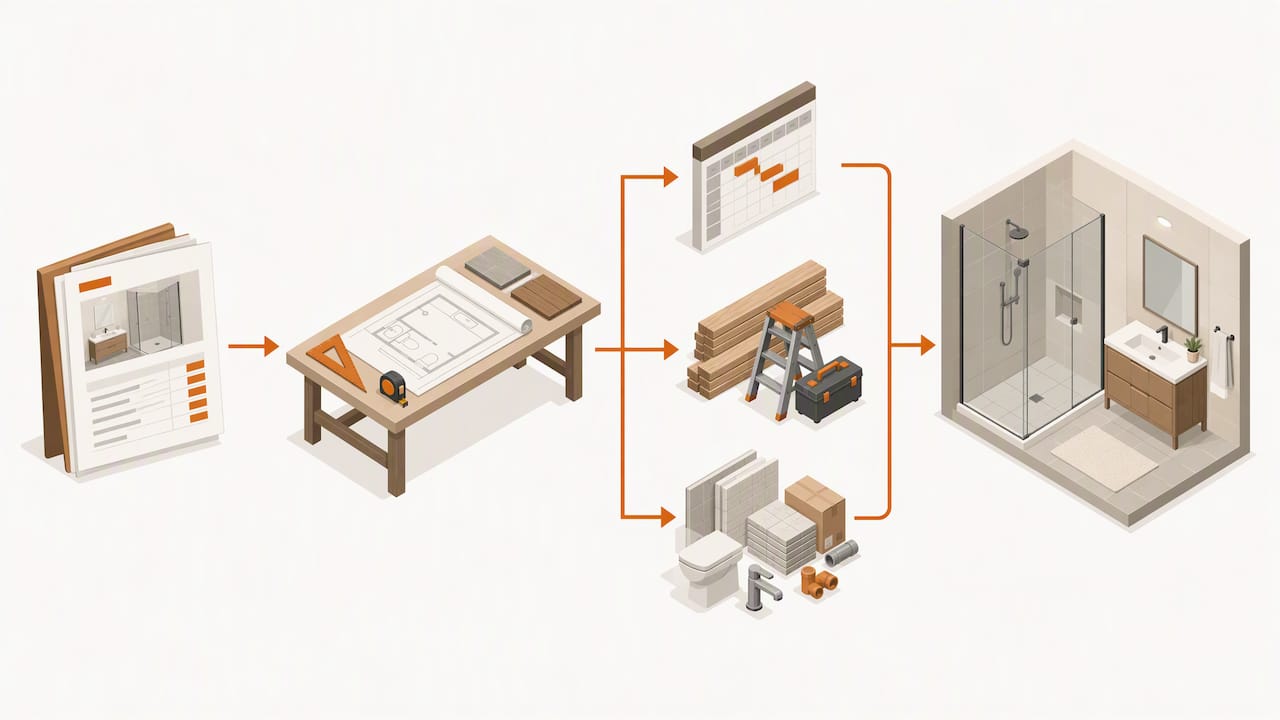
Companies that withhold that budget information from the lead carpenter limit how much impact that person can actually have on the job’s outcome. A lead who knows the numbers can make faster calls on material substitutions, labor sequencing, or subcontractor scheduling without waiting on approval for every decision.
For a typical bathroom or kitchen remodel, the lead carpenter’s day-to-day choices, when to call in a sub, how to sequence demolition against material delivery, directly affect whether the job finishes on time and within budget. A well-run handoff and clear authority tend to shorten the gap between estimate and actual cost, which is part of why remodeling companies invest in training and empowering this role rather than treating it as interchangeable labor.
Typical costs associated with hiring a lead carpenter for a remodeling project
The cost of a lead carpenter is built into the overall price of a remodeling project rather than billed as a separate line item in most cases. For a sense of scale, a Small 3-Fixture Bath with Shower runs $22,100 to $30,000, while a Large Kitchen with Island runs $74,100 to $93,600, and the lead carpenter’s time, coordination, and oversight are factored into those totals alongside materials and subcontractor work.
Projects with more fixtures, custom cabinetry, or higher-end finishes require more of a lead carpenter’s coordination time, which is part of why a 4-Fixture Bath with Steam Shower at $54,625 to $69,000 costs more than a simpler three-fixture bath. Homeowners researching project scope can review current bathroom remodel cost and kitchen remodel cost ranges to understand how lead carpenter oversight fits into an overall project budget rather than appearing as its own fee.
Key criteria and questions to ask when evaluating a lead carpenter
Homeowners vetting a lead carpenter, and candidates sizing up a potential employer’s production model, both benefit from asking similar questions. Trade coverage of the lead carpenter system suggests that candidates should ask in interviews which production model a company uses and what authority the lead carpenter has over subcontractors, purchasing, and schedule decisions.
Worth asking directly:
- Does the lead carpenter receive the project budget and estimate, or work without visibility into cost targets?
- Who handles client communication day to day, the lead carpenter or a separate project manager?
- What tools does the lead use for scheduling, daily logs, and material ordering? Software like The Build has become common for tracking crew schedules, bids, and material orders in real time, so asking whether a company uses a similar system reveals how organized their production process actually is.
- How does the company structure the handoff from sales to production, and is it documented or informal?
These questions surface whether a role gives a lead carpenter real authority or treats the title as a formality.
Red flags to watch for when choosing a lead carpenter
Trade articles on the lead carpenter system caution that the model only works when companies give leads real authority over production decisions, so the absence of that authority is itself a warning sign, whether you are a homeowner hiring a contractor or a candidate evaluating an employer.
Watch for a lead carpenter who cannot answer basic questions about the project budget or timeline, since that often means they were never given the information needed to manage the job properly. Vague answers about who handles subcontractor scheduling, or a company that cannot describe its own production system clearly, point to the same underlying problem: no formal structure behind the title.
For candidates, a job posting heavy on responsibility but light on authority, no budget visibility, no say in sub selection, no defined communication role with clients, is a sign the position may not match its title in practice.
What working under a lead carpenter system looks like at Bath & Kitchen Gallery
Our Lead Carpenter system is built around a clean handoff: the carpenter running your job receives the estimate and budget directly, so there is no guesswork about scope or cost partway through. Our Lead Carpenter system pairs that transparency with up-front pricing, giving the person on-site real authority over decisions rather than just a title.
Our Work Clean System keeps dust and disruption contained throughout construction, which matters both for client satisfaction and for a lead carpenter’s ability to manage a tidy, efficient jobsite. Carpenters stepping into this role get clear ownership of their projects and the operational support to back it up.
Why apply to Bath & Kitchen Gallery and how to submit your application
We built our Lead Carpenter system so the person running a project has the budget, the authority, and the support to actually deliver on schedule, backed by up-front pricing and a Work Clean System that keeps jobsites tidy throughout construction. If you have the experience this role calls for, we want to hear from you.
To apply:
- Send a résumé that quantifies your project outcomes, not just your job titles.
- Include portfolio photos from recent bathroom or kitchen projects you led.
- Note your CLC status or progress toward eligibility if applicable.
Read more about how our Lead Carpenter system works, then reach out through our bathroom remodeling or kitchen remodeling pages to start the conversation about an open lead carpenter position.
FAQ
What experience do I need to become a lead carpenter?
Most employers expect at least five years of hands-on remodeling experience, with some of that time spent directing other workers or subcontractors. The NARI CLC credential uses this same five-year threshold, plus two years specifically in a lead role, as its eligibility standard.
How long does the NARI Certified Lead Carpenter exam take?
The CLC exam runs about three hours and includes roughly 180 to 200 multiple-choice questions drawn from the CLC Program Manual. It covers business management, plans and specs, codes and law, safety, and jobsite management, and requires five continuing education hours annually to stay current.
What is the difference between a lead carpenter and a project manager?
A lead carpenter typically stays hands-on with construction while also supervising subcontractors, managing the schedule, and communicating with clients, whereas a project manager may handle more administrative and office-based coordination. Industry coverage notes that companies vary in how much of each role they combine, so it is worth asking during an interview which model a specific employer uses.
What should I bring to a lead carpenter job interview?
Bring a résumé with quantified project outcomes, portfolio photos from projects you led, and a sample daily log or punch list if available. Prepare STAR-format stories about coordinating subcontractors, handling scope changes, or keeping a project on schedule, since these scenarios come up often in interviews for this role.
Does Bath & Kitchen Gallery hire lead carpenters?
Yes, we hire experienced carpenters for lead roles and support them with our Lead Carpenter system, which gives the lead direct access to the project budget and estimate from the start. Candidates can apply with a résumé and portfolio showing project ownership through our bathroom and kitchen remodeling pages.
Sources
- Certified Lead Carpenter (CLC)-NARI
- Is he really a lead carpenter? — Remodeling
- Using the lead carpenter system | Pro Remodeler