
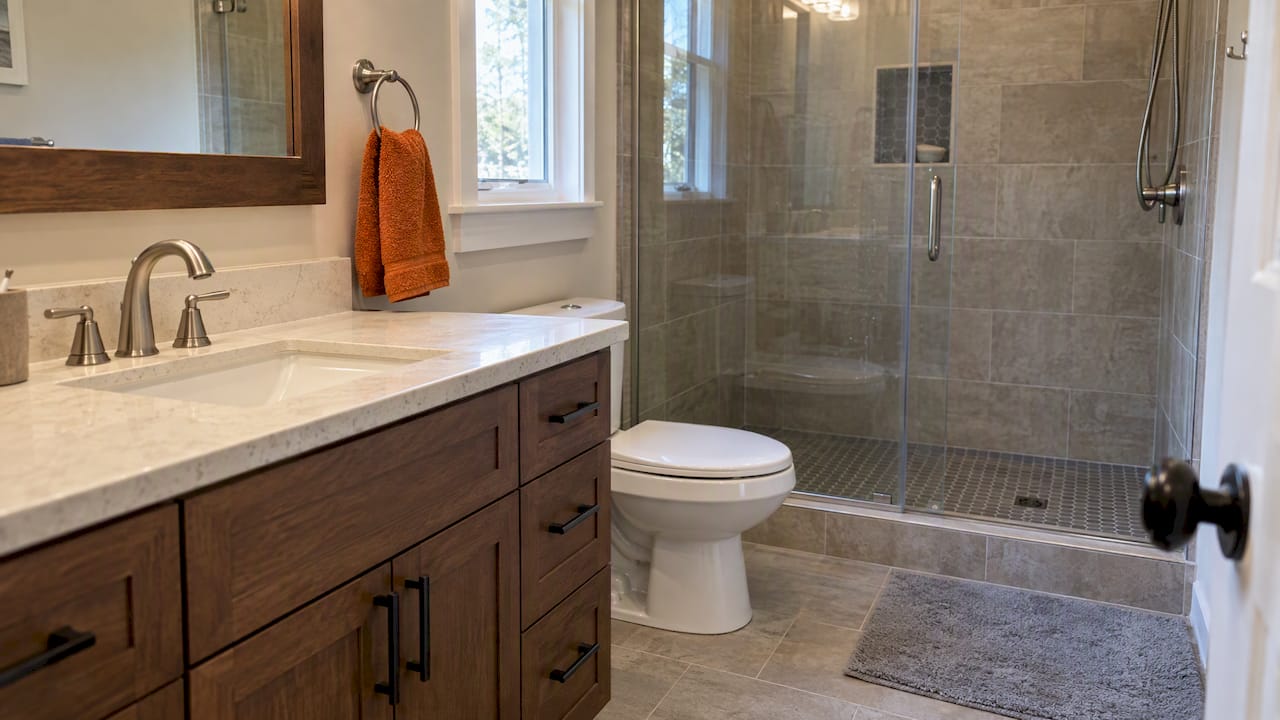
A bathroom remodel’s resale recovery varies by project and market, while upscale projects can cost far more, according to NAR’s 2025 Remodeling Impact Report and Zillow’s ROI analysis. That gap exists because buyers have a ceiling on what they’ll pay for extra bathroom luxury, no matter how much you spend. Local market conditions and the specific scope you choose can shift those numbers considerably.
TL;DR:
- Houzz put median spending on a major primary bathroom remodel at $17,000 in 2024, while small bathroom projects reached $45,000 at the 90th percentile.
- Midrange updates with standard tile, fixtures, and a new vanity usually align with buyer expectations; custom luxury finishes may exceed neighborhood price ceilings.
- Adding a bathroom may boost value and marketability in a home with one bathroom and room for an addition, despite lower percentage recovery.
- Targeted fixture, lighting, paint, or vanity updates can preserve resale value without a full luxury renovation, especially when the existing layout works.
- If you plan to sell soon, match neutral finishes and spending to local comparable homes; owners staying longer should weigh daily comfort alongside resale.
Table of Contents
- National averages: costs, percent recovered, and median spending
- How remodel type changes your expected ROI
- Targeted upgrades that preserve the most resale value
- Setting a budget that protects your resale recovery
- Resale ROI versus the value of actually living in the space
- When a remodel is worth it for your situation
- How we keep your bathroom remodel predictable and low-disruption
- FAQ
- Sources
National averages: costs, percent recovered, and median spending
The headline figures vary depending on who is measuring and how. The 2025 Remodeling Impact Report from the National Association of REALTORS® and NARI puts bathroom renovation cost recovery at about 50%, based on REALTOR®-estimated resale value compared against reported project costs. That figure reflects a broad mix of bathroom projects, not just one standardized scope.
Cost vs. Value data, reported through JLC’s 2025 analysis and summarized by Zillow, tells a more detailed story using a standardized midrange project definition. By that measure, a midrange bathroom remodel’s cost recovery can vary by region, while upscale remodels typically recover a smaller percentage even though the dollar amount returned is often higher.
On the spending side, Houzz’s 2025 renovation trends report found that median spend for a major primary bathroom remodel of 100 square feet or smaller climbed to $17,000 in 2024, with 90th-percentile spending on small bathroom projects reaching $45,000.
A few things worth knowing before you budget:
- Recovery percentages are regional: Pacific and New England markets tend to track closer to the higher end of national ranges, while other regions trail.
- Guest bathroom projects generally cost less than primary bathroom remodels, which affects both your spend and your expected recovery.
- The gap between NAR’s 50% figure and the higher Cost vs. Value numbers comes down to methodology, not a contradiction.
A midrange bathroom remodel’s cost recovery can vary by region, according to Zillow’s ROI breakdown, so local conditions matter for resale-focused homeowners.
How remodel type changes your expected ROI
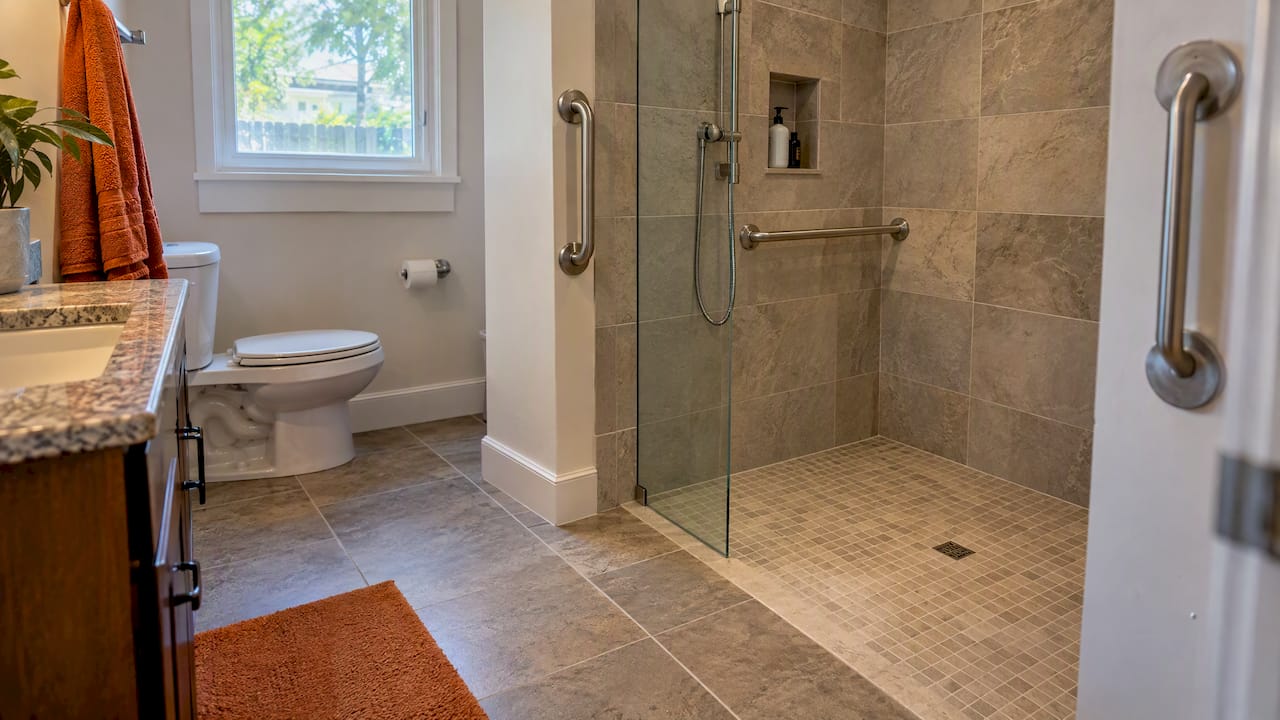
Not all bathroom remodels play by the same rules. A midrange remodel typically means updated fixtures, standard tile, a new vanity, and a refreshed layout using mid-tier materials. An upscale remodel adds custom cabinetry, natural stone, high-end fixtures, and often a layout change. ADA-accessible or universal design remodels prioritize grab bars, curbless showers, and wider doorways. The 2025 Cost vs. Value Report tracks these as distinct categories because buyers value them differently.
Midrange projects usually win on percentage recovery because they match what most buyers in a given price range expect. Upscale projects run into a ceiling: once a bathroom exceeds what comparable homes in the neighborhood offer, the extra spend stops translating into extra resale value. That’s the “over-improving” problem practitioners point to when a remodel’s cost outpaces what the local market will support.
There’s one case where lower percentage ROI still makes sense: if your home has only one bathroom and the layout allows for an addition, adding a second bathroom can boost your home’s absolute value and marketability, even if the percentage return trails a simple cosmetic update.
- Midrange remodels may offer a different cost recovery than upscale projects, depending on the market and scope.
- Upscale remodels often return less, percentage-wise, despite higher costs.
- ADA-focused remodels serve function and accessibility first, with resale value as a secondary benefit.
Pro Tip: Before committing to an upscale scope, ask a local real estate agent what finish level comparable homes in your neighborhood already have.
Targeted upgrades that preserve the most resale value
You don’t need a full gut renovation to protect your investment. Smaller, targeted updates often outperform sweeping luxury overhauls on a cost-per-dollar-recovered basis, a pattern echoed in manufacturer trend research from Daltile and in JLC’s regional Cost vs. Value breakdowns.
- Swap outdated fixtures (faucets, showerheads, hardware) for updated finishes that read as current without a full remodel.
- Replace flooring or refresh the shower surround with durable, neutral tile that photographs well for listings.
- Update the vanity countertop and sink rather than replacing the entire cabinet.
- Improve lighting, since better fixtures and task lighting make a bathroom feel larger and newer.
- Repaint in neutral tones, which appeals to the broadest range of buyers.
Neutral, functional choices tend to perform well because they don’t ask future buyers to share your exact taste. A bold tile pattern or an unusual vanity color can turn off as many buyers as it attracts. Universal design features like grab bars and curbless showers make sense if you plan to age in place or expect to sell to a multigenerational household; for a typical resale in a starter or move-up home, they’re often more than the market asks for.
Our guide on what adds the most value in a bathroom remodel walks through these priorities in more depth.
Setting a budget that protects your resale recovery
Before you pick finishes, set a target spend tied to your home’s value, not to what you’d ideally like to build. A common approach is to keep bathroom remodel costs proportionate to the home’s overall price point, then check that figure against what a local REALTOR® says buyers in your area actually look for, a step NAR’s research consistently points to as a way to avoid overspending relative to neighborhood norms.
Once you have a number, protect it:
- Fix function first (plumbing, ventilation, water damage) before spending on finishes.
- Choose neutral, durable finishes over trend-driven or highly personalized ones.
- Limit custom high-end features unless your home’s price tier supports them.
- Sequence the work so structural and mechanical fixes happen before cosmetic upgrades, which limits cost creep from surprises found mid-project.
Cost control also matters while you’re living through the renovation, not just at resale. Up-front pricing, a clear contingency plan, and minimizing daily disruption all affect how much stress and unexpected cost you absorb during the project itself. Practices like assigning one dedicated point of contact for the job and controlling dust throughout construction are homeowner protections, not just conveniences, since surprise costs and prolonged disruption are often what push a remodel over budget.
Pro Tip: Ask any contractor for an itemized, up-front price before signing, so later change orders don’t quietly erode your resale margin.
For more on sequencing and budget discipline, see our bathroom remodeling tips for homeowners.
Resale ROI versus the value of actually living in the space
Cost vs. Value and similar reports answer one specific question: how much of your project cost comes back if you sell. They use standardized markups and cost categories to make year-over-year comparisons possible, which is useful but narrow. The 2025 Cost vs. Value Report measures the resale price bump only, and it can’t capture years of daily use.
That gap shows up clearly in NAR’s research. The 2025 Remodeling Impact Report includes a Joy Score alongside cost recovery estimates, and homeowners often report high satisfaction with a bathroom remodel even when its resale cost recovery is lower than homeowners might hope. Jessica Lautz of NAR has pointed to this recurring pattern: personal design choices that bring daily satisfaction don’t always match what the broader buyer pool will pay extra for.
A bathroom you’ll use for years delivers value a resale calculator was never built to measure.
This is part of why professional project management (combining design and construction under one roof, assigning a dedicated lead carpenter, and controlling dust throughout the job) matters beyond the numbers. It reduces the risk and friction that turn a good investment into a stressful one.
When a remodel is worth it for your situation
If you’re selling soon, stick to midrange, neutral updates and keep your budget close to what comparable homes in your area already offer. If you plan to sell later or aren’t sure, weigh your daily enjoyment of the space alongside resale math and lean slightly toward what you’ll actually use. If you’re staying long-term or don’t plan to sell, prioritize durability and comfort, but still check that your finishes don’t wildly outpace what’s typical for your neighborhood.
— MediaBeast
How we keep your bathroom remodel predictable and low-disruption
We combine design and construction under one roof, so your project moves from concept to completion without handoffs between separate firms. Every job comes with up-front pricing, a dedicated Lead Carpenter who oversees your project day to day, and our Work Clean System, which keeps dust and disruption contained while work is underway.
- Up-front pricing means you know your cost range before work begins.
- A dedicated Lead Carpenter gives you one consistent point of contact for the life of the project.
- Our Work Clean System reduces the dust and mess that typically spread through a home during renovation.
If you’re ready to see what a project in your home might cost, check our bathroom remodel cost ranges or reach out about bathroom remodeling to get a project-specific estimate.
FAQ
What is the 30% rule for renovations?
The goal is to prevent over-improving beyond what your neighborhood’s resale prices can support, rather than a figure from a specific industry report.
Is $10,000 enough to remodel a bathroom?
A modest budget can cover targeted updates like new fixtures, flooring, a vanity refresh, and paint in a small guest bathroom, but it falls short of a full remodel in most markets. Houzz’s 2025 data shows median spend for a small primary bathroom remodel already reaching $17,000, so such a budget fits a cosmetic refresh rather than a full renovation.
How much profit should a contractor make from a bathroom remodel?
Cost vs. Value benchmarking uses a standardized markup baseline, commonly cited around 10%, as a reference point for typical contractor project costs, according to JLC’s 2025 report. Contractors offering more inclusive services, such as combined design-build work or dedicated project oversight, often price above that baseline to reflect the added coordination and support.
Is $5,000 enough to remodel a bathroom?
Five thousand dollars generally covers small, targeted upgrades, like new fixtures, a fresh coat of paint, and updated hardware, rather than a full bathroom remodel. It can meaningfully refresh the look of a space, but it won’t stretch to new flooring, a vanity replacement, and shower updates together in most markets.
Sources
- ROI for a Bathroom Remodel | Zillow
- 5 Home Renovation Spending Trends to Know About in 2025
- 2025 Cost vs. Value Report: Key Trends – Journal of Light Construction