
For most homes, PEX is the better value: it costs less, installs faster and does not corrode. Copper still wins on lifespan, heat tolerance, outdoor exposure and a long track record some buyers like. The right pick depends on your house, your water and how long you plan to stay. This guide walks through each factor so you can decide, or at least ask your plumber better questions.
TL;DR
- Cost: PEX is usually the cheaper whole-house repipe. One plumbing guide puts PEX at $4,000 to $8,500 installed and copper at $7,000 to $15,000 for the same home.
- Lifespan: Copper typically lasts longer, 50 to 70 years when maintained, against roughly 25 to 50 for PEX.
- Water chemistry: Copper can develop pinhole leaks in acidic or high-chloramine water. PEX is immune to that kind of corrosion.
- Remodeling: If walls are open anyway, PEX’s flexibility saves time. If you only replace part of a system, mixing metals needs care.
Table of Contents
- What each material actually is
- Cost: where the savings really come from
- Lifespan and durability
- Water quality and corrosion
- Freezing, heat and sunlight
- Pests, insurance and resale
- Water pressure and flow
- The partial repipe trap
- Side-by-side summary
- Our perspective: what we see when a remodel opens the walls
- Which one fits your situation
- Planning plumbing into a bathroom or kitchen remodel
- Ready to remodel a bathroom or kitchen?
- Questions homeowners ask
- Sources
What each material actually is
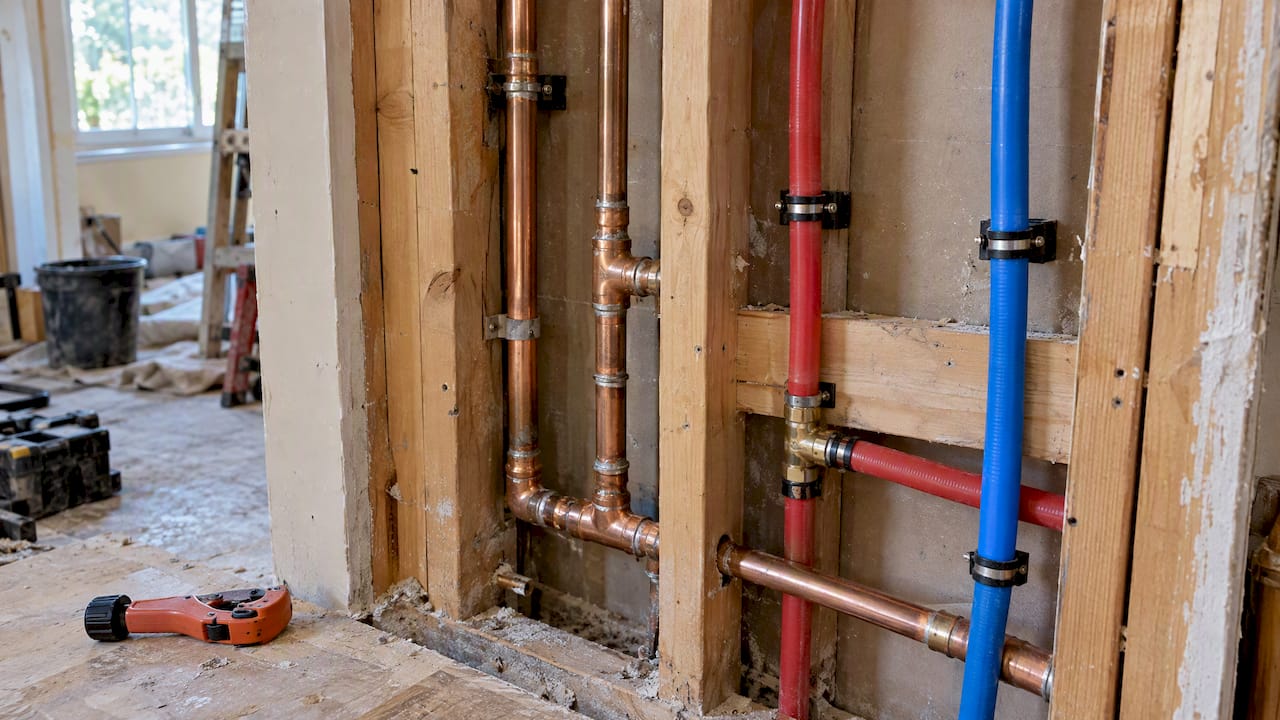
Copper is rigid metal tubing, joined with soldered (sweated) fittings or, increasingly, press fittings. It has been the standard for residential supply lines for decades.
PEX is cross-linked polyethylene: flexible plastic tubing in red (hot), blue (cold) and white (either). It is joined with crimp rings, clamp rings or expansion fittings. Because it bends, a plumber can run long lengths through framing without a fitting at every turn. The plastic pipe industry’s own design guide says installation time and labor drop sharply because of that flexibility. Keep in mind who wrote it, but the point matches what contractors see on job sites.
Both materials are certified lead-free for drinking water under NSF/ANSI 61 and 372, according to this comparison, so neither is a health shortcut or a health risk when installed correctly.
Cost: where the savings really come from
The pipe itself is only part of the bill. Most of the difference comes from labor. Copper needs cutting, fitting, soldering and more joints. PEX goes in faster, often with fewer joints and less wall opening.
For a whole-house repipe, published ranges vary by region and wall access, but they point the same way:
| PEX | Copper | |
|---|---|---|
| Typical whole-house repipe (one national guide) | $4,000 to $8,500 | $7,000 to $15,000 |
| Overall pattern | Often 25% to 50% less | Higher materials and labor |
The first row comes from AlertPlumber’s repipe guide, updated in August 2026. The 25% to 50% savings figure appears in a July 2026 cost comparison that also notes copper’s longer life may offset some of that savings.
Treat any range as a starting point. Square footage, number of bathrooms, whether the house sits on a slab, drywall repair and permit fees can swing a quote more than the material does. Get at least two written quotes that list the material, the fittings and who patches the walls.
Do the math over time
Say PEX saves you several thousand dollars today and copper lasts 20 years longer. That is not an automatic win for copper. You also have to ask whether you will own the house that long, and whether the money saved now could cover a future replacement. If you plan to sell in five to ten years, up-front cost usually matters more than a 70-year lifespan you will not use.
Lifespan and durability
Copper’s reputation rests on longevity. Angi reports that well-maintained copper can last 50 to 70 years, while PEX generally lasts 25 to 50. Bob Vila’s comparison agrees that copper lasts several decades longer.
PEX is newer, so its real-world record is shorter, and manufacturers’ warranty terms vary. What shortens PEX life in practice:
- Long exposure to sunlight. PEX is not meant to sit outdoors or in unprotected, sunlit spots.
- Poor fittings or crimps made by an inexperienced installer.
- Contact with certain chemicals or petroleum products in the soil or around the pipe.
What shortens copper life: aggressive water, which brings us to the next point.
Water quality and corrosion
This is the factor homeowners overlook most. Copper is susceptible to corrosion and pinhole leaks where water is acidic (pH below 7) or high in chloramine, according to this comparison. PEX is immune to that type of corrosion. The same source notes that new PEX can give water a faint odor or taste in the first months after installation.
That odor point has research behind it. A 2014 study of green-building PEX systems looked at contaminant release and odor from PEX plumbing, which is why flushing a new system thoroughly is standard advice.
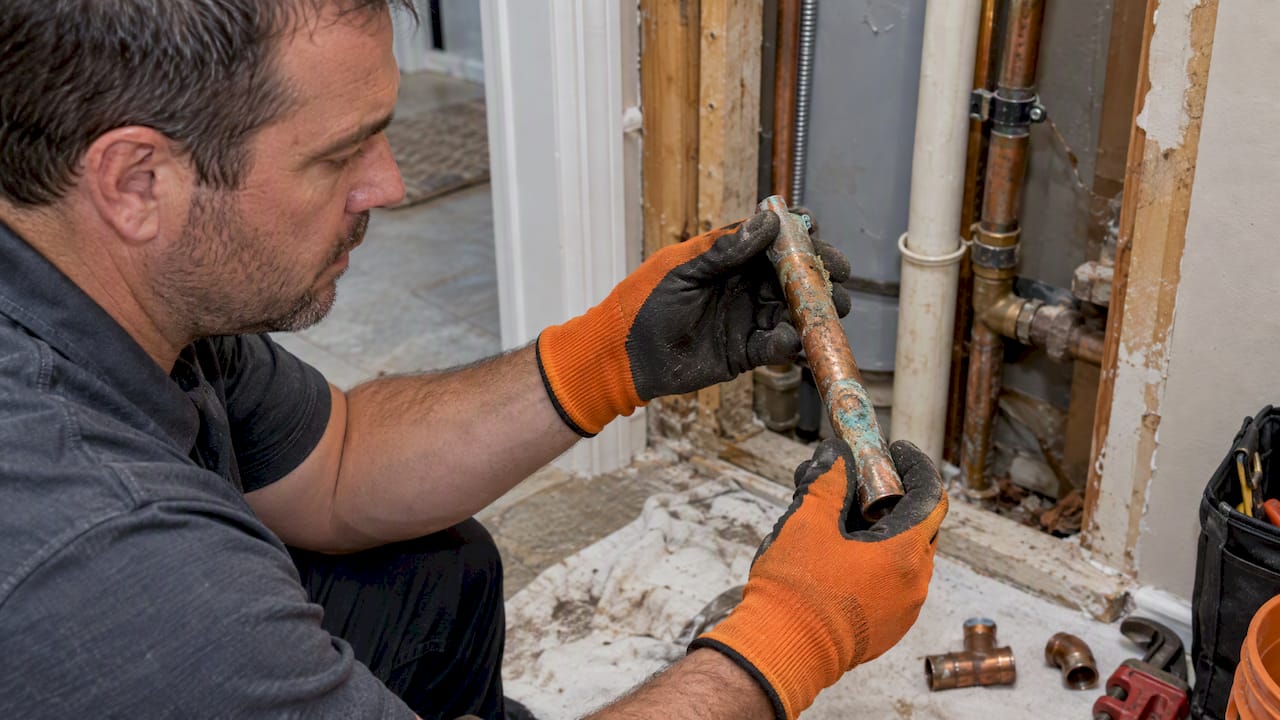
If your home has had repeated pinhole leaks in copper, blue-green staining or pitted pipe, ask your water utility for your current water quality report and have a plumber look at the cut-out pipe before you commit to another round of copper.
Freezing, heat and sunlight
Tampa homeowners rarely worry about frozen pipes, but if you own a second home up north or are reading from a cold climate, this matters. PEX can expand slightly, so it is less likely to split in a freeze than rigid copper. Industry coverage describes copper as favored for rigidity, UV resistance in exterior applications and high-heat runs.
In practice:
- Exposed outdoor runs, sun-baked utility areas, near water heaters: copper is the safer choice.
- Inside walls and floors, away from sun: PEX performs well.
Pests, insurance and resale
Rodents
Rodents can chew through PEX. Bob Vila notes that copper remains the preference in areas with heavy rodent activity. If you have had rats or squirrels in your attic or crawl space, factor that in, and seal entry points regardless of the pipe you choose.
Insurance
A common worry is that insurers dislike PEX. That is largely a myth. What insurers care about is the overall condition and age of your plumbing, so replacing old galvanized steel or failing metal lines with new pipe, in either material, can work in your favor. Policies differ by carrier, so ask your agent directly and get the answer in writing before you decide. The Insurance Information Institute explains that premiums depend partly on how likely a home is to be damaged, which is the angle that matters here.
Resale
Some buyers still see copper as the premium choice. Others see new PEX as a sign the house has fresh plumbing, which many value more than the material. In most markets, a documented, permitted repipe adds more confidence than the pipe type does.
Water pressure and flow
PEX tubing has a smaller inside diameter than copper of the same nominal size, so people assume pressure drops. An industry flow comparison found that in a typical single-family system both materials deliver sufficient flow to fixtures when the same nominal size tubing is used. Again, the source is an industry group, so ask your plumber to size the lines to your fixtures. A home with a large soaking tub, multiple showerheads or a steam shower deserves proper sizing no matter the material.
The partial repipe trap
If you are replacing only a section, how the old and new pieces meet matters. A 2019 study found that PEX connected to upstream copper and brass components showed higher surface metal loadings and oxidation, which may contribute to earlier degradation. That does not mean you can never mix materials. It means that for a partial job, you should ask your plumber how they will transition between the two and whether replacing more of the upstream run makes sense.
Side-by-side summary
| Factor | PEX | Copper |
|---|---|---|
| Up-front cost | Lower | Higher |
| Installation | Faster, flexible, fewer joints | Slower, soldering or press fittings |
| Typical lifespan | About 25 to 50 years | About 50 to 70 years |
| Corrosion in acidic or chloramine water | Immune | Can develop pinholes |
| Freeze tolerance | Better | More prone to splitting |
| Outdoor and UV exposure | Poor | Good |
| Rodents | Can be chewed | Resistant |
| Best fit | Whole-house repipes, remodels, tight walls | Exposed runs, high heat, long-term owners |
Our perspective: what we see when a remodel opens the walls
We design and build bathrooms and kitchens in the Tampa area, so we are not a repipe-only shop. But plumbing decisions land on our projects constantly, because a remodel is the cheapest moment you will ever have to deal with what is behind the wall.
Here is how we think about it:
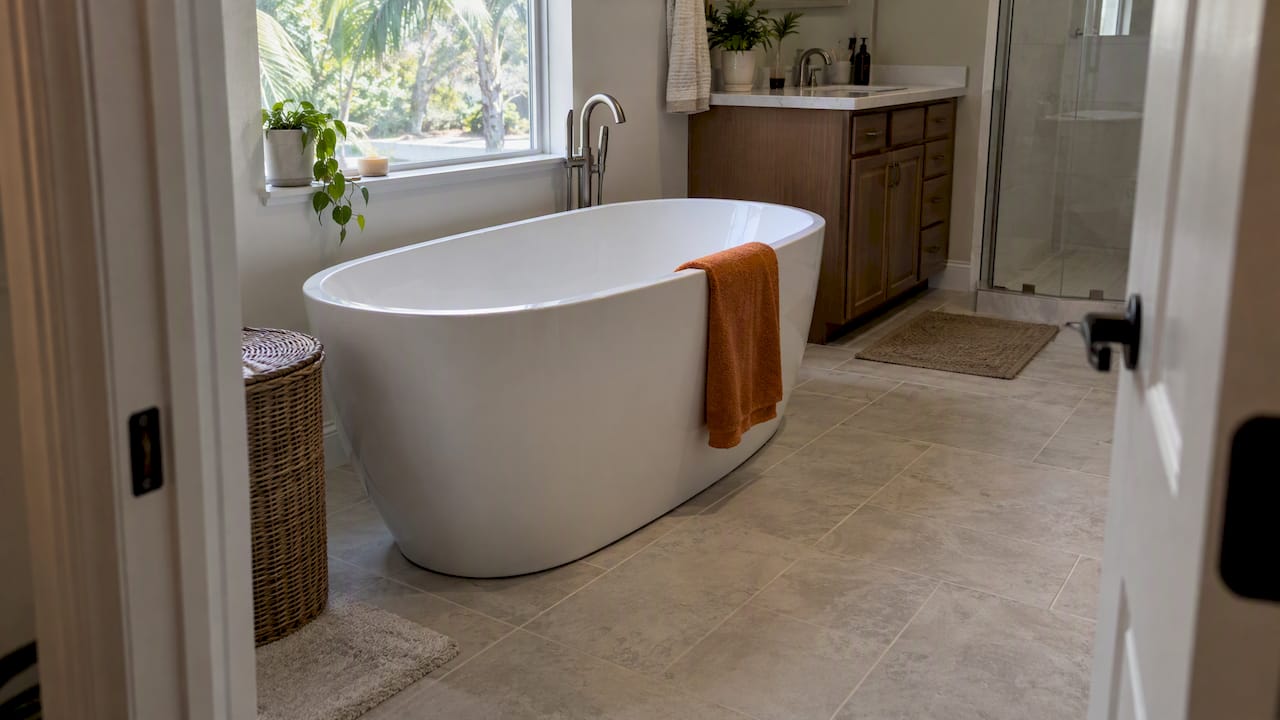
- Decide before demolition, not during. Changing a shower valve location, adding a fixture or moving a sink all touch supply lines. A 5-fixture bath with a freestanding tub has very different plumbing needs than a small 3-fixture bath. We would rather settle pipe type, sizing and routing in the design phase, where it appears as a line item in up-front pricing, than discover it mid-project as a change order.
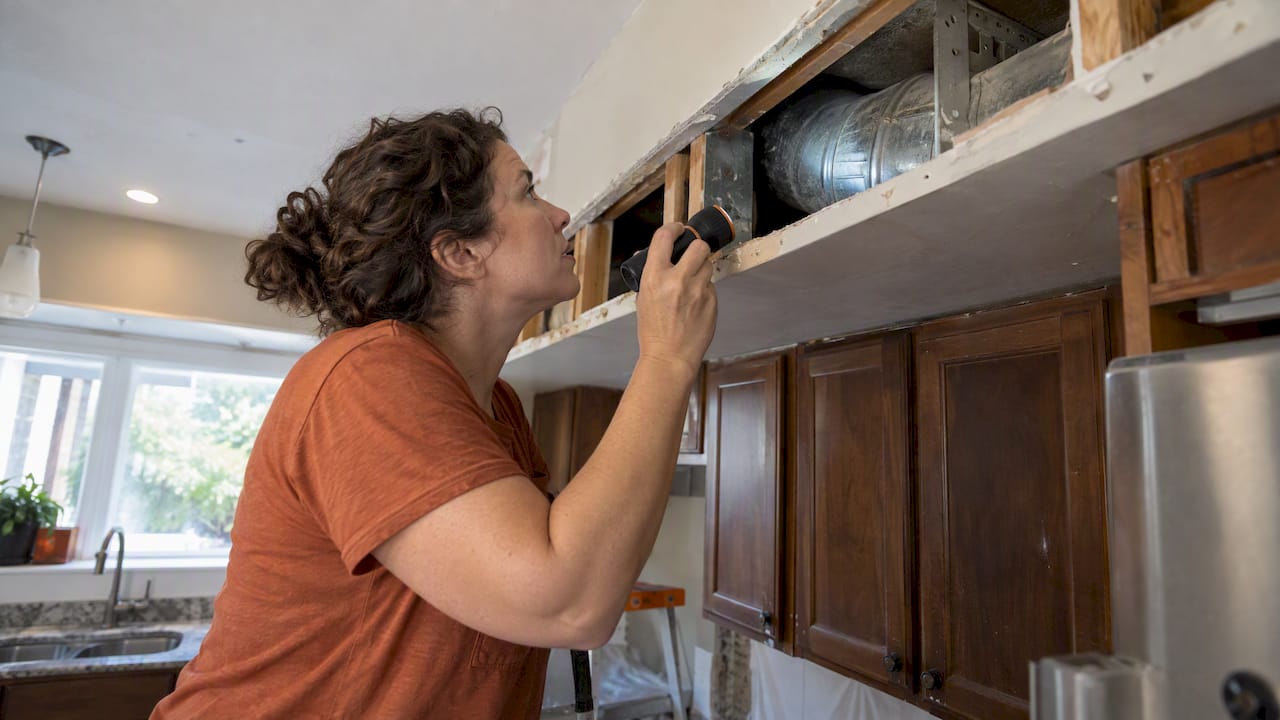
- Look at what is there. Corroded fittings, mixed metals and leaks near the area you are remodeling are cheaper to address while the room is open. Ask your plumber to inspect the lines that serve the room.
- Match the material to the location. Concealed runs inside walls are PEX territory for most homes. Exposed or hot, sunlit runs lean copper.
- Do not let the pipe debate outweigh the permit. Plumbing work should be properly permitted and inspected. Our own guide covers whether you need a permit for a bathroom remodel.
Our Lead Carpenter stays on the project from start to finish, which helps because plumbing, framing and tile all have to line up. That coordination is where schedules slip on remodels, and it is why we handle design and construction together.
— MediaBeast
Which one fits your situation
Choose PEX if:
- You are repiping a whole house, especially an older home with galvanized steel or failing copper.
- Your water is acidic or high in chloramine.
- Walls are finished and you want the least demolition.
- You may sell within a decade and want the best return on plumbing spend.
Choose copper if:
- Pipes will be exposed, outdoors or near high heat.
- You have a rodent problem you cannot fully eliminate.
- You plan to stay for decades and value the longest track record.
- Your HOA, local requirement or buyer expectations call for it.
Consider a hybrid if: you want copper where it is exposed or near the water heater and PEX inside walls. Done correctly, with attention to the transitions, this is common.
Planning plumbing into a bathroom or kitchen remodel
If you are already planning a remodel, plumbing costs belong in the same budget as tile, cabinets and fixtures. Two pages on our site help you plan: how kitchen layouts affect hidden plumbing costs and how to save money on bathroom remodeling. If you are choosing fixtures, water-efficient fixtures are also worth a look, since they affect supply sizing and your water bill.
For a sense of budget, we publish up-front ranges on our site. A Small 3-Fixture Bath with Shower runs $22,100 to $30,000, a 4-Fixture Bath with Shower $35,000 to $46,000, and a 5-Fixture Bath with Freestanding Tub $52,400 to $65,700. Kitchens range from $41,200 to $52,050 for a Small U-Shaped Kitchen with Island up to $74,100 to $93,600 for a Large Kitchen with Island. Final cost depends on scope and materials, and you can see the details on our bathroom remodel cost page and kitchen remodel cost page.

Ready to remodel a bathroom or kitchen?
If plumbing is part of a bigger project, we can handle the design and construction together, with up-front pricing, a dedicated Lead Carpenter and our Work Clean System to keep dust down in your home. Start with our bathroom remodeling or kitchen remodeling pages, or go to our home page to get in touch.
Questions homeowners ask
Is PEX better than copper?
Not across the board. PEX is cheaper, faster to install and immune to the corrosion that causes pinhole leaks in aggressive water. Copper lasts longer, handles heat and sunlight, and resists rodents. Pick based on your house, your water and your plans for the property.
Do insurance companies dislike PEX?
Generally not. Insurers weigh the age and condition of your whole plumbing system, so new pipe in either material can help compared with old, deteriorating metal lines. Rules differ by company, so confirm with your agent before you start work.
What are the disadvantages of PEX?
PEX degrades in sunlight, can be chewed by rodents, and may give water a faint odor or taste in the first months. It also has a shorter track record than copper, and typical lifespan estimates are lower. Good installation and protection from sun and pests address most of these.
Why is copper piping used less than before?
Cost and labor are the main reasons. Copper takes longer to install and costs more in materials. Copper can also corrode in acidic or high-chloramine water, which pushed many plumbers toward PEX for whole-house repipes.
Sources
- PEX vs Copper: Cost, Lifespan & Which Wins
- Whole-House Repipe Cost: PEX vs. Copper
- Pex vs. Copper: Which Is Better for Your Home’s Plumbing? (Angi)
- PEX vs. Copper: Which Pipes Are Best for Your Plumbing Project? (Bob Vila)
- PEX Plumbing Design and Installation Guide, Chapter 2
- Fixture Flow Rate Comparison: PEX and Copper
- Release of drinking water contaminants and odor impacts caused by green building PEX plumbing systems
- Corrosion of upstream metal plumbing components impact downstream PEX pipe