

Your homeowners policy usually protects your house from fire, wind and similar covered events while a remodel is underway, but it does not pay for the remodel itself, and it often limits theft of materials and damage tied to the work. The fix is simple and costs nothing: call your insurer before demolition, ask what changes during construction, and review your coverage limits once the new kitchen or bathroom is finished. A remodel that is planned, documented and run by one accountable team makes all three steps easier.
TL;DR
- A standard policy covers damage from covered events like fire or windstorm during a remodel, but not the cost of the remodel itself or poor workmanship.
- Tell your insurer (or agent) before work begins. Ask about theft of materials, vacancy rules if you move out, and any renovation endorsement.
- Get proof of your contractor’s liability and workers’ compensation insurance before the first day on site.
- After the project, send receipts, permits and photos so your dwelling limit reflects the new rebuild cost. Falling below 80% of replacement value can shrink claim payments.
- Keep a one-page insurance checklist with your remodeling contract so nothing gets missed.
Table of Contents
- What homeowners insurance usually covers during a remodel
- Call your insurer before the work starts
- Theft, stored materials and an empty house
- Contractor insurance: who pays when something goes wrong
- After the remodel: update your coverage
- What a remodel typically costs, and why it matters for coverage
- Our perspective on insurance and remodeling
- Planning a Tampa bath or kitchen remodel
- FAQ
- Sources
What homeowners insurance usually covers during a remodel
Think of your policy as protection for the house you live in, not for the construction project. Liberty Mutual describes the typical picture: damage from covered events such as fire or windstorm, up to your policy limits, renovation materials stored on the property (often with lower limits), your personal belongings inside the home, liability if someone is hurt on your property, and additional living expenses if the house becomes temporarily unlivable.
That is useful, but it has edges. The same source lists what is typically not covered: theft when a home is considered under construction, reduced coverage if the home sits empty for more than 60 days, injuries to contractors or subcontractors, and the cost of the remodel itself, including mistakes, poor workmanship and construction defects.
Progressive puts it the same way: the policy does not pay for the renovation project itself, but it may pay to repair or replace renovation work damaged by a covered peril, up to your dwelling coverage limit.
A worked example: when the damage is caused by the work
Progressive gives two examples of contractor-caused damage. If a plumber’s poor installation causes a leak, insurance may cover the water damage to walls, floors and furniture, up to policy limits, but not the cost of reinstalling the pipes. If an electrician’s wrong wiring starts a fire, insurance may cover the fire damage but not the cost of rewiring.
So the policy responds to the damage, not to the faulty work that caused it. That is why the quality of the construction team, and the paperwork around it, matters as much as the policy.
Call your insurer before the work starts
The one habit every insurer agrees on: tell them early. Progressive advises giving your insurer a heads-up about major improvements, whether or not your rate changes, so your coverage can account for the new work. You may also qualify for discounts on certain upgrades. Allstate recommends asking before construction begins whether your existing policy should be updated.
A kitchen or bathroom remodel counts. State Farm lists kitchen and bathroom remodels among the projects that can change your home’s estimated rebuild cost, and recommends notifying your agent of structural updates.
If you are planning something larger, such as major home remodeling projects that touch roofing, windows or structure, the conversation with your insurer matters even more, because the scope drives which coverage changes you need.
Questions to ask your agent
Bring the scope of work to the call and ask:
- Does my policy change while the house is under construction, and does it still cover theft of materials?
- Do you offer a renovation endorsement for the existing structure and materials? AAA describes a dwelling-under-renovation endorsement that extends coverage while work is underway, and some policies also cover materials stored on site or in transit.
- If we move out, how long can the house be empty before coverage is reduced?
- Will new square footage, higher-end materials or a structural change affect my dwelling limit or premium?
- Which documents do you want after the work is finished?
Write down the answer, the date and the name of the person who gave it. That note belongs in the same folder as your remodeling contract.
Theft, stored materials and an empty house
Three situations cause most of the surprises during a remodel.
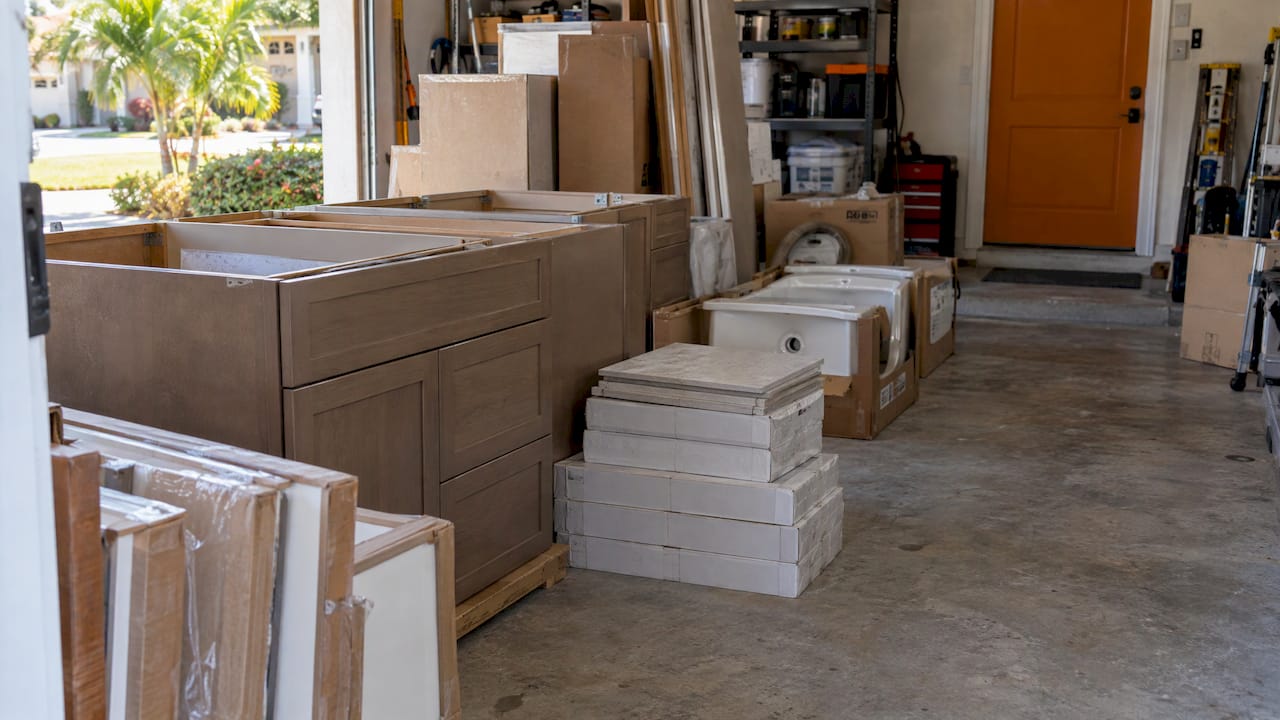
Theft of materials. Cabinets, tile and fixtures delivered before installation are attractive and often sit in a garage or driveway. One published Safeco homeowners policy form excludes theft in or from a dwelling under construction, including materials and supplies, until the dwelling is occupied. It defines under construction to include being remodeled or renovated. The exclusion does not apply if you occupy the dwelling as your primary residence when the loss happens. Wording differs by company and state, so ask your agent how your own policy reads. AAA’s April 2026 guidance likewise notes that theft or damage to building materials not yet installed is, in some cases, not covered.
Vacancy. If you plan to move out for a gut renovation, check the vacancy clause. The same Safeco form excludes vandalism, malicious mischief and glass breakage once a dwelling has been vacant for more than 60 consecutive days, and it excludes freezing of plumbing in a dwelling that is vacant, unoccupied or under construction unless reasonable care was used to maintain heat or drain the water. AAA Club Alliance advises checking that limit if the home will be unoccupied, since some policies restrict coverage after 30 to 60 days.
Living in the house during the work. Staying put avoids the vacancy issue and the theft exclusion described above, and it keeps someone on site to notice a leak early. It is also easier when the job is organized around the family. Our guides on living at home during a kitchen remodel and on setting up a temporary kitchen cover how families get through an 8 to 16 week project.
Contractor insurance: who pays when something goes wrong
Your homeowners policy and your contractor’s insurance do different jobs. Yours protects the house and your belongings. The contractor’s liability coverage responds to damage the crew causes, and workers’ compensation covers the crew’s injuries. Mercury Insurance suggests understanding that division of responsibility before work starts, and finding out whether subcontractors will be used.
Allstate says homeowners can reduce their exposure to a lawsuit by confirming the contractor carries liability insurance and workers’ compensation, and by getting proof from the contractor and any subcontractors such as electricians and plumbers. Arrowhead General Insurance adds that you should verify state licensing and bonding, and consider indemnity and hold-harmless clauses in the contract.
A short contract checklist
| Item | What to confirm | Why it matters |
|---|---|---|
| Licensing | The contractor’s license is active with your state’s licensing board | Work done by unlicensed people can complicate claims and disputes |
| Liability insurance | A current certificate listing coverage and policy dates | Responds to damage the crew causes to your property |
| Workers’ compensation | Proof for employees and for subcontractors | An uncovered worker injury can come back to the homeowner |
| Permits | Who pulls them and when | AAA lists unpermitted or non-code-compliant work among things standard policies typically do not cover |
| Scope and price | An itemized, written scope | Gives your insurer a clear record of what changed |
Permits deserve their own attention in Florida. Our page on whether you need a permit for a bathroom remodel explains how it works.
If a dispute over poor work cannot be settled with the contractor, Progressive notes you may file a complaint with the licensing agency or bring a civil lawsuit. Good paperwork at the start is far cheaper than either.
After the remodel: update your coverage
The finish line is when many homeowners stop thinking about insurance, and it is where the biggest gap can open. A new kitchen with custom cabinets, stone countertops and upgraded appliances costs more to rebuild than the old one.
Allstate warns that if your limits do not cover the increase in your home’s value, you risk being underinsured when rebuilding. State Farm says receipts, permits, contractor documents or photos help your agent confirm what changed, including added square footage or higher-value materials.
The 80% rule, with an example
Many policies reimburse in full only when dwelling coverage is at least 80% of the home’s replacement value. According to Co-op Insurance, if coverage falls below that level, the insurer may pay only a proportionate share of a claim. The same source says undisclosed renovations can lead to denied claims.
Here is an illustration with round numbers. Say your home’s replacement value was $400,000 before the project and your limit was $400,000. After a major remodel, an updated estimate puts replacement value at $460,000. A limit of $400,000 is now about 87% of that value: above the threshold, but with a gap that a large claim would expose. Raise the limit and the gap closes. The numbers are hypothetical, and your policy terms decide how a claim is calculated.
Your post-project checklist
AAA and Mercury both suggest a similar sequence after completion:
- Send your agent the receipts, contract, permits and before-and-after photos.
- Ask for an updated replacement cost estimate and adjust the dwelling limit.
- Add new appliances and other valuables to your personal property coverage, with photos and receipts.
- Ask about discounts for improvements, such as security or safety upgrades.
- Review liability limits if you added features such as a pool.
American Family Insurance also suggests asking whether endorsements such as water backup or sump pump failure coverage make sense for your home. That is relevant to a new bathroom or kitchen, where plumbing is the most common source of water damage.
What a remodel typically costs, and why it matters for coverage
Your insurer’s estimate follows what you built, so it helps to know what the work costs. Our published ranges are one-off project prices for Tampa-area homes. A small 3-fixture bath with shower runs $22,100 to $30,000, and a 4-fixture bath with a steam shower runs $54,625 to $69,000. On the kitchen side, a small U-shaped kitchen is $48,500 to $60,200, and a large kitchen with an island is $74,100 to $93,600.
Those are project costs, not rebuild estimates, and your insurer calculates rebuild value its own way. But a detailed, itemized scope is exactly the kind of document that helps an agent see what changed. If financing is part of your plan, see our overview of financing options for remodeling.
Our perspective on insurance and remodeling
Most of the stress people feel in a remodel comes from surprises, and insurance surprises are among the worst: a delivery that disappears, a leak nobody planned for, a claim that does not match what the house became.
We build our process to remove surprises. We handle design and construction together, so the scope you approve is the scope that gets built. Our pricing is up-front, with detailed item lists, which gives you a clear written record of what is going into your home. Each job has a dedicated Lead Carpenter, so one person knows the project day to day. Our Work Clean System keeps dust and disruption down, which matters when your family is living in the house.
We encourage every homeowner to call their insurance agent before demolition and again after the final walkthrough. A clear scope, itemized pricing and finished-work photos make both conversations short.
MediaBeast
Planning a Tampa bath or kitchen remodel
If you are ready to remodel, we design and build kitchens and bathrooms in the Tampa area, with up-front pricing, a dedicated Lead Carpenter on every project and our Work Clean System to limit dust. Because we handle design and construction, you get one team and one detailed scope to share with your insurance agent.
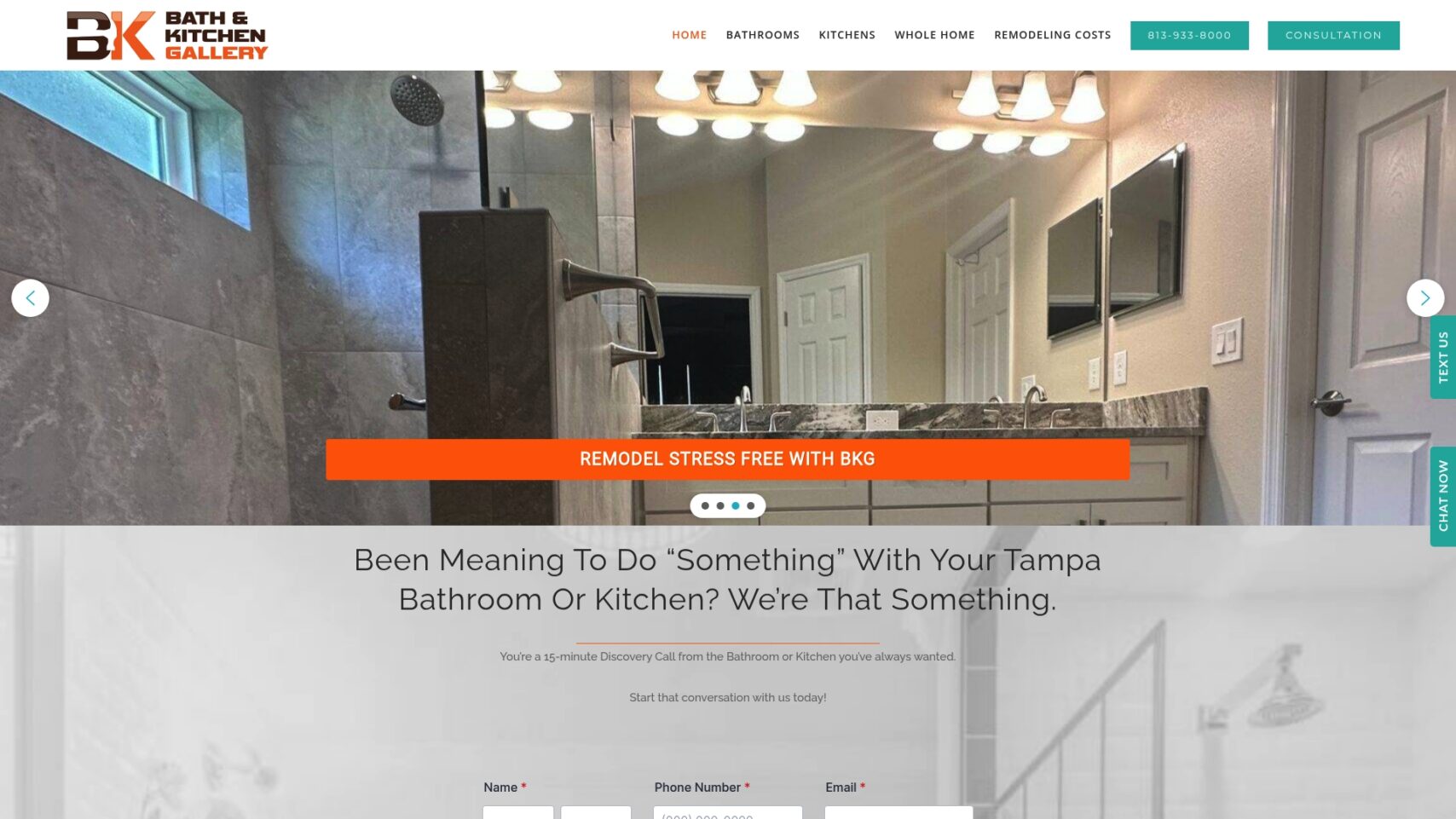
Visit our local showroom to choose materials, or start at tampakitchenandbath.com to plan your project.
FAQ
Does homeowners insurance cover remodeling?
It covers damage to your home from covered events, such as fire or windstorm, while the work is underway, up to your limits. It does not pay for the remodel itself, mistakes or poor workmanship, according to Liberty Mutual. Theft of materials and long vacancies are the areas most likely to be limited.
Do I have to tell my insurance company about a remodel?
Yes, tell them before work begins. Progressive advises notifying your insurer about major improvements so your coverage can reflect the finished home. A kitchen or bathroom remodel is on State Farm’s list of projects that can change estimated rebuild cost.
Do I need a special renovation policy?
Not always. Some insurers offer a renovation endorsement that extends coverage to the existing structure and materials during the work, as AAA describes. Ask your agent whether your policy has one, especially if you will move out or the project is large.
What happens if I move out during the remodel?
Check your policy’s vacancy clause first. Some policies reduce coverage for vandalism, glass breakage and water damage after 30 to 60 days of vacancy, per AAA. Tell your agent your move-out dates and ask what coverage applies.
What should I send my insurer after the project?
Receipts, the contract, permits and before-and-after photos, according to State Farm and Mercury. Then ask for an updated replacement cost estimate and a review of your dwelling limit.
Sources
- Does Homeowners Insurance Cover Remodeling? Liberty Mutual
- Does Homeowners Insurance Cover Renovations? Progressive
- Does Homeowners Insurance Cover Contractor Damage? Progressive
- Homeowners Insurance for Home Renovations, Allstate
- When To Review Your Home Insurance Coverage, State Farm
- Homeowner’s Insurance for Renovations, AAA Club Alliance
- Does Homeowners Insurance Cover Renovations? AAA
- Safeco homeowners policy form, Oklahoma Insurance Department
- Before You Renovate: Home Insurance Tips, Mercury Insurance
- Risk management tips for home renovation projects, Arrowhead General Insurance
- Remodeling Your Home? Better Check Your Insurance Coverage, Co-op Insurance
- Does remodeling your home affect your insurance? American Family Insurance
- Home Remodeling, Smart Roofing and Restoration