
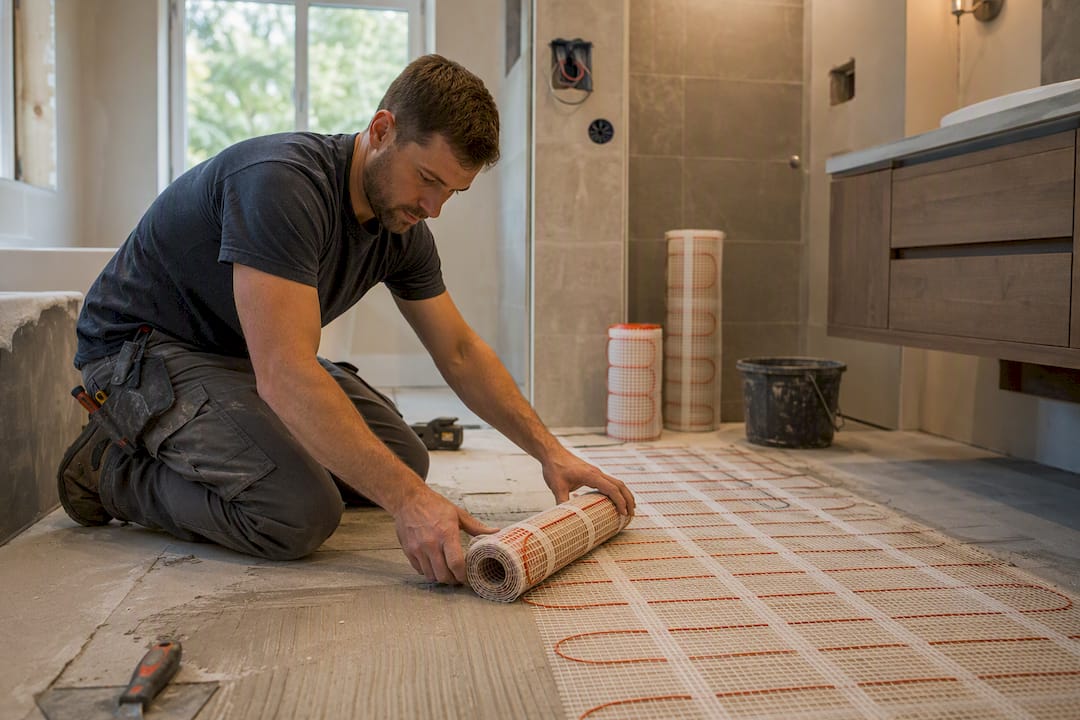
Plan on spending between $600 and $4,600 to install a heated bathroom floor, with most homeowners landing near $1,800 and installed pricing running $8 to $20 per square foot. That figure covers a typical single bathroom with an electric system, which is the route most homeowners take for a single room.
That number usually includes:
- The heating mat or cable, thermostat, and installation labor
- Basic floor prep on a sound, ready subfloor
It usually excludes:
- New finish flooring (tile, stone, or vinyl) on top of the system
- Subfloor repair, demolition of old tile, or electrical panel upgrades
Pro Tip: Roll the heated floor into a full bathroom remodel instead of a standalone retrofit. You avoid paying twice for demo and floor prep, and the labor crew is already on-site tearing out the old floor anyway.
Costs shift by region, too.
Key Takeaways
Heated bathroom floor installation typically costs $600 to $4,600 installed, with electric systems offering the best value for single bathrooms and hydronic systems justified only at larger scale.
| Point | Details |
|---|---|
| Budget realistically | Expect $8–$20 per square foot installed, averaging around $1,800 for a typical bathroom. |
| Choose electric for one room | Electric mats and cable run $8–$15 per square foot and skip plumbing costs entirely. |
| Watch for exclusions | Confirm whether finish flooring and subfloor repair are included before comparing bids. |
| Bundle with a remodel | Combining heated floors with a full renovation avoids paying for demo and prep twice. |
| Get it priced up front | Bath & Kitchen Gallery uses up-front pricing and a dedicated Lead Carpenter to keep heated floor and remodel costs transparent from quote to completion. |
Table of Contents
- How Much Do Heated Bathroom Floors Cost by System Type?
- What Does a Heated Floor Cost for Different Bathroom Sizes?
- What Affects the Final Price of a Heated Bathroom Floor?
- Should You DIY or Hire a Pro for Heated Floor Installation?
- How Much Does It Cost to Run a Heated Bathroom Floor?
- Is a Heated Bathroom Floor Worth the Cost?
- How Do You Get an Accurate Heated Floor Quote?
- Get an Up-Front Quote for Your Heated Floor Project
- Frequently Asked Questions
- Sources
How Much Do Heated Bathroom Floors Cost by System Type?
The system you choose drives your price more than almost anything else. Electric mats, electric cable, and hydronic (water-based) systems each installed differently, and the gap between them is bigger than most homeowners expect.
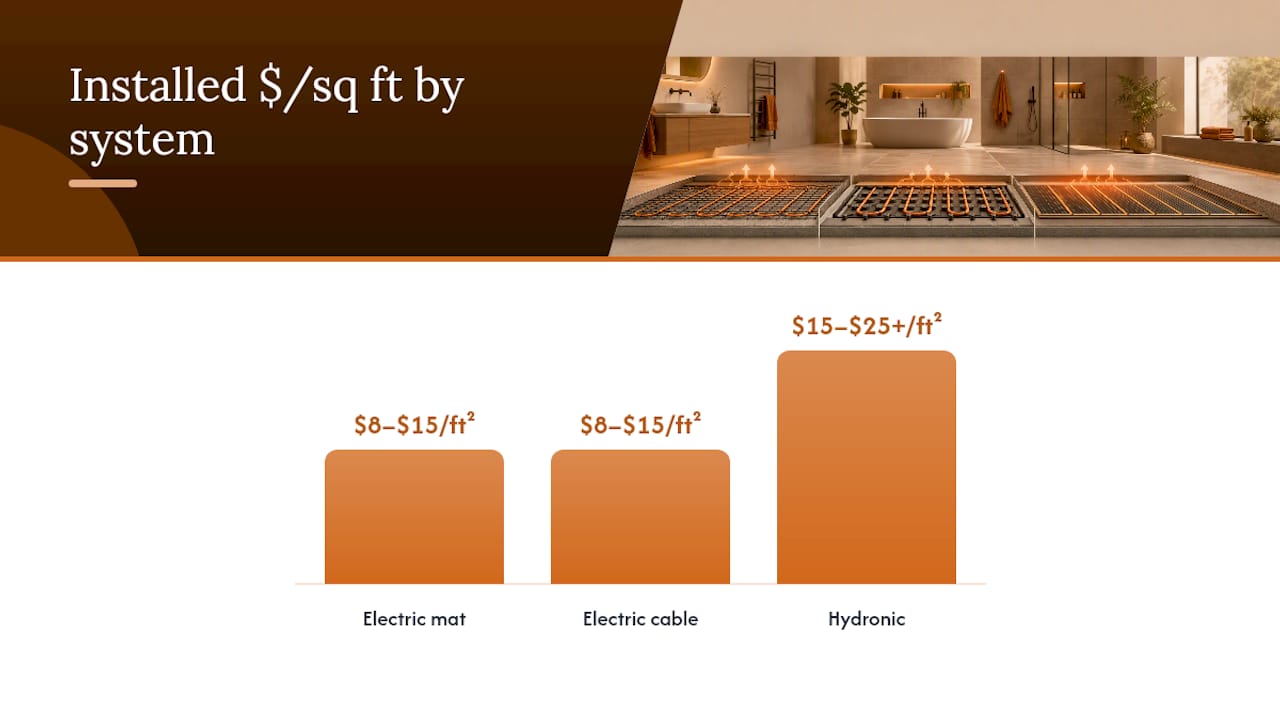
Electric mat systems are pre-spaced heating wire fused into a mesh sheet. They install fast, which keeps labor down, and installed pricing usually runs $8 to $15 per square foot. For a typical bathroom, that puts electric installs in the $800 to $3,300 range once you add the thermostat and basic labor
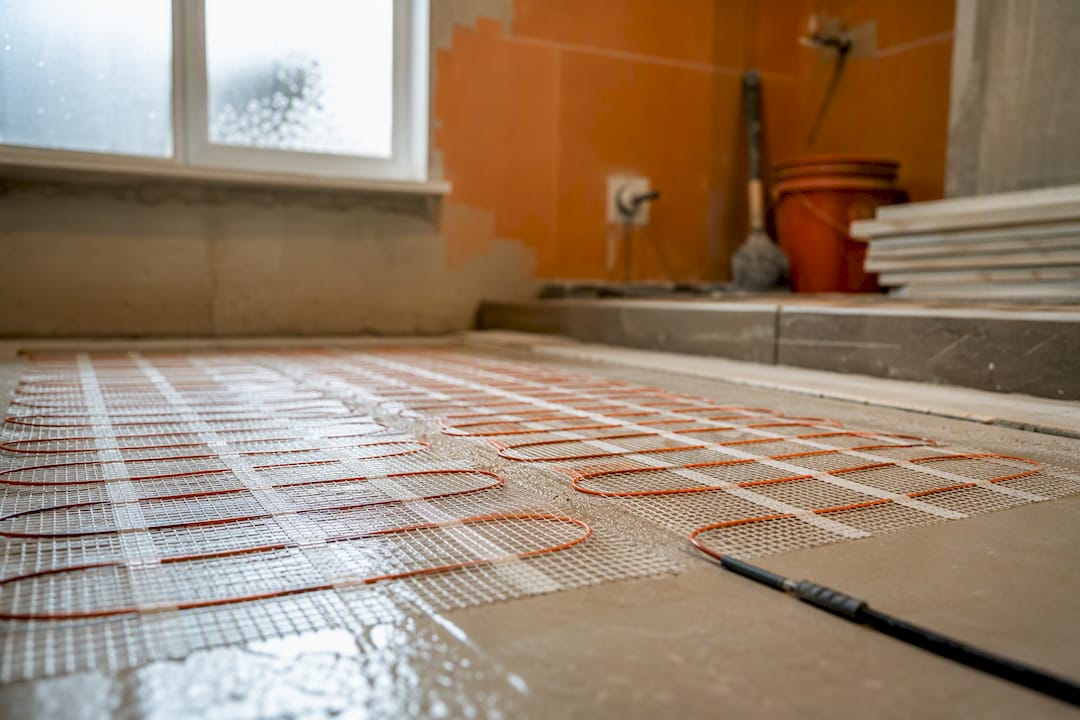
Electric cable systems are loose wire an installer spaces by hand, which takes longer but fits oddly shaped bathrooms better than a fixed mat. Pricing lands in a similar $8 to $15 per square foot band, though labor hours run slightly higher on complex layouts.
Hydronic systems pump heated water through tubing connected to a boiler or water heater. They cost far more for a single bathroom, often $4,000 to $8,500, because you’re paying for plumbing work and often a dedicated heat source, not just flooring labor. A licensed plumber, like the installation services at Frost Plumbing, typically handles the boiler tie-in and line work on these jobs.
| System Type | Installed $/Sq Ft | Typical Total | Installation Complexity | Best Floor Coverings |
|---|---|---|---|---|
| Electric mat | $8–$15 | $800–$3,300 | Low, fast retrofit | Tile, stone, LVT |
| Electric cable | $8–$15 | $900–$3,000 | Moderate, custom layouts | Tile, stone |
| Hydronic | $15–$25+ | $4,000–$8,500 | High, needs boiler/plumbing | Tile, stone, engineered wood |
Electric systems typically carry a manufacturer warranty of 15 to 25 years and, barring a puncture or installation error, often outlast the flooring on top of them. Hydronic components generally carry similar warranty windows but add the maintenance realities of any boiler-fed system.
What Does a Heated Floor Cost for Different Bathroom Sizes?
Bathroom square footage is the other half of the equation, and small rooms don’t scale the way you’d expect.
| Bathroom Size | Estimated Cost Range |
|---|---|
| 20 sq ft (powder room) | $600–$1,200 |
| — | $800–$1,200 |
| — | $1,200–$1,900 |
| — | $1,800–$4,000 |
| — | $2,400–$4,600 |
Here’s a quick worked example: a 50-square-foot bathroom with an electric mat system might run $500 for the mat itself, $200 for a programmable thermostat, and $900 to $1,200 for labor and minor prep, landing around $1,600 to $1,900 total.
Small rooms have a comparatively high cost per square foot since installers typically charge a minimum project fee regardless of size. A powder room and a primary bath both need a thermostat wired, a sensor installed, and an inspection, so those fixed costs get spread over far fewer square feet in the smaller room.
What Affects the Final Price of a Heated Bathroom Floor?
A handful of variables swing your quote up or down more than anything else:
- Finish flooring choice. Porcelain tile adds less than natural stone; stone and large-format tile both slow installation.
- Subfloor condition. Repairing a damaged or uneven subfloor commonly adds $900 to $3,000 before the heating system goes in.
- Electrical capacity. If your panel can’t support a new dedicated circuit, expect an electrician’s fee on top of the floor installation.
- Plumbing needs. Hydronic systems requiring boiler modifications or new supply lines add additional plumbing costs beyond the radiant system itself.
- Room layout complexity. Angled walls, multiple fixtures, and tight corners increase labor hours for electric cable and mat trimming alike.
- Permits. Many jurisdictions require an electrical permit for a new circuit, commonly $50 to $200, and some also require inspection for hydronic plumbing work.
New construction is almost always cheaper than retrofitting an existing bathroom, because there’s no old floor to demo and no finished walls to protect. Retrofit work commonly needs $800 to $1,500 in extra demo and prep, which is why bundling the heated floor into a full remodel, rather than a standalone project, usually comes out cheaper per dollar spent. Our bathroom remodel cost breakdown shows how these line items stack when you fold heated floors into a larger renovation.
Should You DIY or Hire a Pro for Heated Floor Installation?
Electric mat kits can be DIY-friendly if you’re comfortable with basic electrical work and the subfloor and fixtures do not require modification. Most manufacturers sell kits sized to your square footage with straightforward installation instructions.
Hire a professional the moment the job involves a hydronic system, structural subfloor repair, moving a toilet flange, or adding a new electrical circuit that needs a licensed electrician to tie into your panel. A licensed installer typically bills $50 to $90 per hour, or prices the whole job per square foot, which is more common on radiant floor work.
Before you sign a contract, ask every bidder these questions:
- Does this quote include finish flooring installation, or just the heating system?
- What’s included for subfloor prep, and what happens if you find damage mid-job?
- Is a dedicated electrical circuit required, and is that electrician’s fee already in the bid?
- What warranty covers the heating element versus the labor?
- What’s the realistic timeline, start to finish?
A straightforward retrofit over an existing sound subfloor typically takes one to three days. Add tile setting, subfloor repair, or a hydronic tie-in, and the timeline stretches to a week or more. Our guide on what to expect during a bathroom renovation walks through what that disruption looks like day by day.
How Much Does It Cost to Run a Heated Bathroom Floor?
Running an electric heated floor typically costs $0.15 to $0.35 per hour for an average bathroom, which puts most households at $10 to $25 a month on a sensible schedule, morning and evening rather than all day.
Electric systems cost more per hour than hydronic ones, but for a single bathroom that difference rarely matters. Hydronic only becomes the cheaper option to run when it’s heating multiple rooms off one boiler, spreading the operating cost across a larger footprint.
A few habits keep that number down:
- Install a programmable or WiFi thermostat and set it to run only when you’re actually in the bathroom.
- Add a floor sensor so the system reads actual floor temperature instead of guessing.
- Improve insulation under the subfloor where possible, since heating efficiency upgrades reduce how hard any heating system has to work.
A smart or 7-day programmable thermostat typically costs $80 to $300 more upfront but pays that back in avoided run time within a year or two of normal use.
Is a Heated Bathroom Floor Worth the Cost?
For most homeowners, yes, but it depends on which bathroom and what you value most.
Pros:
- Genuine comfort on cold mornings, especially over tile or stone
- Even heat across the whole floor instead of one hot spot
- A luxury feature buyers notice during a showing
Cons:
- Upfront cost that doesn’t apply to every bathroom in the house
- Repairs require pulling up the finish floor if a mat fails
- Hydronic systems add ongoing plumbing complexity
Real estate agents generally treat heated floors as a nice-to-have that helps a primary bathroom show well, not a feature that recoups its full cost dollar for dollar. It’s an investment in daily comfort more than a guaranteed resale multiplier.
If the cost doesn’t fit your budget right now, a plug-in space heater, an electric towel warmer, or simply better bathroom insulation solves the “cold bathroom” problem for a fraction of the price.
How Do You Get an Accurate Heated Floor Quote?
A reliable quote depends on giving your contractor complete information upfront, and asking them to itemize theirs in return.
Before you call anyone, gather:
- Exact bathroom square footage and a rough sketch of the layout
- What’s currently under your feet (tile over concrete, plywood subfloor, existing radiant system)
- Your finish flooring choice, or at least the material category
- Whether you want a basic thermostat or a smart, WiFi-connected one
- Your electrical panel’s age and whether it has open capacity
A trustworthy installer breaks subfloor prep, electrical work, tile setting, and permit fees into separate line items rather than folding everything into one number you can’t audit. If a bid seems unusually low, ask specifically whether it includes finish flooring and subfloor repair. Our page on what’s included in a bathroom remodel estimate walks through exactly what should appear on paper.
Pro Tip: Ask to see subfloor prep and electrical work as separate line items, not bundled into “installation.” Bundled pricing is where surprise change orders hide.
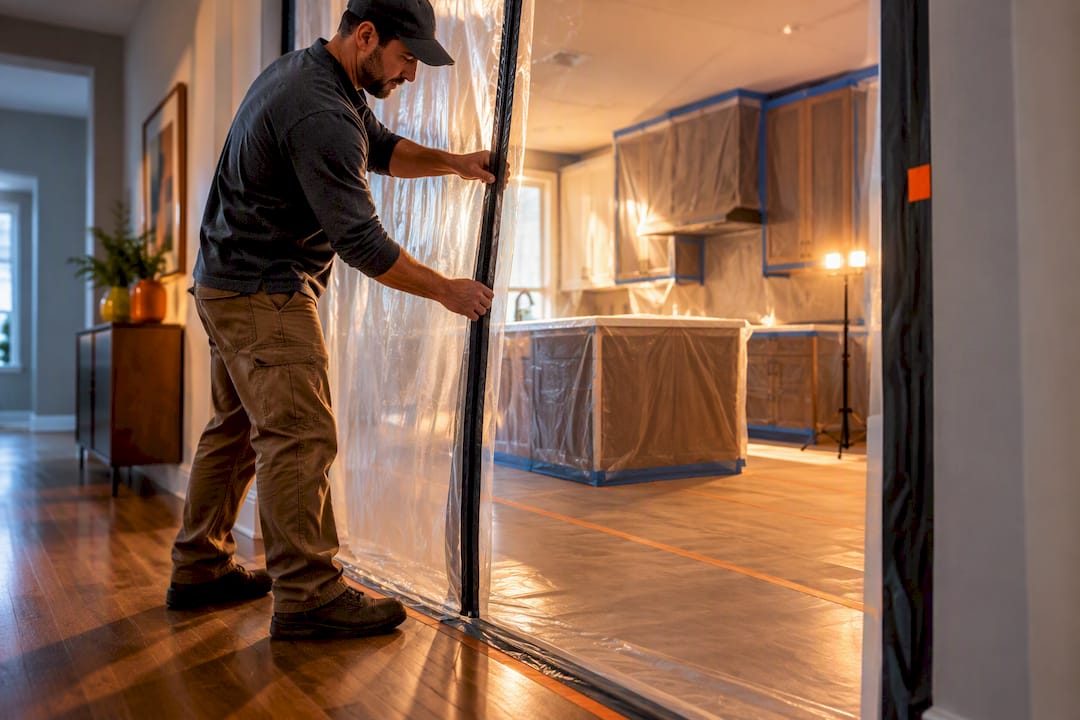
At Bath & Kitchen Gallery, every project runs on up-front pricing, a dedicated Lead Carpenter who oversees your job start to finish, and our Work Clean System, which keeps dust and disruption contained while the crew works.
When we recommend heated floors, and when we don’t
We generally recommend heated floors in primary bathrooms and master suites, where daily use justifies the investment, and steer most single-bath retrofits toward electric mats over hydronic for cost reasons. The right call always comes down to matching the spend to what you actually value, comfort every morning or a lower upfront number, and that’s worth talking through in a showroom consultation before you commit to either.
Get an Up-Front Quote for Your Heated Floor Project
Vague estimates and mid-project change orders are the two things that turn a heated floor upgrade into a budgeting headache. Bath & Kitchen Gallery prices your project up front, with a dedicated Lead Carpenter managing the job so subfloor prep, electrical work, and finish flooring never turn into surprise line items halfway through.
Bring your bathroom’s square footage, your current floor type, and your finish material preference to your consultation, and we’ll walk you through where heated flooring fits into your overall remodel budget. Browse real completed projects in our Tampa bathroom remodeling gallery to see how heated floors look paired with different tile choices, then request your bathroom remodel cost estimate to get a number you can actually plan around.
Frequently Asked Questions
How much does it cost to install heated floors in a bathroom?
Most homeowners spend $600 to $4,600, averaging around $1,800, with installed pricing running $8 to $20 per square foot depending on system type and room size.
Are heated bathroom floors worth the extra cost?
For a primary bathroom used daily, most homeowners find the comfort worth it. For a rarely used guest bath, a towel warmer or better insulation often makes more financial sense.
Is electric or hydronic radiant floor heating cheaper?
Electric systems cost less to install for a single bathroom, typically $8 to $15 per square foot versus $15 to $25 or more for hydronic, which requires plumbing and often a boiler tie-in.
Can I install a heated bathroom floor myself?
A DIY electric mat kit is realistic if your subfloor is sound and you’re comfortable with basic electrical work. Hydronic systems and any job requiring a new electrical circuit need a licensed professional.
Does a heated floor need a permit?
Many areas require an electrical permit for the new dedicated circuit, commonly $50 to $200, and hydronic plumbing work may require separate inspection depending on your local code.
Sources
- How Much Does It Cost to Install a Heated Bathroom Floor? 2025 Data
- Heated Bathroom Floor Cost: Price Ranges, Components, and Budget Guidance 2026 – Current Cost
- Heated Bathroom Floors: Cost, Types & Is It Worth Installing? (2026)