
IKEA cabinets suit homeowners who accept standard sizes and want a lower upfront price and a quick start. Custom or semi-custom cabinets fit complex layouts, premium materials and a long ownership horizon. For many kitchens, a hybrid works best: standard boxes where they fit, custom pieces only where standard sizes fail. Your layout, budget and patience for coordination decide it.
TL;DR:
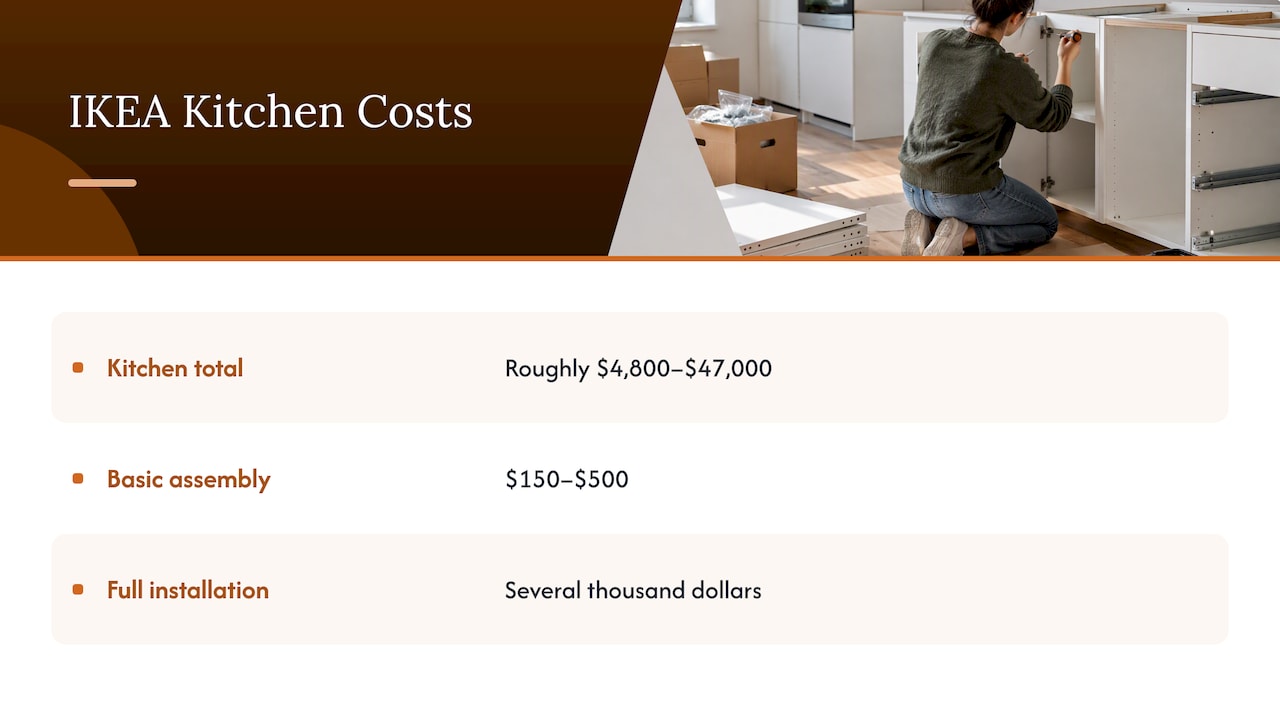
- IKEA kitchen totals commonly range from about $4,800 to $47,000, while professional installation can add several thousand dollars beyond the cabinet price.
- KCMA says IKEA commonly pairs Blum hardware with particleboard based boxes; ask about box material and A161.1 certification, which tests cabinet performance.
- Choose custom early for sloped walls, unusual ceiling heights, or integrated appliances, since standard modules need workarounds and can inflate an IKEA quote.
- Hybrid kitchens can use standard boxes on straight runs and custom fronts or fillers at problem areas, but set a spending cap before upgrades accumulate.
Table of Contents
- How do IKEA and custom cabinets compare at a glance?
- What does each option really cost once you add labor and extras?
- What are cabinets made of, and why does it affect how long they last?
- How much design freedom do you actually get?
- Who installs, and how long does it take?
- How long will each type last, and what goes wrong?
- How do you decide? A checklist and questions to ask
- Can a hybrid approach give you the best of both?
- Why does one team handling design and construction reduce risk?
- How can we help with your cabinet decision and kitchen remodel?
- FAQ
- Sources
How do IKEA and custom cabinets compare at a glance?
Start with the big picture, then read the sections that matter most to your project. The differences come down to price, build quality, customization, timeline and upkeep.
- Price: US IKEA kitchens commonly total about $4,800 to $47,000, depending on kitchen size and options. The same source puts a conventional full kitchen remodel at roughly $5,000 to $35,000, so the cabinet choice is only one slice of the total. Custom and semi-custom quotes vary widely with materials and features, so we price them from your actual plan rather than from a range.
- Build quality: IKEA commonly pairs high-performance hardware from Blum with particleboard-based boxes. Custom shops typically build with plywood or solid wood and joinery such as dovetails, and certified lines prove structural strength through standardized testing.
- Customization: IKEA comes in fixed module sizes. Custom work is cut to your walls, your appliances, and your ceiling height. Semi-custom sits between the two, with set styles but more size and finish options.
- Timeline and installation: IKEA modules are often available quickly, and many homeowners assemble and hang them without a contractor. Custom cabinets are built to order, so production adds time, but a managed process handles measuring, ordering and installation for you.
- Upkeep: Both routes need the same habits: wipe up spills, keep hinges adjusted and watch moisture near the sink and dishwasher. Construction affects how forgiving a cabinet is when those habits slip.
Here is who benefits most from each route:
- IKEA: Budget-focused homeowners with a fairly standard layout who are comfortable with a detailed ordering process or who hire a separate installer.
- Semi-custom: Homeowners who want better materials and more size options without paying for fully bespoke work.
- Custom: Owners with unusual spaces, integrated appliances, premium finish goals or a plan to stay in the home for many years.
- Hybrid: People who want a polished look on a controlled budget and are willing to coordinate two sources.
What does each option really cost once you add labor and extras?
Cabinet boxes are only part of the bill. Doors, hardware, installation, countertops and finishing touches add up, and that is where quotes drift apart.
IKEA total costs and installation
The Airtasker breakdown cited above shows how wide the spread is: totals from roughly $4,800 up to $47,000 depending on size and options. Labor is where many IKEA budgets get surprised. The same source reports that basic assembly services often add $150 to $500, while full professional installation can run to several thousand dollars. A homeowner who assembles everything personally saves that money but takes on the schedule risk.
Price bands at a glance: IKEA kitchen totals run from about $4,800 to $47,000, and installation can add anywhere from a few hundred dollars to several thousand more, so the cabinet price alone never tells you the final number.
Custom and semi-custom cost drivers
What pushes custom pricing up is predictable. Knowing the drivers lets you decide where to spend and where to save:
- Material selection: Plywood, solid hardwood and specialty veneers all price differently from one another.
- Labor: Fabrication, finishing and on-site fitting take skilled hours. Custom work absorbs most of that labor in the shop.
- Specialty features: Pull-out pantries, appliance panels, built-in spice storage and glass-front doors each add cost.
- Finish choices: Paint grade, stain grade and multistep glazes vary in price, and a fancier finish needs more time.
How to read a quote
An honest quote is itemized. Ask for these lines separately, whether the quote comes from a retailer or a contractor:
- Cabinet boxes, with the material named.
- Door and drawer fronts, with style and finish.
- Hardware: hinges, slides, pulls and knobs, by brand.
- Installation labor and who performs it.
- Finish work, trim, filler panels and crown molding.
- Delivery, disposal of old cabinets and any change-order policy.
A single lump sum with the word “cabinets” next to it hides the comparisons you most need to make. We give our clients up-front pricing with item lists for exactly this reason, and you can see how that looks on our kitchen remodel cost page.
DIY or professional installation?
DIY assembly is realistic when your walls are plumb, your layout is simple and you have time to measure twice. It gets risky with tall pantry units, corner cabinets, uneven floors or tight clearances around appliances. A professional installer costs more but absorbs the measuring risk, and a mistake on a disordered cabinet can erase the savings you were chasing.
What are cabinets made of, and why does it affect how long they last?
Longevity comes from three things: the box material, the joinery and the hardware. Hardware and structure are separate questions, and mixing them up is the most common buyer mistake.
How IKEA cabinets are built
IKEA cabinets arrive flat-packed, and the boxes are typically made from particleboard-based components. They are paired with quality moving parts: KCMA notes that IKEA commonly uses high-performance Blum hardware but often relies on particleboard-based construction. In other words, the drawer glides well, but the box that holds the drawer behaves like particleboard when it meets water or heavy loads.
How custom cabinets are typically built
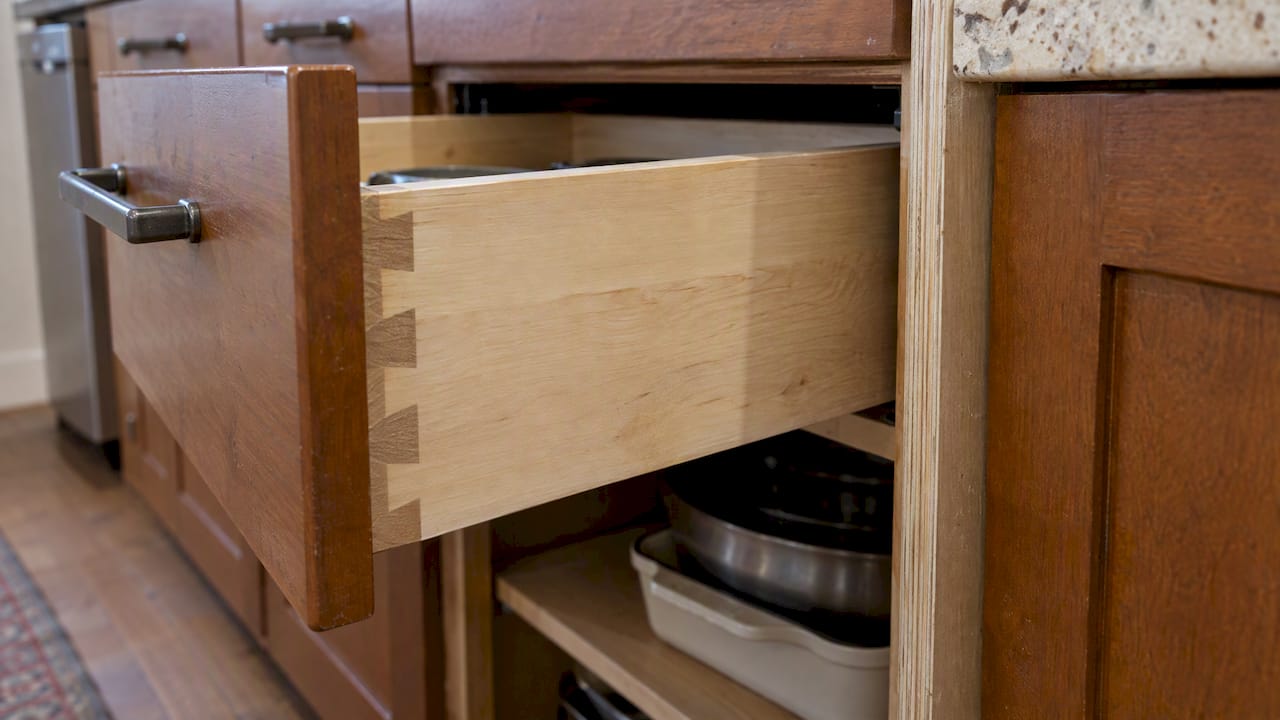
Custom shops usually build with plywood or solid wood, joined with dovetails or similar methods, and often with thicker carcass panels. Plywood tolerates moisture swings better than particleboard, and solid joinery resists racking over years of door slamming and drawer loading. If you want a deeper look at material tradeoffs, this guide on plywood versus MDF cabinets explains the specs to demand.
What KCMA and ANSI A161.1 certification means
KCMA is the cabinet manufacturers’ trade association, and its A161.1 program is the standard to know. KCMA describes ANSI/KCMA A161.1 Quality Certification as a cabinetry performance standard that requires manufacturers to submit products to tests simulating cabinet lifetime use. KCMA also points to testing such as door cycling and base-joint load stress as proof of structural integrity. For a buyer, a certification mark is a trust signal that a line has been stress-tested by a third party, rather than only described in a brochure.
What to verify on any quote
- Ask which material forms the box, shelves and back panel.
- Ask for the hinge and drawer slide brand and whether they are soft-close.
- Ask whether the line carries A161.1 certification.
- Ask how thick the panels are and how the corners are joined.
- Inspect a sample door and drawer in person when you can.
Pro Tip: Do not let a famous hardware brand stand in for box quality. Good hinges on a weak box still leave you with a weak box.
How much design freedom do you actually get?
Design is where the routes differ most visibly, and also where the gap can be narrowed on a budget.
Where standard sizes limit you
Standard modules come in set widths and heights. Most kitchens need filler strips or panels to close gaps between the last cabinet and the wall. A well-planned layout handles this gracefully. A poorly planned one wastes inches of storage or leaves awkward corners.
Ways to get a custom look without custom pricing
- Third-party fronts: Aftermarket door and drawer fronts fit standard boxes and change the style entirely.
- Paint and finish: Painted fronts and a coordinated trim package disguise the box beneath.
- Hardware swaps: New pulls and knobs change the character of a kitchen at modest cost.
- Countertop and trim choices: A distinctive counter, backslash and crown molding raise the perceived quality of the whole room.
When only custom will do
Some situations cannot be solved with standard parts: nonstandard ceiling heights, integrated appliances that need exact panel fits, odd corners, sloped walls or unusual built-in features. If your plan includes these, request custom pricing early so you are not comparing against an IKEA quote that will balloon once workarounds are added. Our page on why to choose appliances before cabinets explains how appliance dimensions drive the cabinet plan.
Hybrid tactics for a polished look
Keep standard boxes where walls are straight and runs are simple, then add custom fronts, custom filler pieces or a single built-in where the layout demands it. This gives you precision in the places guests notice, and savings everywhere else.
Who installs, and how long does it take?
Schedule and coordination matter as much as price. A cheaper cabinet that sits in boxes for weeks while you hunt for an installer is not really cheaper.
- Lead times: In-stock IKEA modules can often be picked up or delivered quickly, though backorders on specific items do happen. Custom cabinets are built to order, so production adds time before delivery.
- Installer costs: Per the Airtasker breakdown, basic assembly services often add $150 to $500, while full professional installation can reach several thousand dollars. Independent trades and retailer-arranged installers differ in who stands behind the work, so ask who handles callbacks and whether the labor is guaranteed.
- Coordination workload: With a DIY IKEA project, you own the measurements, the order, the delivery check and any missing-part problems. With a contractor-managed project, someone else measures on site and catches conflicts before ordering. Industry experts quoted by Sweeten note that custom cabinetry often brings site visits, re-designs and project oversight that reduce ordering errors.
- When to hand it off: If your calendar is tight, if plumbing and appliance placement must line up with the cabinet plan, or if you simply do not have the bandwidth to manage trades, a managed build protects your schedule.
How long will each type last, and what goes wrong?
Value shows up over years, not at checkout. Realistic expectations help you judge whether a lower first price will cost more later.
Common failure points
- Hardware wear: Hinges loosen and slides lose smoothness with daily use. Quality hardware from known brands lasts longer and can usually be replaced.
- Particleboard swelling: Boxes near sinks and dishwashers are most vulnerable when water gets in at edges or cut-outs.
- Hinge and slide fatigue: Heavy pots and overloaded drawers shorten the life of any cabinet.
- Finish damage: Cooking steam and cleaners wear thin finishes, especially around the range.
Construction choices help. Plywood boxes and thicker panels tolerate moisture and loading better, and certified construction has been tested against exactly the kind of stress that causes these failures. We do not give a number of years here, because service life depends heavily on use, moisture and care.
Reading warranties
Warranties typically cover defects in materials or workmanship, not water damage, misuse or poor installation. Read what the warranty excludes, who honors it and whether installer errors fall under the cabinetmaker’s coverage or the installer’s.
Maintenance that extends life
- Wipe up spills near the sink and dishwasher promptly.
- Tighten loose hinges and screws before they strip.
- Do not overload drawers beyond what the slides can handle.
- Use gentle cleaners that will not strip the finish.
- Keep range hoods working so steam does not settle on door fronts.
Pro Tip: If the boxes are sound but the finish looks tired, refinishing can refresh them for less than replacement. A service such as cabinet painting and refinishing is worth pricing before you tear anything out.
How do you decide? A checklist and questions to ask
Turn all of the above into action. Work through your priorities first, then take the right questions to each supplier.
Your decision checklist
- Set a realistic budget band for the whole kitchen, not just cabinets.
- Rate your layout complexity: straight runs, or angles, islands and integrated appliances.
- Decide how long you plan to stay in the home.
- Think about how hard the kitchen works every day.
- Consider resale goals in your neighborhood.
- Be honest about your timeline and how much coordination you can handle.
Questions to bring to every supplier
- What are the boxes made of, and how thick are the panels?
- Which hinge and drawer slide brands are included?
- Do you measure on site, or do I supply dimensions?
- What does the warranty cover, and what does it exclude?
- What are the lead times from order to delivery?
- Who installs, and who is responsible if something is wrong?
Weighing the quotes
Compare total cost, but give extra weight to itemized transparency. A clear change-order policy and clear installer responsibilities are worth paying for, because surprises late in a remodel cost more than almost any line item.
Choosing your route
Pick custom when your layout is complex, you want premium materials or you value managed oversight. IKEA is fine when your layout is simple, your budget is tight and you can handle the coordination. A hybrid is the best compromise when most of the kitchen is standard but one or two areas are not.
Can a hybrid approach give you the best of both?
A hybrid kitchen uses standard cabinets where they fit and custom pieces where they do not.
- IKEA boxes with custom fronts: You keep the lower box cost while getting a distinctive look.
- Selective custom pieces: One built-in, a tall pantry or an appliance surround is made to measure while the rest stays standard.
- Custom fillers and trim: Fitted trim hides the seams and makes standard cabinets look built-in.
The risk is scope creep. Each upgrade seems small, but fronts, panels, trim and custom pieces together can approach a fully custom price. Set a ceiling before you start and decide which upgrades are non-negotiable.
Someone also has to own compatibility. Ask your installer whether the custom parts will fit the standard boxes, and who is responsible if they do not. A simple example: an island with custom fronts and a distinctive finish, surrounded by standard perimeter cabinets, puts the money where the eye lands first.
Why does one team handling design and construction reduce risk?
Here is our editorial view. Most cabinet regrets come from the gaps between people: a designer who never saw the site, a supplier who never met the installer, a homeowner stuck as the messenger between them. The product matters, but the handoffs matter more.
That is why we handle design and construction together. One team owns the plan from the first sketch to the final trim, so measurements, appliance specs and cabinet choices are checked against one another before anything is ordered. Up-front pricing with item lists keeps the numbers honest, and a dedicated Lead Carpenter on each job means a single person knows the project in detail and answers your questions. Our Work Clean System keeps dust and disruption down, making it easier for homeowners to navigate renovations.
None of this makes a cabinet better by itself. It makes the whole project less likely to wobble, and that is where many budgets quietly fall apart.
— MediaBeast
How can we help with your cabinet decision and kitchen remodel?
If you are weighing IKEA against custom and want one team to price it honestly, we can help you land on the right cabinetry and then deliver the whole kitchen. Our kitchen remodeling service covers cabinetry design, custom cabinetry and project management, so you are not coordinating trades on your own.
A consultation with us gives you:
- A site measure so the plan fits your actual room.
- An itemized estimate that separates boxes, fronts, hardware and labor.
- A project plan for your remodel.
- Recommended material options at different budget levels.
Our kitchen remodel cost page shows itemized examples, such as a Small U-Shaped Kitchen at 48,500 to 60,200 USD, so you can see how a managed project is priced. When you are ready, request a kitchen remodeling consultation and bring your cabinet questions with you.
FAQ
What are the different types of kitchen cabinets?
Kitchen cabinets generally fall into three groups: stock, semi-custom and custom. Stock cabinets come in set sizes and styles, semi-custom adds size and finish options, and custom cabinets are built to your exact space. IKEA is a flat-packed modular system that works like stock with many configurations.
Is IKEA cabinet good quality?
IKEA pairs high-performance hardware from Blum with particleboard-based boxes, according to KCMA. The hardware is good, but the box behaves differently from plywood when exposed to moisture or heavy loads. For dry, standard layouts it can serve well, and for demanding kitchens we suggest checking for A161.1 certification.
Is IKEA or DIY kitchens cheaper?
IKEA is usually cheaper at the cabinet level, and assembling it yourself saves more. The Airtasker cost breakdown shows basic assembly services adding $150 to $500, while professional installation can reach several thousand dollars. Savings disappear if mistakes force reorders or repairs.
How much to pay someone to install an IKEA kitchen?
Basic assembly often runs $150 to $500, and full professional installation can run to several thousand dollars, according to Airtasker. The final number depends on kitchen size, layout complexity and whether plumbing, electrical or countertop work is included. Get an itemized quote before you commit.
Sources
- ROI of Cabinet Durability: Reducing Project Risk With A161.1 | KCMA
- Surprising Truth About IKEA vs. Custom Cabinets
- How Much Does an IKEA Kitchen Cost? Full Price Breakdown 2026 | Airtasker US