
Start with high-impact cosmetic updates: paint or refinished cabinet faces, bar-pull hardware, layered lighting, and a new backsplash. Move to targeted replacements when cabinets or counters limit how you cook, and commit to a full remodel only when the layout or systems must change. Houzz found wood cabinets now lead at 29%, so even small choices can feel current.
TL;DR:
- Refinish cabinets when boxes and doors are sound; replace fronts for dated styles, and replace full units only when boxes are damaged or poorly sized.
- Keeping the layout avoids new plumbing and electrical costs; moving sinks, gas lines, outlets, or walls may require permits, depending on local rules.
- Published estimates put minor renovations at $10,000–$20,000, major remodels at $20,000–$65,000, and complete overhauls above $65,000, with materials and hidden damage affecting the final cost.
- Standard remodels often require 6–12 weeks of active construction, while design and cabinet ordering can add months before demolition begins.
- Bar pulls suit current kitchens, with 74% of renovators choosing them; measure existing hole spacing first to avoid drilling new cabinet holes.
Table of Contents
- Which quick updates change how a kitchen feels the most?
- How do you decide between refinishing, new doors, and new cabinets?
- When is a full remodel worth the cost and the wait?
- Which storage and built-ins make an older kitchen work like a new one?
- What should you know about lighting, ventilation, and electrical?
- Which materials and finishes will still look good in five years?
- How do you plan the project and choose the right contractor?
- Why should function come before style?
- Ready for a modern kitchen without the usual hassle?
- FAQ
- Sources
Which quick updates change how a kitchen feels the most?
Lighting and hardware deliver the most visible change per dollar. Angi’s cost guidance names them the highest-impact budget items, and they are also the least disruptive, since you can finish many of them without losing the use of your kitchen.
Here is the order we suggest, from most to least bang for the money:
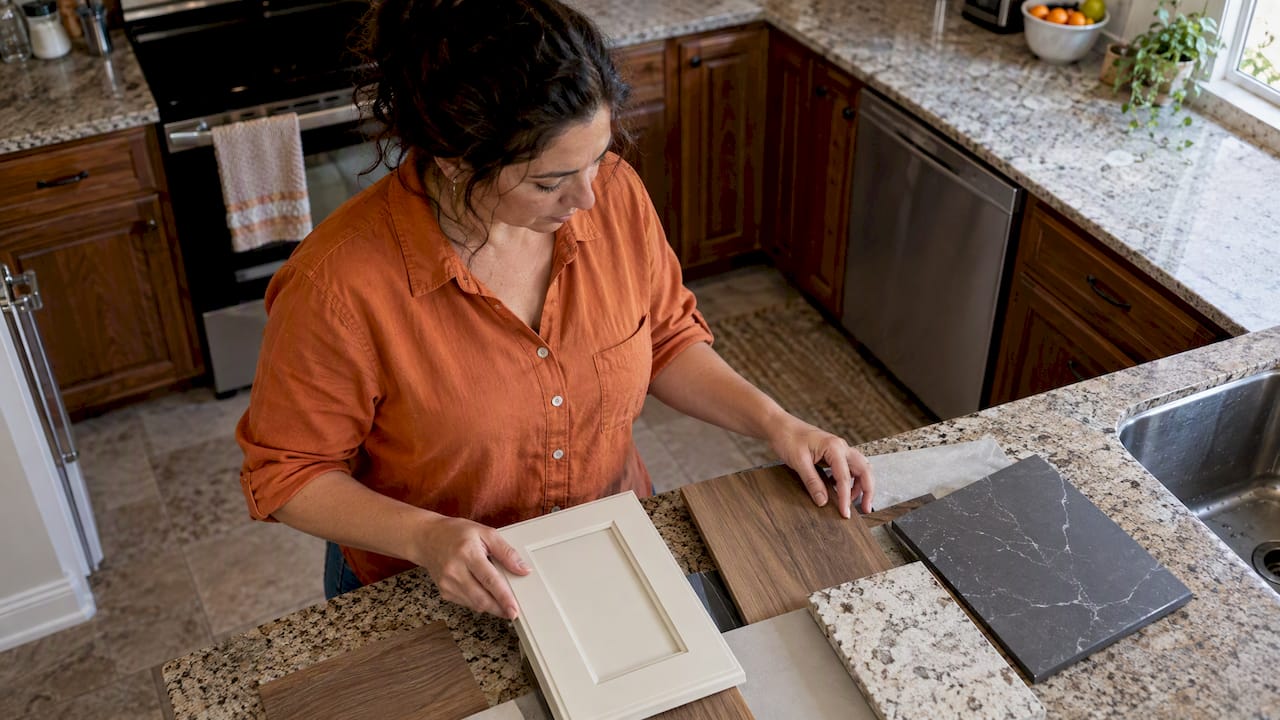
- Refinish or paint cabinet faces. If the boxes are solid and the doors are flat or simple shaker style, a deep paint color or fresh stain can make an older kitchen read as new. If doors are cracked, warped, or heavily ornate, paint will only highlight the problem.
- Swap the hardware. Replacing knobs with bar pulls is the single cheapest modernizing move. 74% of renovators use bar pulls, so they are a safe, current choice. Measure the hole spacing on your existing cabinets first so new pulls line up without drilling.
- Replace fluorescent or track lighting. Recessed cans on a dimmer, plus under-cabinet task lights, change the room more than most people expect. Dimmers let the same kitchen work for cooking, homework, and late-night snacks.
- Update the backsplash. A simple tile or peel-and-stick style can reset the whole wall behind the counter. Keep it plain if your counters have a lot of patterns.
- Change the faucet and fixtures. A pull-down faucet in a modern finish is a small purchase that you touch every day.
These updates mostly leave plumbing, gas, and wiring alone, which is why they usually fall outside permit rules. Local rules differ, though. One city building department notes that simple countertop replacement or cabinet refacing often does not require a permit, while relocating cabinets, sinks, or electrical work typically does. Call your own building department before you start anything that touches wiring or pipes.
For more low-cost ideas, HGTV’s roundup of budget kitchen updates shows what homeowners commonly do without major construction, and Lowe’s overview of cabinet updates covers painting, hardware swaps, and trim additions. We also keep a practical checklist of things to do for a better kitchen if you want a printable starting point.
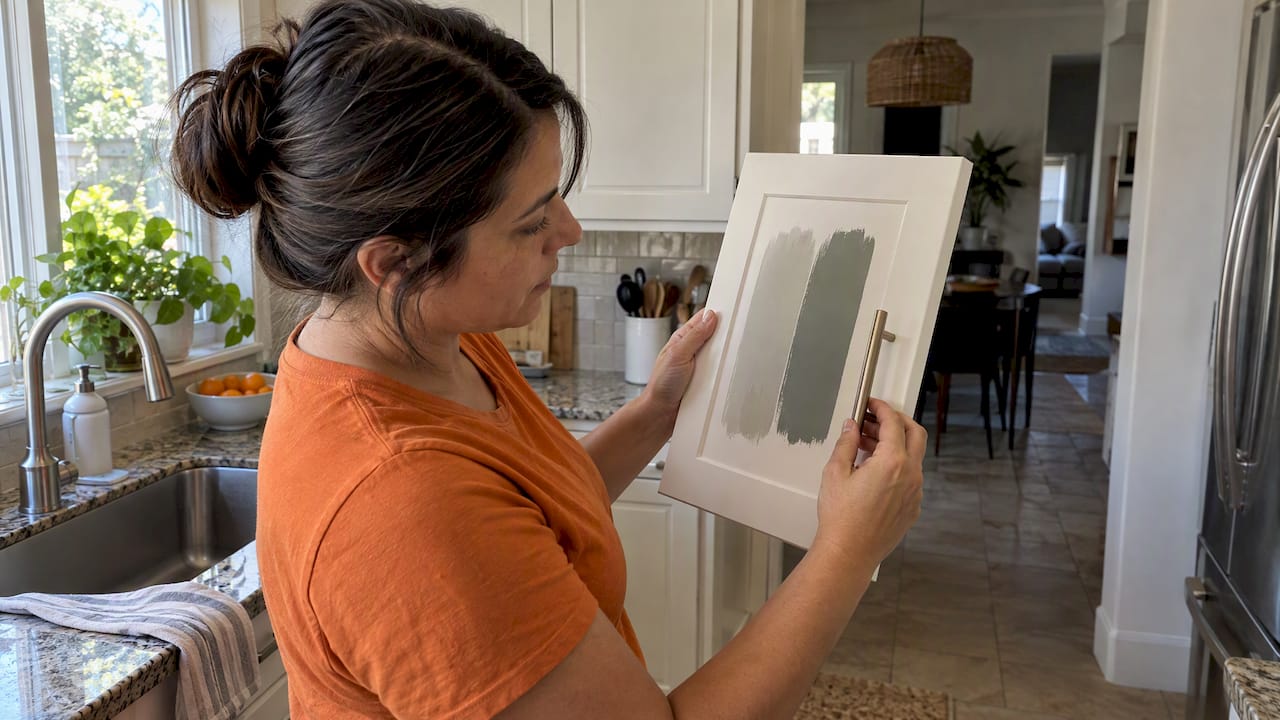
Pro Tip: Buy one sample bar pull and one can of cabinet paint in a small size, then test both on a cabinet door before you commit. Morning and evening light change how finishes look.
How do you decide between refinishing, new doors, and new cabinets?
Mid-range upgrades make sense when the surface looks tired but the room still works, or when one or two pieces of the kitchen actively get in your way. The goal is to spend money where it changes daily use, and to leave alone what already functions.
Use this checklist to pick a cabinet strategy:
- Refinish or paint when the boxes are sturdy, doors are in good shape, and you like the layout.
- Swap doors and drawer fronts when the boxes are solid but the door style looks dated, or when you want a different material such as wood veneer.
- Replace cabinets when boxes are water damaged, sagging, or poorly sized for how you cook, or when you want drawers where there are now doors.
Partial approaches stretch a budget. Replace only the lower cabinets with deep drawers, which hold pots far more easily than a dark cabinet shelf. Add a tall pantry cabinet at one end of the run. Or build a new island first, since it gives you storage and a work surface without disturbing the perimeter.
Countertops are the other major decision:
- Engineered quartz: consistent color, low maintenance, no sealing.
- Natural stone: unique veining, but it needs periodic sealing and care.
- Solid surface: seamless look and repairable scratches.
- Laminate: the budget route, and today’s patterns look better than older ones.
For the backsplash, slab backsplashes run in the same material as the counter, giving a clean, grout-free wall that wipes down fast. Tile remains the lower-cost and more flexible choice.
When you upgrade appliances, prioritize in this order:
- Range and hood: ventilation matters more than the brand name.
- Refrigerator: look for the interior layout that fits your food habits.
- Dishwasher: quieter models make open-plan kitchens more comfortable.
- Energy efficiency: check the label across all of them, since these run daily for years.
The biggest cost saver is simple: keep the layout. Every sink, gas line, or outlet you leave in place is plumbing and electrical work you do not pay for. If you want a sense of how this scales, our guide to affordable kitchen makeover ideas walks through budget-minded choices.
When is a full remodel worth the cost and the wait?
Choose a full remodel when the problem is the room itself: a cramped work triangle, a wall that blocks flow, a window you want to relocate, or wiring and plumbing that no longer meet your needs. Houzz reports that layout changes lead major upgrades at 52%, a reminder that many homeowners eventually decide the footprint is the real obstacle.
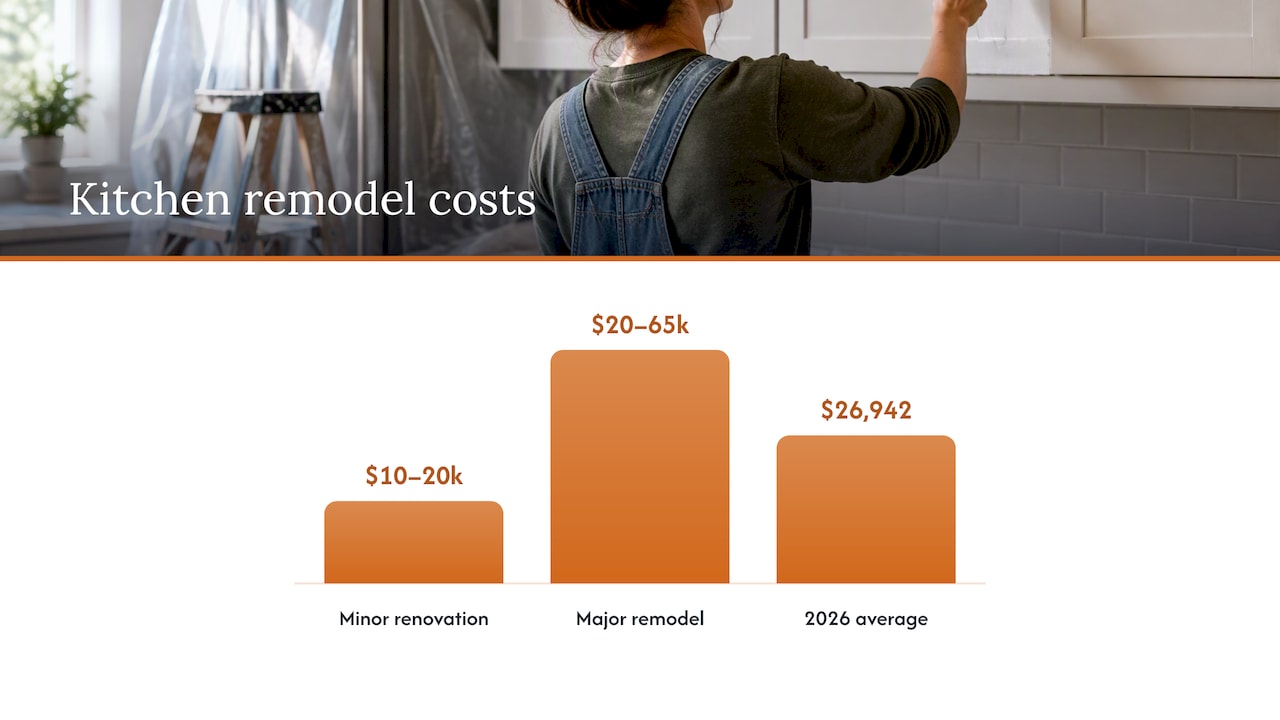
Costs fall into bands. The UDPOWER summary of Angi data puts minor renovations around $10,000–$20,000, major remodels around $20,000–$65,000, and complete overhauls above $65,000. Your own number depends on size, materials, and what is hiding behind your walls.
The same report puts the 2026 average professional kitchen remodel near $26,942, with many projects between $14,588 and $41,555. Treat the average as a reference point, not a quote, since your cabinets and layout will move the number either way.
Here is how a typical project unfolds:
- Design and measuring: you settle the layout, finishes, and appliances.
- Ordering: cabinets and special items often take weeks or months to arrive.
- Permits: your contractor or you file for work that moves plumbing, wiring, or walls.
- Demolition and rough-in: plumbing, electrical, and any structural work happen first.
- Installation and finishing: cabinets, counters, backsplash, and appliances go in last.
Active construction commonly runs roughly 6–12 weeks for many standard remodels, but design and ordering can add months before the first day of demolition. We break down the stages in more detail on our kitchen remodel timeline page.
Permits typically come into play when you move or remove cabinets and counters, relocate sinks or dishwashers, add an island with power, or change electrical and exhaust. Rules vary by city, so confirm locally.
The usual budget drivers are moving plumbing, structural changes, custom cabinets, and surprises in older houses such as outdated wiring or water damage. That is why we advise a contingency reserve built into the budget from day one. Layout changes escalate costs quickly, because one moved wall can trigger new electrical, flooring, and drywall work in the same stroke.
Which storage and built-ins make an older kitchen work like a new one?
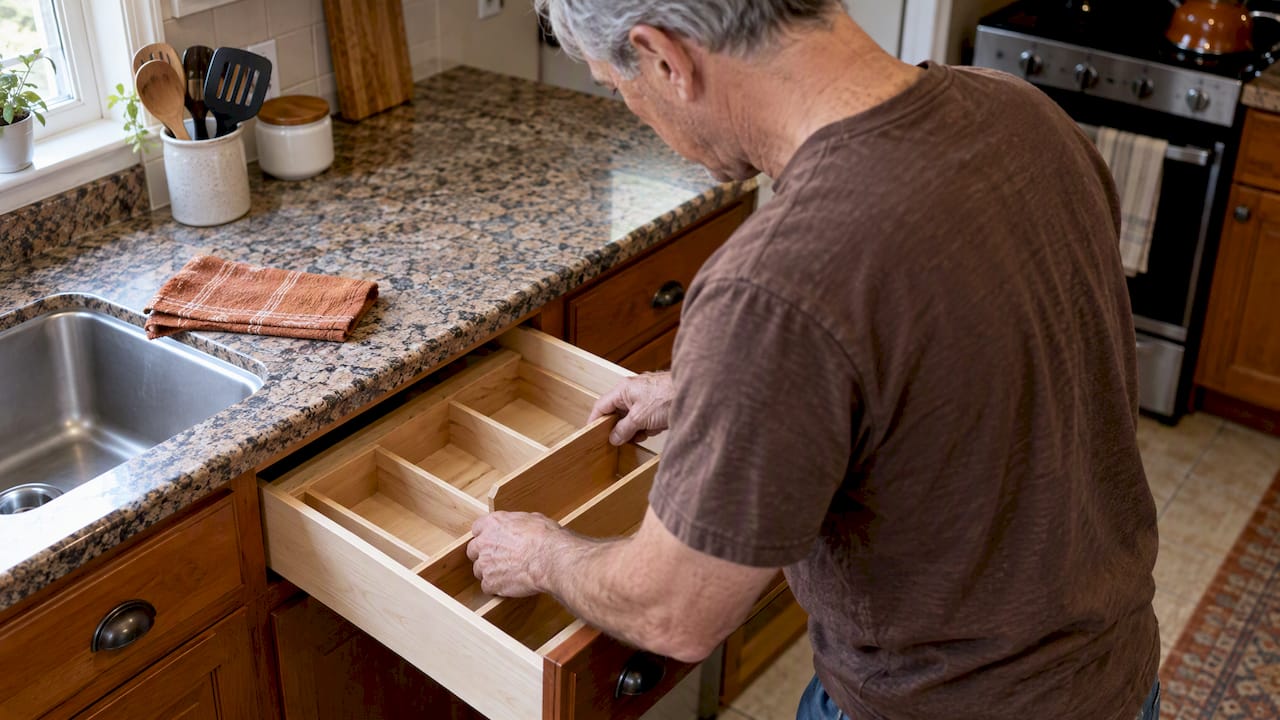
Storage is where modern kitchens quietly beat old ones. Houzz found that 76% of renovating homeowners add specialty built-ins, and a separate Houzz study reports that 94% integrate specialty storage features, including pull-out waste or recycling bins.
The features that earn their place:
- Pull-out trash and recycling: keeps bins out of sight and off the floor.
- Tray and baking sheet dividers: vertical slots replace the avalanche of flat pans.
- Spice pull-outs: narrow cabinets beside the range hold a full collection.
- Deep drawers for pots: you see everything without kneeling.
- Appliance garages and island storage: small appliances stay close but off the counter.
A pantry is worth the footprint when you buy in bulk or cook often. In a tight kitchen, internal organizers in existing cabinets deliver most of the benefit for far less. If a pantry door is part of the plan, One Day Doors & Closets explains how to select the right pantry door for style and function.
Pro Tip: Choose organizers in one finish, such as all wood or all matte black, so the inside of your cabinets looks as intentional as the outside.
What should you know about lighting, ventilation, and electrical?
Plan lighting in three layers: general light from recessed cans, task light under the upper cabinets, and accent light inside glass cabinets or along toe kicks. Put each layer on its own switch or dimmer so you can set the mood. The NKBA kitchen planning guidance recommends separate switching for task lights and emphasizes lighting efficacy.
NKBA guidance cites minimum ducted hood ventilation in the range of 100–150 CFM, with ducts made of metal with smooth interior surfaces. Ducted hoods that vent outdoors generally work better than recirculating ones.
Keep these electrical basics in mind:
- Islands usually need receptacles and sometimes their own circuit.
- Electrical requirements depend on the project and local code. Have a licensed electrician assess them.
- Older panels may need an upgrade to support new loads.
We recommend hiring a licensed electrician for any new circuit, panel work, or hood installation. Your local code decides the final requirements, so treat guidelines as a planning aid.
Which materials and finishes will still look good in five years?
Trends tell you where the market is heading, but durability tells you what to buy. Houzz reports that wood cabinets overtook white 29% to 28%, bar pulls dominate hardware, and slab backsplashes are growing. Warm wood tones and clean lines read as current without being loud.
How common materials compare:
- Wood veneer: warm, durable, and refinishable, though it responds to humidity.
- Painted MDF: smooth finish and lower cost, but chips show and edges can swell near water.
- Quartz: very low maintenance and consistent in color.
- Natural stone: distinctive look, needs sealing.
- Laminate: the budget choice, with surprisingly good modern patterns.
For hardware, brushed nickel is forgiving, black shows dust and fingerprints more, and brushed gold adds warmth but should match your faucet. Our guide to the best finishes for kitchen fixtures goes deeper. To balance budget and longevity, spend on the surfaces you touch most and keep big finishes neutral, then add personality with paint, hardware, and lighting that are easy to change later. If sustainability matters to you, see our sustainable design ideas for kitchen remodels.
How do you plan the project and choose the right contractor?
A clear process prevents most remodeling regrets. Work through it in order:
- Assess what bothers you most: storage, light, layout, or finishes.
- Set a budget with a contingency reserve built in.
- Choose the scope: cosmetic, targeted, or full remodel.
- Collect written quotes with itemized scope and allowances.
- Schedule around ordering lead times, not just construction.
When you interview contractors, ask who the lead carpenter or project manager is, what the allowances cover, how long the timeline runs from contract to completion, and what dust-control practices they use. Also ask about deposit terms and how change orders are priced. A design-build firm, where one team handles design and construction, reduces handoffs and finger-pointing.
If you are planning for the long term, think about accessibility too. Our aging-in-place kitchen ideas cover practical features, and Houzz reports that 53% of renovating homeowners address current or future needs. A 2026 guide to accessibility in aging homes adds useful background.
Pro Tip: Ask each contractor to price the same written scope. Quotes only compare fairly when everyone bids the same list.
Why should function come before style?
Style fades, but function pays you back every single day. A drawer that opens fully, a light over the cutting board, and a hood that actually clears the air shape your kitchen far more than the color of the backsplash. Our approach reflects that: design and construction under one roof, up-front pricing, a dedicated lead carpenter for each project, and a Work Clean System that minimizes dust. When a decision involves layout, plumbing, or electrical, bring in a professional early.
— MediaBeast
Ready for a modern kitchen without the usual hassle?
We handle design and construction together, give you up-front pricing, and assign a lead carpenter for your project. Our Work Clean System minimizes dust and disruption while we work.
See what projects typically cost on our kitchen remodel costs page, or book a consultation through our kitchen remodeling page and tell us which path fits your home.
FAQ
How can I modernize an outdated kitchen?
Start with cosmetic changes: paint or refinish cabinets, install bar pulls, and replace old lighting with recessed cans on a dimmer. Then add a new backsplash and faucet. If cabinets or the layout still limit you, move to targeted replacements.
What is the cheapest way to update a kitchen?
Hardware, paint, and lighting give the biggest visual return for the least money. Angi lists lighting and hardware as the highest-impact budget items. Most of these projects skip permits, but check locally.
How do I update a kitchen without replacing it?
Refinish or reface cabinets, swap hardware, change the backsplash, and upgrade the faucet and lighting. Adding pull-out organizers also makes the kitchen function like a new one. These steps keep your layout and plumbing untouched.
How long does a kitchen remodel take?
Many standard remodels need about 6–12 weeks of active construction. Design and cabinet ordering can add months beforehand, so plan the full timeline early.