
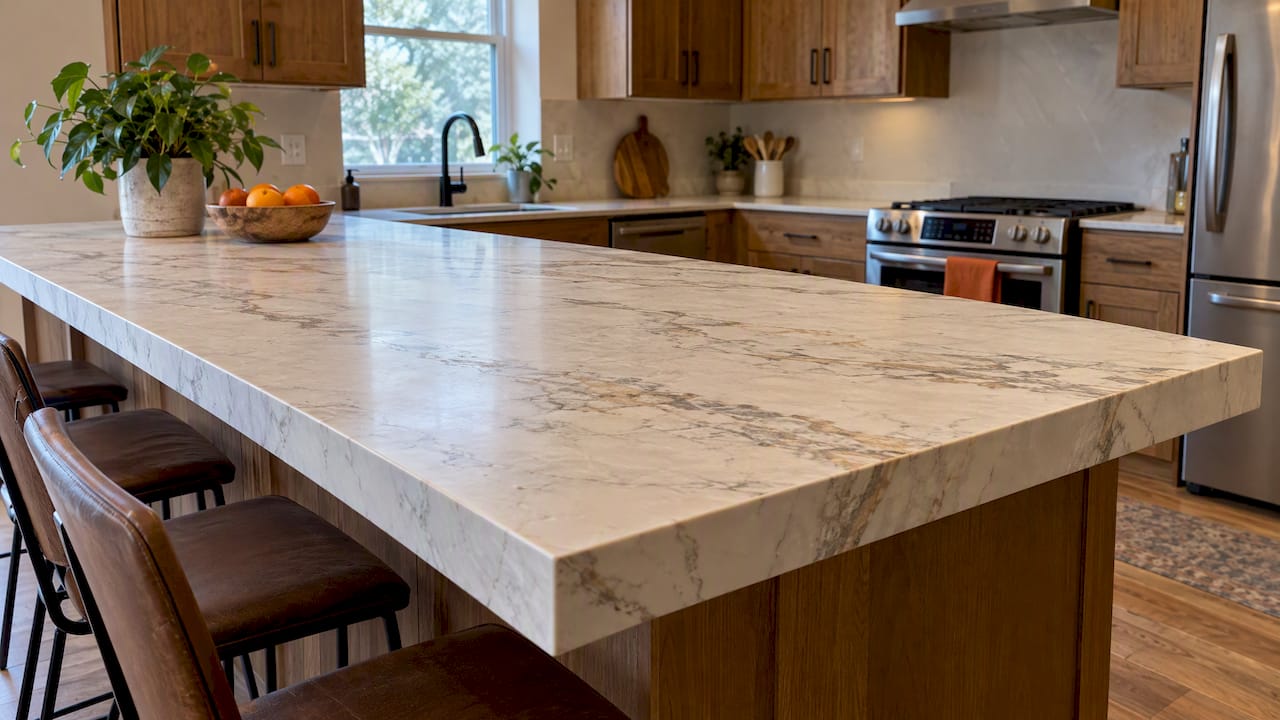
Sintered stone is a dense, resin-free slab made by fusing mineral powders under extreme heat and pressure. It handles hot pans, sunlight and stains better than most countertop materials. It also costs more than many homeowners expect, chips at the edges more easily than quartz, and needs a fabricator who has worked with it before. Whether it is the right pick depends on how you cook, where the counter sits and how much you want to spend.
This guide covers what the material is, what it costs in the U.S., how it stacks up against quartz and granite, and the trade-offs that sales brochures tend to skip.
TL;DR
- Sintered stone (also sold as an “ultra-compact surface”) is made from natural minerals fired without resins, so it resists heat, UV light and stains very well.
- Installed prices commonly run about $65 to $150 per square foot, which overlaps with premium quartz and often lands at the high end.
- Its weak spot is edges and corners: it is rigid, can chip under a hard knock, and works best with eased or mitered edges rather than decorative routed ones.
- Quartz is still the easier choice for a standard indoor kitchen with a tight budget. Sintered stone earns its price in outdoor kitchens and heavy-cooking households.
- It is not a DIY material. Choose the fabricator as carefully as the slab.
Table of Contents
- What sintered stone actually is
- How it performs on a real kitchen counter
- The downsides nobody puts on the brochure
- How much do sintered stone countertops cost?
- Sintered stone vs. quartz
- Sintered stone vs. granite and other options
- Where sintered stone makes the most sense
- Perspective: how we think about choosing a countertop
- How to buy sintered stone without regrets
- Planning a countertop upgrade with us
- FAQ
- Sources
What sintered stone actually is
Sintered stone is a manufactured slab. Makers press a blend of natural mineral powders (clay, feldspar, quartz, glass and oxides) and fire them at roughly 1,200°C, about 2,200°F. The Spruce describes it as a material made entirely from minerals heated and pressed together, with no organic resins or binders.
You will see several names for the same family of products: sintered stone, ultra-compact surface, and sometimes porcelain slab. They are not identical in every detail, but they share the same basic process.
The process is the reason for the material’s reputation. Engineered quartz is mostly ground quartz held together by polymer resin. Resin is the part that scorches, yellows in sunlight and can absorb stains. Take it out and you remove those weaknesses. Sintered stone is not natural stone in the sense granite is, and it is considered a synthetic material, but its ingredients come from the earth.
How it performs on a real kitchen counter
Heat
This is the headline advantage. Quartz resin begins to degrade at about 300°F, while sintered stone tolerates 500°F and beyond. In practice, that means a pan off the burner will not leave a mark, and you do not need to hunt for a trivet every time you cook. If you sear, roast and bake often, this matters more than any color choice.
Stains and hygiene
The surface is almost non-porous, so wine, coffee, oil and turmeric sit on top rather than soaking in. The Spruce notes nearly 0% porosity. There is no sealing schedule, which is a real relief compared with some natural stones.
Sunlight and weather
Because there is no resin to fade or yellow, the material is UV-stable. Remodel Calculators lists it as suitable for outdoor kitchens for that reason. In Florida, where sun and humidity are daily facts, it is the main reason homeowners ask about it for lanais and patios.
Scratches
The surface is very hard and resists scratching well. Hard does not mean unbreakable, which brings us to the downsides.
The downsides nobody puts on the brochure
The People Also Ask box on Google asks about this directly, and it deserves a straight answer.
Edges chip. Sintered stone is extremely rigid. Remodel Calculators explains that it is more prone to edge chipping under a hard impact than natural stone or quartz, and that fabricators should avoid routed decorative profiles such as ogee or bullnose in favor of eased, beveled or mitered edges. If you picture a rounded, ornate edge, this material may not give it to you.
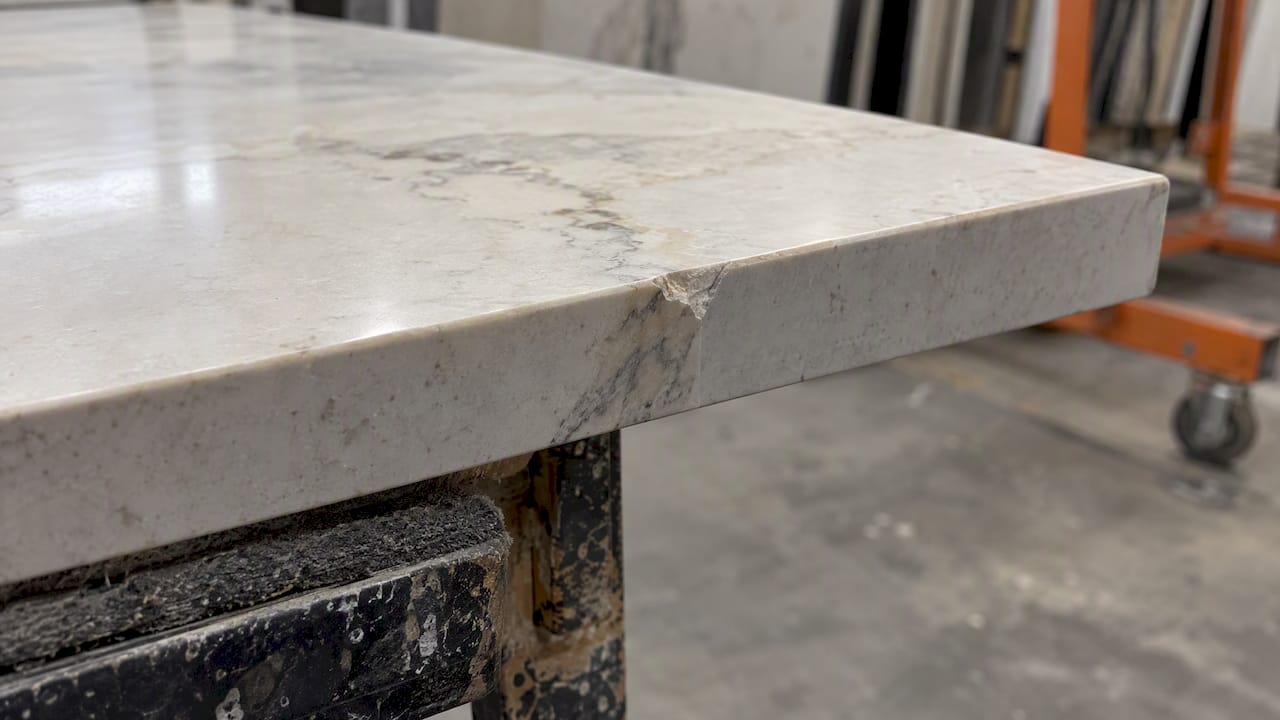
The pattern may be skin-deep. A common assumption is that the veining runs through the full thickness of the slab. Homedit points out that many products carry a printed design on the surface. If a corner chips, the core may not match the face, and the chip shows. Some premium lines now offer full-body color, so ask the supplier which type you are looking at.
Fabrication is specialized. SlabWise notes that it takes specific tooling, cutting speeds and diamond blades, and that thin slabs under 12 mm need full support underneath to avoid cracking. A fabricator who has done it many times is worth more than a small saving on the slab.
Repairs are harder. Quartz is generally easier to repair and more forgiving of impacts, and more shops stock and can fabricate it.
Fewer choices. Fewer fabricators and fewer edge options mean fewer quotes to compare and less flexibility if you change your mind.
How much do sintered stone countertops cost?
As of 2026, installed sintered stone typically runs about $65 to $150 per square foot in the U.S., with regional variation. That overlaps with premium engineered quartz, though sintered stone is often at the upper end.
Here is what that range means for a typical job:
| Counter area | Low end ($65/sq ft) | High end ($150/sq ft) |
|---|---|---|
| 30 sq ft (small kitchen) | $1,950 | $4,500 |
| 50 sq ft (average kitchen) | $3,250 | $7,500 |
| 80 sq ft (large kitchen with island) | $5,200 | $12,000 |
Those figures are simple multiplication of the published range, not a quote. Your number moves with:
- Slab thickness and brand. Thicker slabs and premium lines cost more.
- Cutouts. Sink, cooktop and faucet openings add fabrication time on a hard material.
- Edges and waterfalls. Mitered edges and waterfall ends use extra material and labor.
- Layout and waste. Large-format slabs are expensive to waste, so the cutting plan matters.
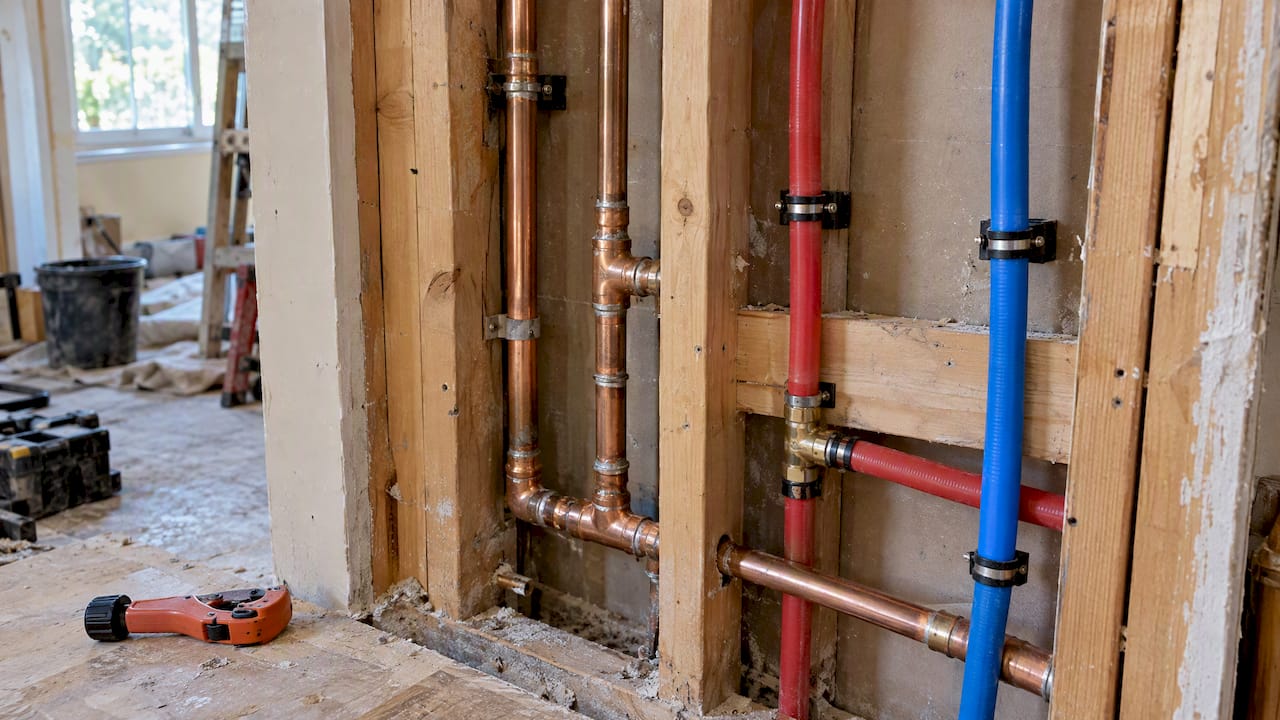
- Demolition and substrate. Removing old counters and making the base solid is part of the job.
A countertop is also only one part of a kitchen budget. For context, our published project ranges put a small U-shaped kitchen at $48,500 to $60,200 and a large kitchen with an island at $74,100 to $93,600, covering design and construction. You can see every layout on our kitchen remodel costs page.
Sintered stone vs. quartz
This is the comparison most people are really making. Here is how they differ on the points that affect daily life:
| Factor | Sintered stone | Engineered quartz |
|---|---|---|
| Composition | Fused minerals, no resin | Ground quartz plus polymer resin |
| Heat | Tolerates 500°F and beyond | Resin degrades around 300°F |
| Sunlight | UV-stable, fine outdoors | Can yellow outdoors |
| Stains | Nearly non-porous | Non-porous, resin can discolor with heat or sun |
| Edge profiles | Limited, eased or mitered work best | Wide range |
| Impact | More prone to edge chips | More forgiving |
| Repairs | Harder | Generally easier |
| Installers | Fewer qualified | Widely available |
| Price | Often upper end, about $65 to $150 per sq ft | Overlaps, often lower at entry level |
The comparison data comes from SlabWise’s quartz versus sintered stone breakdown.
Choose sintered stone if you cook with high heat, want a counter outdoors, or dislike the idea of resin in the surface.
Choose quartz if the kitchen is entirely indoors, you want a rounded or decorative edge, you want the widest range of designs and fabricators, or you want a lower starting price.
Sintered stone vs. granite and other options
Granite is a natural stone: every slab is unique, the edges can be shaped in many profiles, and it is usually sealed periodically. Sintered stone offers a more uniform look and no sealing, but has less edge flexibility. Marble looks beautiful and etches with acids, which sintered stone does not. If you are drawn to natural color variation, see our guide on natural stone colors for kitchen countertops.
For a wider look at every surface we install and how to weigh them, our page on choosing the right kitchen countertops walks through the options side by side.
Where sintered stone makes the most sense
Outdoor kitchens and lanais
This is where the material has the clearest edge. Sun, rain, heat from a grill and temperature swings are tough on resin-bound surfaces. If you are planning one, outdoor kitchen countertop options are worth reading about, since the surface has to cope with weather as well as cooking.
Busy cooking kitchens
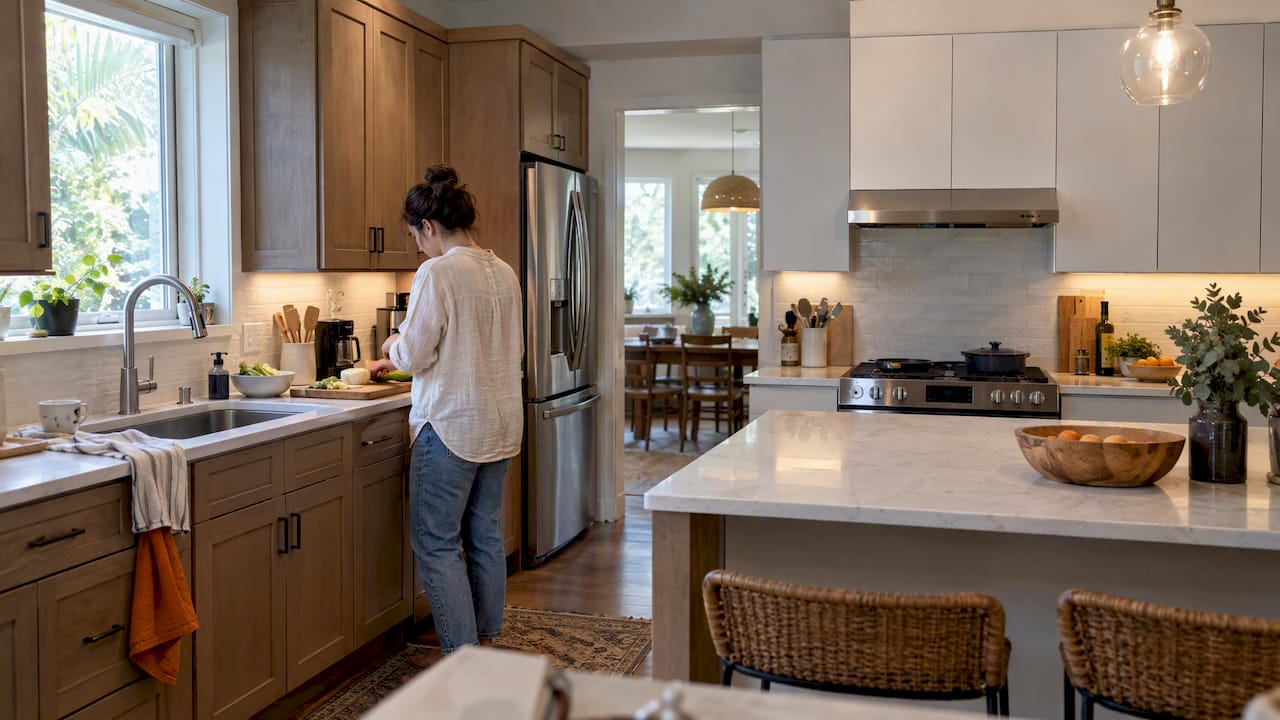
Families who cook daily on high heat, and who put hot cookware down without thinking, will appreciate a surface that shrugs it off.
Bathroom vanities and showers
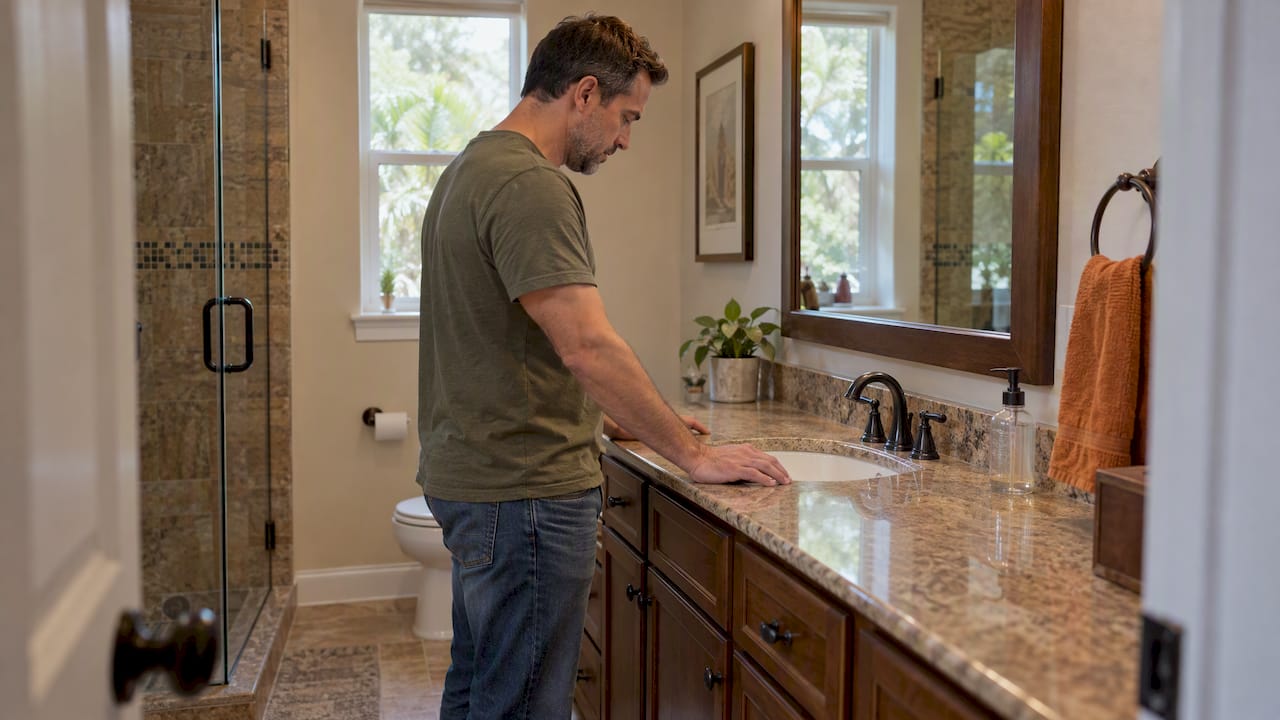
The low porosity suits wet rooms. Large slabs can also clad shower walls with few grout lines. Our bathroom vanity countertop ideas page shows other surface choices for those spaces.
Where it is a weaker fit
A tight budget, a strong wish for an ornate edge, or a household with heavy cast-iron pots that get dropped on corners. In those cases, quartz or granite may serve you better.
Perspective: how we think about choosing a countertop
We handle both design and construction, so we see what happens after the slab is picked. The countertop that looks best in a showroom is not always the one that works best in a kitchen that has to survive weekday dinners.
Our advice starts with questions, not materials. How do you cook? Do you set hot pans down? Do you want a soft rounded edge? Is anyone going to be climbing on the island? The answers usually narrow the field quickly. A hard, heat-proof, resin-free surface suits some households perfectly. For others, a familiar material with a forgiving edge is the better investment, and the money saved can go to cabinetry or lighting.
We also believe the surface is only as good as the plan around it. Cabinet layout, support, cutouts and the order of trades decide whether a project runs smoothly. That is why we give up-front pricing with detailed item lists and assign a dedicated Lead Carpenter to each job. Material choices are made with the full picture in front of you, at our showroom, not at the last minute.
— MediaBeast
How to buy sintered stone without regrets
- Set your priorities. Heat, outdoor use, edge style and budget. Rank them.
- Ask what type of slab it is. Printed surface or full-body color? It determines how a chip would look.
- Check the thickness. Thin slabs need full-substrate support. Ask how the fabricator plans to provide it.
- Choose the edge early. Eased, beveled or mitered edges perform best.
- Ask about the fabricator’s experience. How many sintered stone jobs, and can you see one?
- Look at the full slab, not a sample. Veining and tone can vary.
- Get the layout in writing. Seams, cutouts and waste should be on the quote.
Planning a countertop upgrade with us
If you are remodeling a Tampa-area kitchen or bath, we can take the countertop decision as part of the whole project: design, materials, construction and installation under one team, with a local showroom where you can compare surfaces in person. Our pricing is up-front, and each job has one Lead Carpenter you can reach.
Start with our kitchen remodeling services or the countertops for your kitchen remodel page, and tell us how you use your kitchen.
FAQ
Are sintered stone countertops worth it?
They are worth it when heat, sunlight or stain resistance are high priorities, such as outdoor kitchens or heavy-cooking households. For a standard indoor kitchen on a limited budget, quartz often delivers similar everyday results for less. Weigh the edge limitations before you commit.
Which is better, quartz or sintered stone?
Neither wins everywhere. Sintered stone handles higher heat and UV, while quartz offers more edge profiles, easier repairs and more fabricators. Pick based on where the counter goes and how you cook.
Can you put hot pans on sintered stone?
It tolerates temperatures of 500°F and above, far beyond the point where quartz resin starts to degrade. That said, a very hot pan on a cold surface is still a stress, so a trivet remains a reasonable habit if you want to be cautious.
Can sintered stone chip or crack?
Yes. It is rigid and edges can chip under hard impact, and thin slabs can crack if they lack full support underneath. Eased or mitered edges and an experienced installer reduce the risk considerably.
How is sintered stone different from “ultra compact surface”?
The terms describe the same family of products: slabs made by firing compacted mineral powders without resin. Different makers use different names, but the process and performance are broadly similar.
Sources
- What Is Sintered Stone? A Complete Guide, The Spruce
- What is Sintered Stone? Uses, Cost, and Considerations, Homedit
- Countertop Materials Compared: Quartz to Soapstone, Remodel Calculators
- Quartz vs Sintered Stone Countertops 2026, SlabWise
- SlabWise, 2026 installed price references