
A waterfall island is worth the premium when you have a genuinely striking slab, the budget to match it (typically a significant premium over a standard island edge), and a fabricator who can prove they’ve nailed a 45-degree miter joint before. If any of those three is shaky, a partial waterfall gets you most of the visual payoff for meaningfully less money and risk. The sections below break down the fabrication details, real cost ranges, and a decision framework to help you land on the right call.
TL;DR:
- Waterfall islands are most impressive with high-quality slabs that have continuous veining and are installed by fabricators skilled in 45-degree miters.
- The cost to add a waterfall edge ranges from $1,500 to $4,000 per side, with double-sided drops reaching up to $8,000, depending on material and labor.
- Partial waterfalls offer most of the visual impact at lower cost and risk, especially if the slab pattern is bland or the budget is limited.
- Proper fabrication, including seam matching and reinforcement, is crucial; ask for portfolio photos and tests on scrap slabs before proceeding.
- A full waterfall may limit seating and storage, and it can pose repair challenges, so evaluate if the aesthetic or functional gains justify the premium.
Table of Contents
- Waterfall Island Pros and Cons Start With Understanding the Detail
- What You Gain: The Real Benefits of a Waterfall Edge
- What You Lose: The Drawbacks Nobody Puts on the Mood Board
- What a Waterfall Island Actually Costs
- Choosing the Right Slab for the Job
- Vetting a Fabricator Before You Sign Anything
- A Quick Framework for Deciding
- Middle Ground Options That Still Look Custom
- Why We Push Clients Toward Planning First
- Getting Your Waterfall Island Done Right
- Sources
- FAQ
Waterfall Island Pros and Cons Start With Understanding the Detail
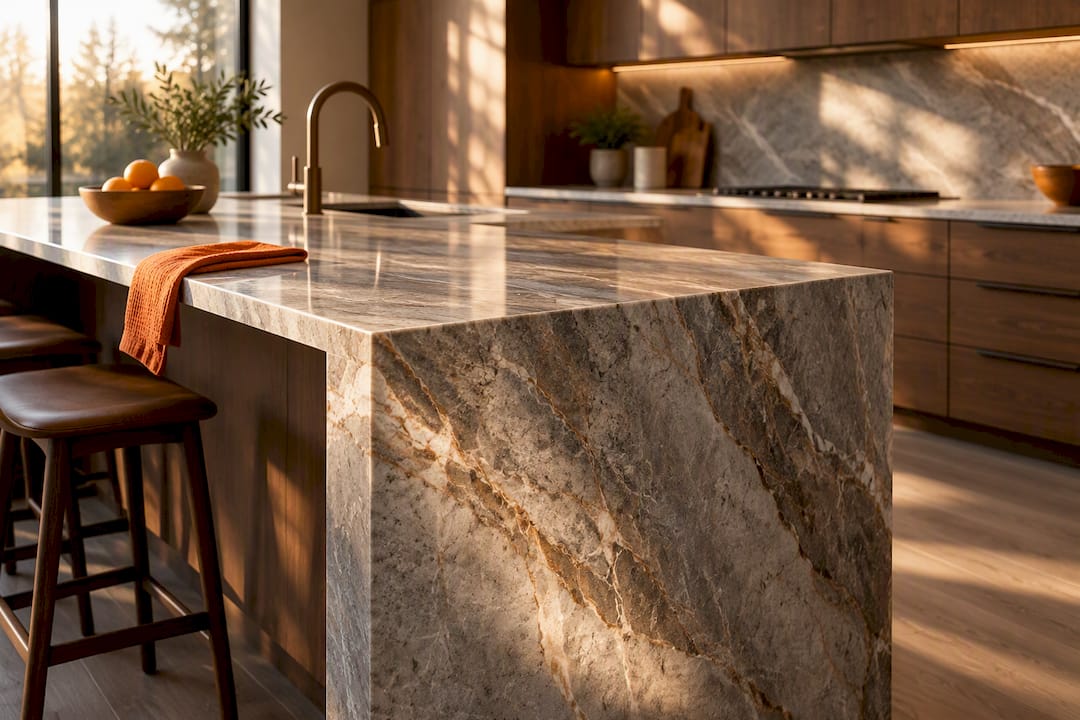
A waterfall island takes a single slab and wraps it over the countertop edge down to the floor, so the stone appears to “fall” in one continuous sheet instead of stopping at a standard edge profile. The visual trick depends entirely on the seam where the horizontal top meets the vertical side, which is why fabricators cut that joint at a precise 45-degree miter angle and match the stone’s veining across the bend.
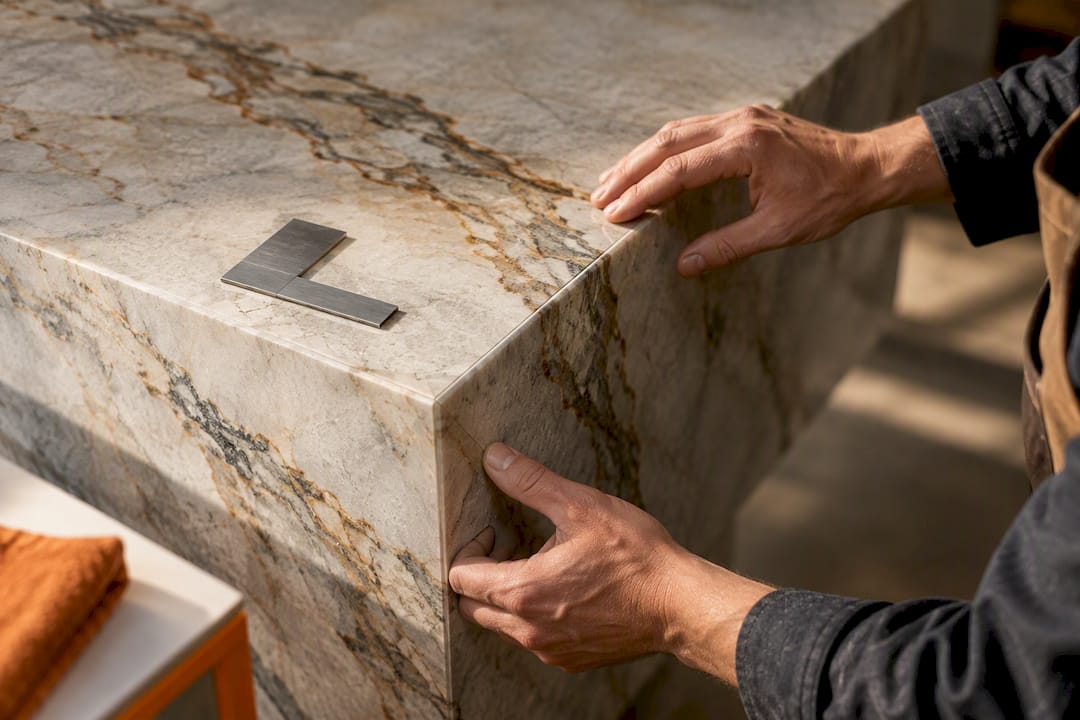
Get that miter wrong, and the whole point of the feature collapses into a visible, ugly line. Homeowners can choose a single waterfall (one side dropped), a double (both ends), or a partial waterfall that drops only part of the way down, a compromise gaining ground as a practical middle path for 2026 kitchens. The miter and vein match is where fabrication skill either shows off or shows its cracks.
What You Gain: The Real Benefits of a Waterfall Edge
Done well, a waterfall island becomes the room’s focal point the moment you walk in. That’s the design payoff people pay for.
- Visual weight. A continuous slab reads as sculptural, not just functional, especially with quartzite or heavily veined marble.
- Protection. Wrapping the panel over cabinet ends shields exposed particleboard or plywood from scuffs, moisture, and dings.
- Durability, conditionally. Harder stones like granite and quartzite hold up to daily bumps far better than the drywall or paneled ends they replace.
- Flexibility. You can mix materials, run a partial drop, or pair stone with a wood-clad end for contrast.
- Resale interest. Buyers touring a kitchen tend to notice a waterfall island before they notice much else in the room.
Designers who specialize in stone consistently warn against wasting the feature on a dull slab. As one fabrication guide puts it, the effect lives or dies on the aesthetic quality and vein continuity of the material itself, not on the detail alone.
Pro Tip: If your slab has bland, repetitive veining, save your money. A waterfall on a flat pattern just draws more attention to how little pattern there is.
What You Lose: The Drawbacks Nobody Puts on the Mood Board
The premium is real, and so are the practical headaches. Vein matching alone can force you into buying extra material, since each panel typically needs 6 to 18 additional square feet per side just to get the pattern to line up.
- Cost creep. Extra slab, extra polishing, extra labor. It adds up fast, and estimates often run higher than homeowners expect going in.
- Weight. A full stone panel dropping to the floor is heavy enough that it usually needs mechanical bracing or a reinforced cabinet frame underneath.
- Transport risk. Large single-piece panels crack more easily in transit and during installation than standard countertop sections.
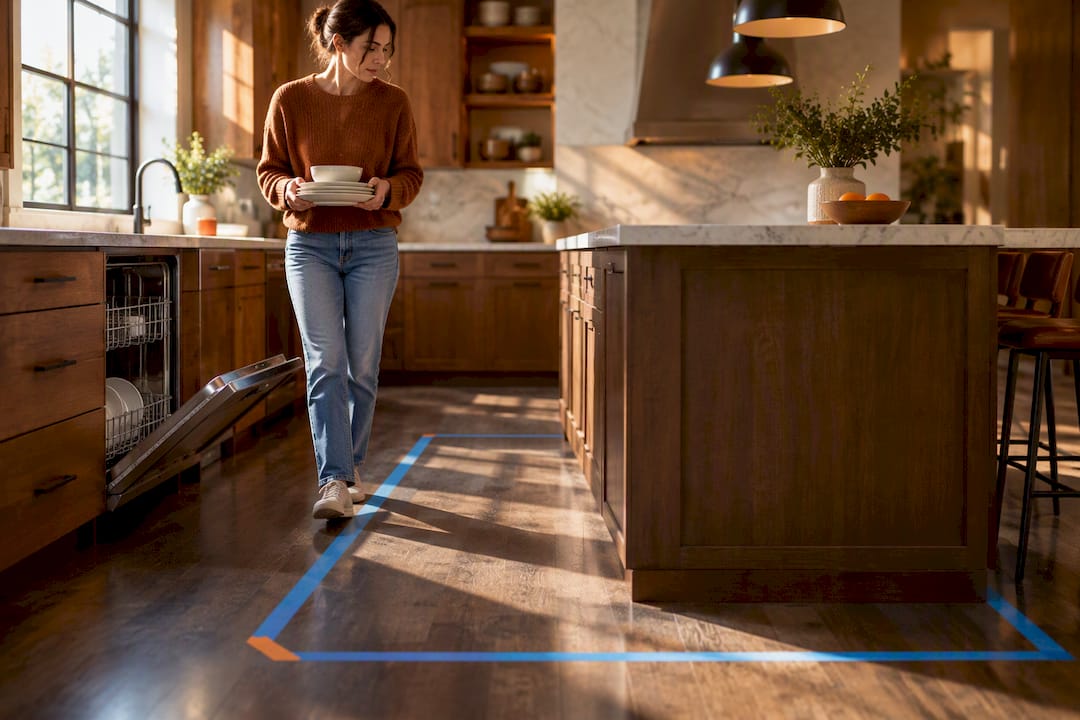
- Lost seating and storage. A waterfall end typically can’t hold stools or drawers, so you’re trading function for form on that side of the island.
- Repair headaches. Chip or crack a waterfall panel, and you’re not patching an edge, you’re potentially replacing a full custom-cut piece.
- Crumb catch. The 90-degree drop can trap debris right where the countertop meets the floor line, which shows dust faster than a toe-kick.
Pro Tip: Ask your fabricator directly how they handle a chipped miter corner after installation. If they hesitate, that’s your answer about their experience level.
What a Waterfall Island Actually Costs
Material choice drives the number more than anything else, but the labor for cutting and finishing that miter joint is not trivial either. A single waterfall side commonly adds $1,500 to $4,000 to an island; a double-sided drop commonly adds $3,000 to $8,000, according to fabrication cost breakdowns.
| Cost driver | What it covers | Why it swings the price |
|---|---|---|
| Extra slab material | 6 to 18 sq ft per panel side | Needed to keep veining continuous across the miter |
| Miter fabrication | Cutting, test fitting, epoxy bonding | Precision work; mistakes mean a redo on expensive stone |
| Edge polishing | Finishing the mitered seam and exposed edges | Waterfall installs require significantly more polishing than a standard edge |
| Installation labor | Rigging, leveling, on-site bonding | Heavier panels need more hands and more careful transport |
Ways to trim the premium: go single-sided instead of double, choose porcelain instead of natural stone, use a thinner 2cm panel with hidden reinforcement, or ask your fabricator whether a remnant slab from another job can supply the matching panel. Budget extra time too. Templating, ordering a slab that vein matches, and letting epoxy cure properly all add days a standard countertop install doesn’t need.
Choosing the Right Slab for the Job
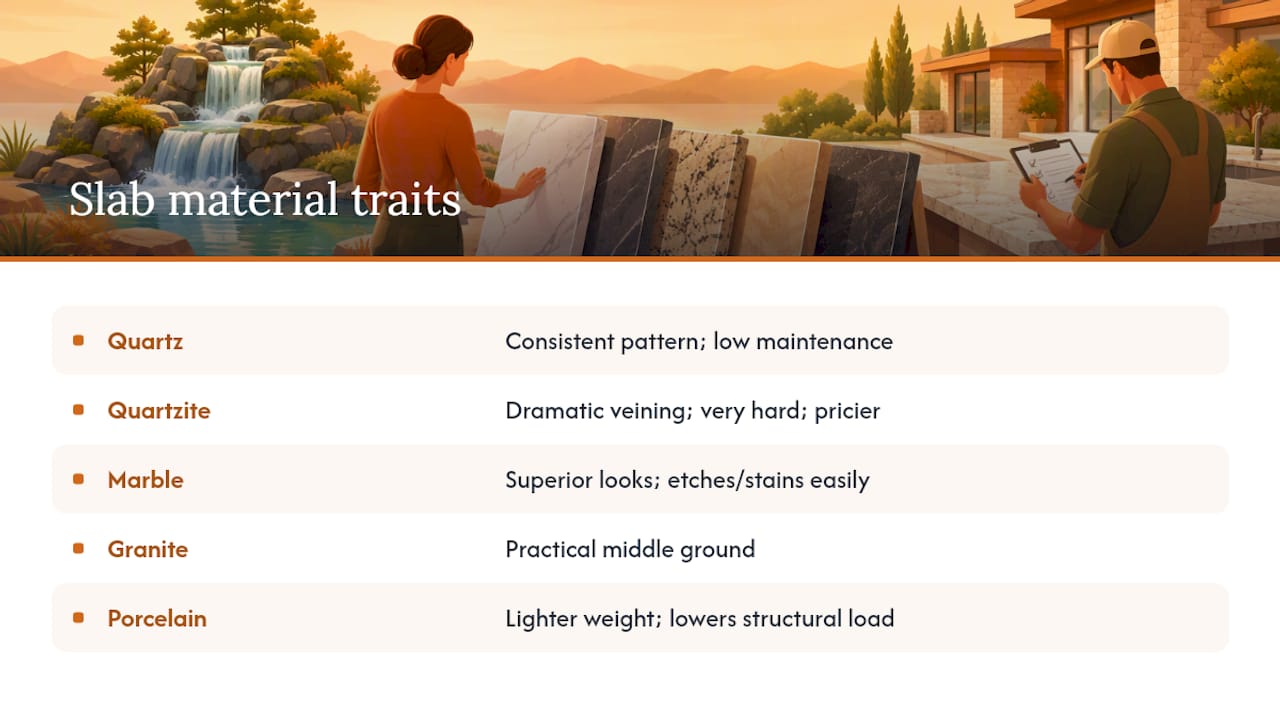
Not every stone behaves the same way once you bend it around a 90-degree corner. Quartz gives you a consistent, repeatable pattern and low maintenance, which makes vein matching almost a non issue. Quartzite delivers dramatic natural veining and serious hardness, at a real price jump. Marble looks the best in most rooms but etches and stains easily, so treat it as a showpiece finish rather than a workhorse surface.
Granite and porcelain round out the practical middle ground. Porcelain in particular is lighter, which reduces the structural demands of a heavy stone drop and appeals to homeowners nervous about weight. Thickness matters too: 2cm panels need reinforcement, while 3cm slabs, and steel rodding for softer stones like marble, hold up far better under the stress a mitered corner puts on the material. For a deeper comparison of how these materials perform across a full kitchen, see this guide to countertop selection.
Vetting a Fabricator Before You Sign Anything
The gap between a stunning waterfall island and a regrettable one usually comes down to who cut the miter, not which stone you picked.
- Ask for portfolio photos of past waterfall miters, ideally close-up shots of the seam, not just wide room shots.
- Confirm their joining method. A proper miter should use two-part epoxy, and softer stones like marble should get steel rodding under the miter zone to resist cracking.
- Coordinate outlet and core-drill locations during templating, before the slab is cut, not after.
- Verify leveling and transport protocols for the panel, since a large single piece is far more fragile in transit than a standard cut.
- Get a written estimate that separates the waterfall premium (extra material, polishing, labor) from the base countertop cost, so you know exactly what you’re paying for.
Pro Tip: Have the fabricator test the miter cut on a scrap piece of your actual slab before committing to the full panel. A five-minute test can save you from a very expensive redo.
A Quick Framework for Deciding
Run through three questions before you commit.
- Will people actually see it? A waterfall end facing a wall or a pantry does nothing for you. It only earns its cost on a visible sightline from the main living space.
- Do you need that seating or storage? If your island end is your only bar seating or your only deep drawer bank, a full waterfall costs you function you can’t get back.
- Is your slab and budget genuinely worth it? A flat, low-interest slab or a tight budget both point toward skipping the full drop.
When any of those answers lean negative, a partial waterfall is usually the smarter layout call. It keeps sightline drama without sacrificing the whole end of the island. For general layout and clearance planning around the island itself, this island sizing guide is worth a look before you finalize dimensions.
Middle Ground Options That Still Look Custom
You don’t need a full monolithic drop to get a sculptural kitchen. A partial waterfall, dropped only a foot or two down the side, captures most of the visual punch for a fraction of the material cost. Butt-jointed or laminated vertical panels skip the miter entirely, trading a little seam visibility for real savings. Thinner porcelain panels over concealed support cut weight without cutting style. Pairing stone with a wood-clad end or open shelving softens the look and reclaims some storage you’d otherwise lose.
Why We Push Clients Toward Planning First
A waterfall island rewards patience and punishes shortcuts. The heaviest failures we see aren’t material choices, they’re skipped steps: no test miter, no reinforcement plan, no clear line item for the premium in the estimate.
A remodeling company that combines design and construction under one roof, with a dedicated lead carpenter overseeing complex installations like this one, can help ensure the miter fabrication, slab selection, and electrical coordination are well managed as part of a comprehensive kitchen remodeling project. A dust containment system during templating and installation can be beneficial for managing disruption during a material-heavy project. Rodding, core drilling, and moving a full stone panel are not weekend DIY tasks. For a fuller rundown of what typically justifies a professional over a DIY approach, see our breakdown on hiring a pro versus doing it yourself.
— MediaBeast
Getting Your Waterfall Island Done Right
If you’ve read this far, you already know the difference between a waterfall island that looks custom and one that looks like a missed detail comes down to who’s holding the tools. A remodeling company that handles design and construction together and offers up-front pricing can help you know what the waterfall premium actually costs before demo day, not after.
Our process starts with a consult that covers slab selection, layout, and templating in the same conversation, so the miter work gets planned around your kitchen’s actual sightlines and cabinetry, not bolted on afterward. Having a dedicated lead carpenter stay on a project from templating through install can be important when the job involves rodding, epoxy bonding, and moving heavy panels. It’s advisable to ask about the fabricator’s miter experience and how dust is controlled to keep the kitchen livable during the build. Full package pricing for islands and kitchen layouts, waterfall or otherwise, is outlined on our kitchen remodel cost guide, and that’s the right next stop if you’re ready to get real numbers for your space.
Sources
- Waterfall Countertop Edges: Complete Fabrication Guide – Dynamic Stone Tools
- Waterfall Edge — Fabrication & Layout Guide | SlabKast
- Waterfall cost breakdown and examples – Slabwise
- Waterfall edge countertops: Design and fabrication reference – Countertop Authority
- Waterfall kitchen island trend pros and cons – Hunker
FAQ
Is a Waterfall Kitchen Island Outdated?
No, but the full monolithic version is shifting. 2026 kitchen trends lean toward partial waterfalls and mixed materials rather than the heavy, blocky full-slab drop that dominated a few years ago.
Why Are Homeowners Removing Waterfall Islands?
Most removals come down to regret over lost seating, a slab that didn’t have enough visual interest to justify the cost, or a miter joint that failed and became an eyesore instead of a feature. It’s rarely the concept itself that fails, it’s poor slab choice or weak fabrication.
Is a Waterfall Countertop Worth the Extra Cost?
It’s worth it when you have a striking, well-veined slab and a fabricator who can prove clean miter work, since a single side typically adds $1,500 to $4,000 and a double side adds more. On a dull slab or a tight budget, a partial waterfall usually delivers better value.
How Much Does a Waterfall Kitchen Island Cost With Tampakitchenandbath?
A Large Kitchen with Island typically costs between $74,100 and $93,600, while a Large L-Shaped Kitchen with Island typically costs between $62,600 and $79,100; a waterfall edge adds to those ranges depending on material and side count. Full package details are on the kitchen remodel cost page.
Can You Retrofit an Existing Island With a Waterfall Edge?
Yes, but it usually means removing the current countertop entirely rather than adding a panel to what’s there, since the vein match and miter require a single continuous slab layout. It’s closer to a full countertop replacement than an upgrade.