
Start with your toilet if it predates 1994, then move to a WaterSense showerhead, faucet aerators, and any leaking valve you have been ignoring. Those four moves cost the least and save the most, and WaterSense and ENERGY STAR labels tell you which specific products actually deliver on that promise. A typical household can trim a substantial amount of water use each year this way. The category breakdown below explains what to buy and why.
TL;DR:
- Replacing pre-1994 toilets and installing WaterSense showerheads or faucet aerators can significantly reduce household water use with minimal investment.
- Performance ratings such as MaP scores for toilets and WaterSense labels for fixtures ensure that savings do not come at the cost of efficiency or comfort.
- Upgrading appliances like ENERGY STAR washers and dishwashers offers substantial water and energy savings, especially if current units are reaching the end of their lifespan.
- Home water pressure must be checked before fixture replacement to prevent poor performance, especially when selecting ultra-low-flow showerheads or faucets.
- Professional installation and advice are recommended for plumbing modifications beyond simple fixture swaps, ensuring optimal function and avoiding common issues like inconsistent pressure or temperature swings.
Table of Contents
- Water-Efficient Fixtures by Category: Toilets, Showerheads, Faucets, and Appliances
- How Do You Choose the Right Fixture for Your Home?
- Installing and Maintaining Water-Efficient Fixtures
- What Are the Real Savings and Payback Times?
- When Do You Need a Professional Instead of a Hardware Store Trip?
- Are There Rebates for Water-Efficient Fixture Upgrades?
- Do Water-Efficient Fixtures Help the Environment Beyond Lower Bills?
- Will Efficient Fixtures Change How Your Water Heater Performs?
- Balancing Efficiency With Comfort: An Editorial Take
- How Tampakitchenandbath Handles Efficient Fixture Upgrades
- Where to Verify Fixture Specs and Ratings
- Sources
- FAQ
Water-Efficient Fixtures by Category: Toilets, Showerheads, Faucets, and Appliances
Every fixture category has its own math, and the savings potential varies more than most homeowners expect. A toilet installed before 1994 can use 3.5 to 7 gallons per flush. A modern high-efficiency toilet uses 1.28 gallons per flush or less, and dual-flush models let you choose an even lower volume for liquid waste. That gap alone accounts for most of the water a household wastes on plumbing fixtures, which is why toilets top the priority list.
Flushing performance matters as much as flow volume. A low-flow toilet that clogs or requires a second flush erases its own savings and irritates everyone in the house. That is where Maximum Performance testing comes in. MaP testing and third-party performance data score toilets on how well they clear solid waste at a given flush volume, so you can avoid a model that looks efficient on paper but performs poorly in real use. Pressure-assist toilets, which use a compressed air chamber to boost flush force, make sense in households with multiple bathrooms on one drain line or anyone who has had chronic double-flushing problems with a gravity-fed low-flow model.
Showerheads follow a similar logic. Older heads run at 2.5 to 3.5 gallons per minute. WaterSense-labeled showerheads cap out at a reduced flow rate compared to older models, and the better ones close that gap in spray force through design, not just volume. Aerating showerheads mix air into the water stream, which feels fuller at lower flow but loses some heat faster in cold bathrooms. Laminar-flow models push individual water streams instead, holding heat better but sometimes feeling less like a “full” shower to people used to older fixtures. If you shower in a chilly bathroom, that distinction is worth testing before you commit.
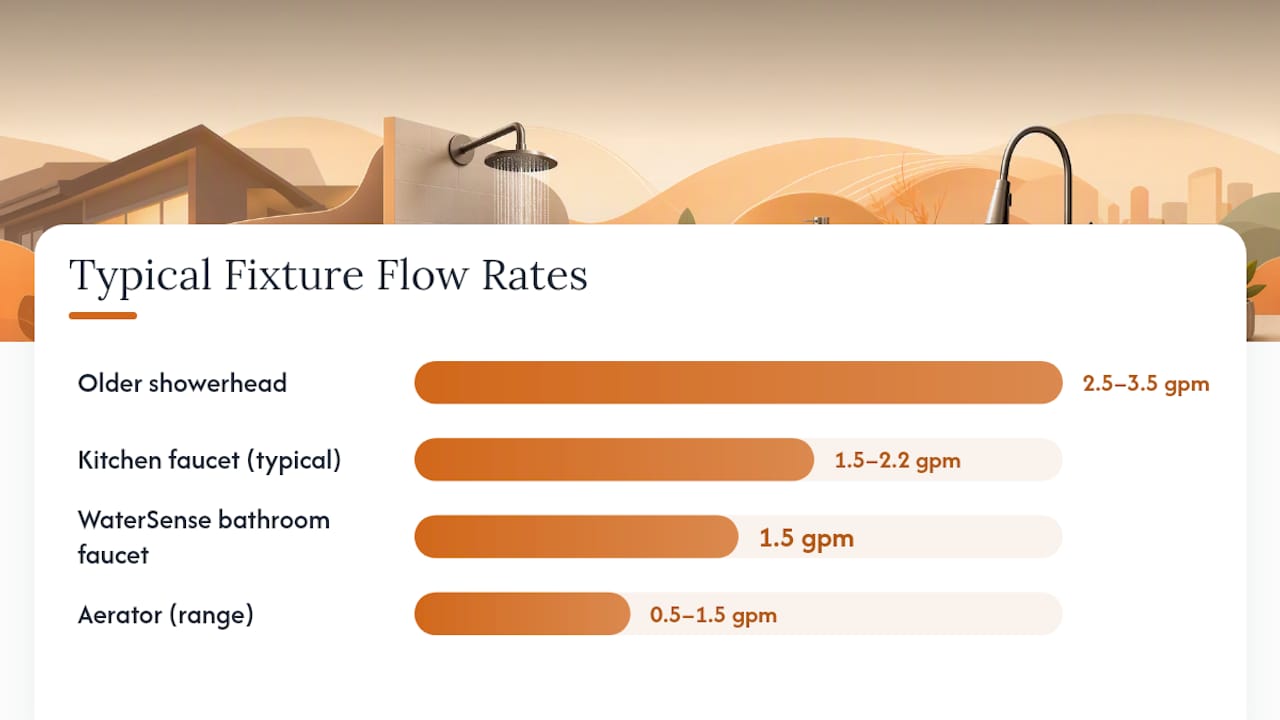
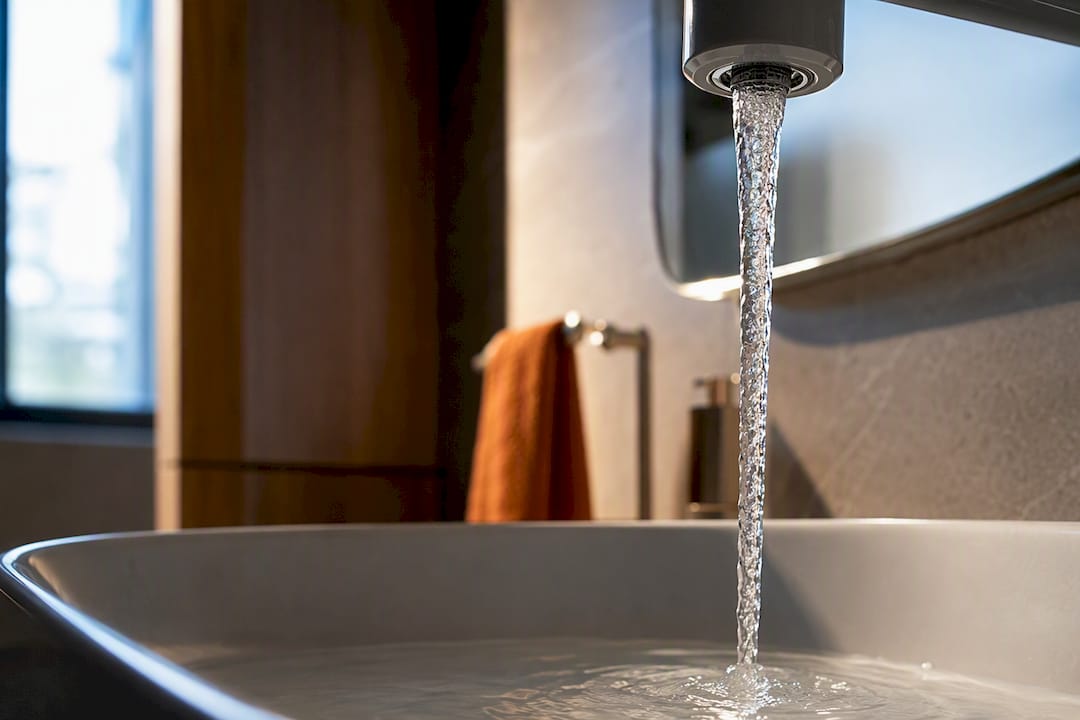
Faucets split into two very different use cases. Bathroom faucets do light-duty work: handwashing, tooth brushing, shaving. Kitchen faucets fill pots, rinse produce, and need enough force to clear a sink. WaterSense bathroom faucets max out at 1.5 gpm, roughly a third below the old 2.2 gpm federal standard, and the EPA estimates that swapping old faucets and aerators for WaterSense models saves the average family about 700 gallons a year. Kitchen faucets generally run higher, often 1.5 to 2.2 gpm, because that lower bathroom flow rate would make filling a stockpot a chore. If you are not ready to replace a faucet body, a $3 to $10 aerator swap gets most of the same benefit. Aerators come in a range from 0.5 gpm (bathroom, ultra-low) up to 1.5 gpm (kitchen, standard efficient), and screwing in a new one takes about five minutes with no plumbing skills required.
Appliances round out the picture, and this is where water efficiency and energy efficiency overlap directly:
- ENERGY STAR clothes washers use about 30% less water than conventional models, largely because front-loading and efficient top-loading designs tumble clothes through a shallow pool instead of fully submerging them.
- ENERGY STAR dishwashers use roughly 18% less water than standard models, while also using less hot water per cycle than washing the same load by hand.
- Pre-rinse spray valves (mainly relevant if you have a commercial-style kitchen faucet) can cut rinse water use substantially when replaced with low-flow versions.
- Efficient hose nozzles with shutoff triggers stop the constant-flow waste of a standard garden hose left running.
- Smart irrigation controllers adjust watering schedules based on weather and soil data, which matters most for homes with lawns but has no bearing on indoor fixtures.
Appliance replacement tends to make the most financial sense when your washer or dishwasher is already near the end of its service life. Swapping a functional 8-year-old machine purely for water savings rarely pays back fast enough to justify it. Swapping a dying 15-year-old one for an ENERGY STAR model is close to a free upgrade, since you were replacing it anyway.
How Do You Choose the Right Fixture for Your Home?
Flow rate on a box means nothing if your home’s water pressure cannot support it. Here is the sequence that actually prevents a disappointing installation.
- Check your water pressure. A pressure gauge on an outdoor spigot (sold for about $10 at most hardware stores) gives you a reading in seconds. Plumbing professionals generally consider 20 to 80 psi the safe operating range for residential fixtures, and anything under 40 psi will make even a well-designed low-flow showerhead feel weak.
- Match flow rate to your actual pressure, not just the label. If you are already below 45 psi, an ultra-low-flow 1.5 gpm showerhead can feel like standing under a light drizzle. A 2.0 gpm WaterSense model with a good aerating design usually holds comfort better at low pressure than the absolute lowest-flow option on the shelf.
- Check for a real performance rating, not just a flow number. Look for the WaterSense label on faucets and showerheads, ENERGY STAR on appliances, and MaP scores on toilets. These marks confirm independent testing rather than a manufacturer’s marketing claim.
- Confirm whether the fixture needs a mixing or compensating valve. Some low-flow showerheads and shower systems require a pressure-compensating valve to maintain consistent temperature and flow, especially in older homes with galvanized supply lines.
- Decide between retrofit and replacement. An aerator swap or a fill-cycle diverter (a small device that shortens a toilet’s refill cycle) takes minutes and costs under $20. Full fixture replacement makes sense when the existing unit is failing, badly outdated, or when you are already remodeling the space.
Pro Tip: Before buying a low-flow showerhead for a low-pressure home, ask the retailer or plumber whether it is rated as a “high-performance” or “high-efficiency” design specifically built for reduced pressure, not just a standard low-flow head. The difference in spray force can be dramatic even at the same gpm rating.
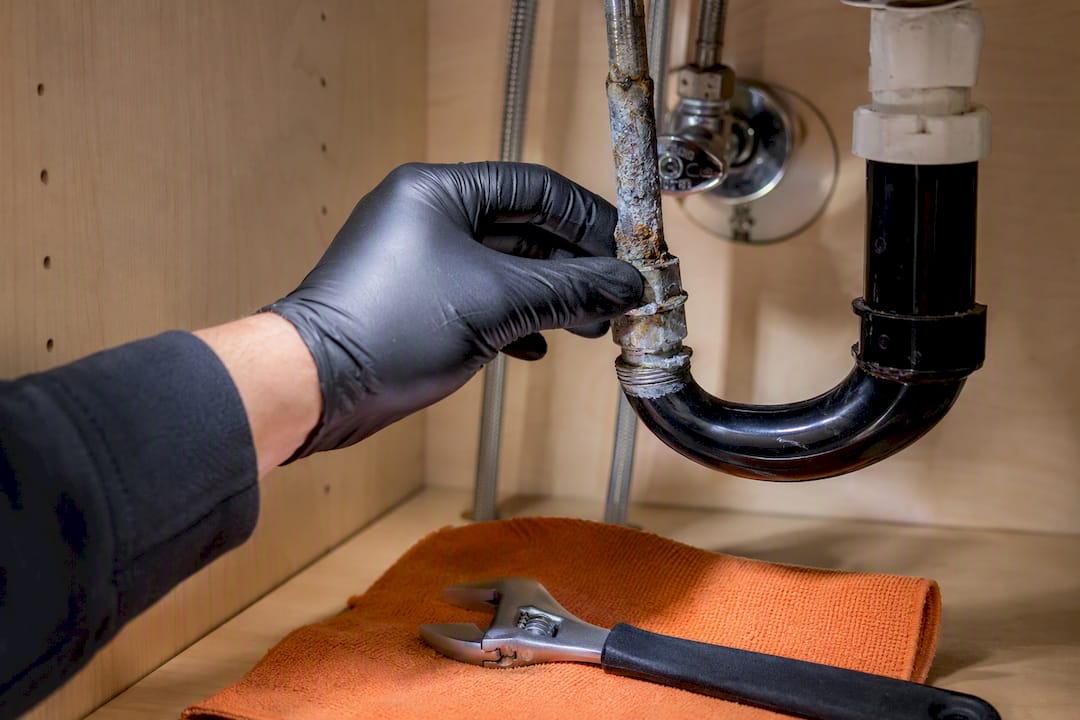
Watch for red flags that mean it is time to call a plumber instead of a hardware store run: fluctuating water pressure across fixtures, visible corrosion on supply lines, a home built before 1970 with original galvanized piping, or a new fixture that never seems to reach full temperature. Those point to a plumbing issue no aerator will fix.
Installing and Maintaining Water-Efficient Fixtures
Most of this work takes under an hour and no special tools. The rest is just remembering to check on it.
Test for hidden toilet leaks first, since a silent leak can waste more water than a fixture upgrade saves. Put a few drops of food coloring in the tank, wait 10 minutes without flushing, and check the bowl. Color in the bowl means the flapper valve is leaking. A cracked or warped flapper is a $10 to $15 fix; a persistent leak after replacing it may signal a bigger tank issue worth a plumber’s opinion.
Swapping fixtures yourself is straightforward for most homes:
- Unscrew the old aerator from the faucet tip counterclockwise, using a cloth or pliers if it is corroded in place.
- Thread on the new aerator by hand, then snug it with pliers wrapped in a cloth to avoid scratching the finish.
- Unscrew the old showerhead from the shower arm and check the thread for old plumber’s tape residue.
- Wrap fresh plumber’s tape clockwise around the threads before installing the new head, then hand-tighten and turn a quarter turn more with a wrench if needed.
If pressure feels inconsistent after installation, or you notice temperature swings you did not have before, that is a sign the home needs a compensating valve, not a different showerhead.
Flow-monitoring devices, which clamp onto a main water line and track usage in real time through a phone app, catch leaks and unusually high-use days faster than a monthly utility bill ever will. They are optional but useful if you have had leak surprises before.
Fixing small leaks around the house can save up to 20 gallons per day per leak, which is why the EPA runs an annual reminder called Fix a Leak Week each spring. Put a recurring reminder on your calendar to do the dye test, check under-sink connections for moisture, and glance at your water meter before and after a two-hour period with no water use. A meter that moves during that window means something, somewhere, is leaking.
What Are the Real Savings and Payback Times?
The numbers behind these upgrades justify the effort, even before counting the energy savings that come with them.
- A full toilet replacement from an old 3.5 to 7 gpf model to a 1.28 gpf high-efficiency unit is typically the single biggest indoor water saver in a home, given how many flushes a household logs in a year.
- Efficient showerheads at 2.0 gpm or less, versus older 2.5 to 3.5 gpm heads, cut shower water use by roughly a third to nearly half depending on the starting fixture, according to performance data compiled by Stanford’s water efficiency program.
- Faucet aerators and WaterSense faucets save the average family about 700 gallons a year for a retrofit that usually costs less than a movie ticket per fixture.
- ENERGY STAR washers cut water use by about 30%, and because roughly 90% of a washing machine’s energy use goes toward heating water, that reduction shows up on your energy bill too, not just your water bill.
Cost ranges vary by fixture and region, but the pattern holds across most retrofits: aerators run $3 to $15 and pay back in weeks. WaterSense showerheads run $15 to $60 and typically pay back within a year through lower water and water-heating costs. High-efficiency toilets run higher, often several hundred dollars installed, with payback measured in a few years depending on household size and local water rates.
Bigger investments belong in a different conversation. Greywater reuse systems, which capture water from showers and washers for irrigation or toilet flushing, can reuse up to 60% of household water but involve real plumbing work and permitting in many areas. Drain-water heat recovery systems, priced in the hundreds of dollars, capture heat from outgoing shower water to preheat incoming water, and they pay back over several years rather than months. Both make more sense as part of a larger remodel than as a standalone weekend project, and pairing them with eco-friendly renovation planning tends to produce better results than bolting them onto an existing bathroom.
When Do You Need a Professional Instead of a Hardware Store Trip?
Some upgrades stop being a weekend project the moment they touch the plumbing behind the wall. Rerouting hot water lines, adding a pressure-compensating valve to an older shower system, or dealing with a house that runs low pressure across every fixture on the second floor all call for a licensed plumber or a remodeling team that handles plumbing as part of the job.
This is where a bathroom renovation and a fixture swap start to overlap. If your home has long, narrow supply runs, aging galvanized pipe, or a water heater that struggles to keep up once you add a second low-flow fixture on the same line, a fixture-by-fixture approach eventually hits a ceiling. A full remodel lets a contractor address the pipe layout, the fixtures, and the finish work in one pass instead of three separate headaches spread over two years.
Some remodeling projects are structured around up-front pricing and a dedicated Lead Carpenter assigned to each job, so homeowners know the cost and the point of contact before work starts. Its Work Clean System is built to keep dust and disruption contained during construction, which matters more than most homeowners expect once demolition starts on a shared bathroom. Readers curious about how past projects turned out for other homeowners can look through past client experiences before deciding whether a fixture swap or a full remodel fits their situation better.
Are There Rebates for Water-Efficient Fixture Upgrades?
Many water utilities and municipalities offer rebates for WaterSense toilets, high-efficiency showerheads, and ENERGY STAR washers, though the amount and eligibility rules vary widely by provider and change from year to year. Some utilities offer a flat rebate per fixture; others run seasonal programs tied to drought conditions or run through a limited annual budget that closes once funds are spent.
The fastest way to find what applies to your address is to check your water utility’s own rebate or conservation page directly, since third-party lists often go stale within a year. Many utilities also partner with WaterSense on regional promotions, offering free showerhead exchanges or toilet rebate events during Fix a Leak Week each spring. Some electric utilities run parallel rebates for ENERGY STAR washers and dishwashers, since reduced hot-water demand also reduces electric or gas load.
A few practical notes before applying: most rebate programs require proof of purchase and the WaterSense or ENERGY STAR label on the receipt or packaging, and many require the old fixture to be removed and, in some cases, photographed or turned in. If a remodel is already on your calendar, it is worth checking rebate eligibility before demolition begins, since some programs require the old fixture as proof of replacement rather than just a receipt for the new one. Rebate funds are also commonly capped annually, so applying early in the calendar year improves your odds versus waiting until a program runs out of budget.
Do Water-Efficient Fixtures Help the Environment Beyond Lower Bills?
Cutting household water use eases pressure on watersheds, reservoirs, and the aquifers many municipal systems draw from, particularly in regions where summer demand already strains supply. Less water pulled from a river or reservoir for household use means more stays in the system to support fish habitat, wetland health, and downstream ecosystems that depend on stable flow levels.
There is also a treatment-side benefit that rarely gets mentioned. Every gallon that does not go down a drain is a gallon your local wastewater treatment plant does not have to process, which means less energy spent pumping and treating water and fewer chemicals used in that treatment cycle. In coastal and lakefront areas, that translates into lower nutrient loading and reduced risk of the algae blooms that plague overtaxed watersheds during hot months.
Water efficiency and energy efficiency are tied together closely enough that cutting one nearly always cuts the other. Heating water accounts for a meaningful share of a typical home’s energy use, so lower hot-water demand from efficient showerheads, faucets, and washers means fewer emissions from the power plant or gas furnace supplying that heat. None of this requires the homeowner to think about ecosystems while shopping for a showerhead. It happens automatically once the fixture is in place.
Will Efficient Fixtures Change How Your Water Heater Performs?
Lower flow rates change the math your water heater runs every day. A showerhead using 2.0 gpm instead of 3.0 gpm needs less hot water per minute, which means your existing tank or tankless unit works less hard to maintain temperature during a shower. For most households, this shows up as a quieter recovery cycle on a tank heater and a lower modulation rate on a tankless unit, not as a noticeable change in comfort.
The one place this can get tricky is in homes with older tankless water heaters that were sized for higher-flow fixtures. Some tankless units have a minimum flow rate required to trigger ignition, often somewhere around 0.5 to 0.75 gpm. Pair an aggressively low-flow fixture with a tankless heater near that threshold, and the unit can fail to fire consistently, leading to intermittent bursts of cold water. If you have a tankless system and are considering an ultra-low-flow fixture below 1.5 gpm, check your unit’s minimum activation flow rate before buying, or ask a plumber to confirm compatibility.
Tank-style water heaters do not have this ignition-threshold issue, but they do benefit from reduced hot-water draw over time in a different way: less cumulative demand means less mineral buildup and wear inside the tank, which can modestly extend service life. None of this requires you to resize or replace a water heater just to install efficient fixtures. It only becomes a real consideration if you are combining several low-flow upgrades with a tankless system that was sized tightly to begin with.
Balancing Efficiency With Comfort: An Editorial Take
The fixture industry loves to sell the lowest gpm number on the shelf as the responsible choice, and that is where a lot of homeowners go wrong. A 1.0 gpm showerhead in a house running 35 psi is not virtue, it is a bad shower. Efficiency only sticks with a household when it does not feel like a downgrade.
The smarter path is staged: fix leaks and swap aerators first, since they cost almost nothing and never disappoint. Move to a WaterSense showerhead and toilet next, checking pressure before you buy. Save the bigger plumbing decisions, like a tankless water heater or a full re-pipe, for when you are already remodeling anyway. Efficiency upgrades stacked onto a planned renovation cost less per dollar of value than the same upgrades done piecemeal over five separate weekends.
— MediaBeast
How Tampakitchenandbath Handles Efficient Fixture Upgrades
Fixture shopping gets a lot simpler once someone who does this daily is helping you match products to your home’s actual plumbing instead of guessing from a shelf tag.
Some remodeling teams pair design and construction under one roof, so a fixture upgrade during a bathroom remodel does not turn into multiple contractors pointing fingers at each other. Projects may get a dedicated Lead Carpenter who oversees the work start to finish, and up-front pricing means costs are known before demolition begins. The Work Clean System keeps dust and debris contained throughout construction, which matters most in a household still using the rest of the home while the bathroom is torn apart. Browse the Tampa bathroom remodeling gallery to see finished projects, or check what a bathroom remodel typically costs before requesting a consult. If your fixture goals are tangled up with bigger plumbing questions, that is exactly the kind of project worth planning with a team that handles both the pipes and the finish work in one pass.
Where to Verify Fixture Specs and Ratings
- WaterSense product specifications (EPA): the official certification criteria for water-efficient fixtures and how the 20% efficiency threshold is set.
- WaterSense bathroom faucets (EPA): flow rate limits and savings estimates for faucet upgrades.
- Guide to Home Water Efficiency (US DOE): ENERGY STAR appliance water savings and larger-scale efficiency systems.
- Best Management Practice #7: Faucets and Showerheads (DOE): federal flow-rate baselines for comparison against WaterSense specs.
- Top Performing Water Fixtures Fact Sheet (Stanford): MaP performance data and showerhead flow benchmarks.
- Start Saving (EPA WaterSense): leak detection guidance and Fix a Leak Week resources.
Sources
- WaterSense product specifications | US EPA
- Bathroom faucets | WaterSense (US EPA)
- Guide to Home Water Efficiency (US DOE)
- Top Performing Water Fixtures Fact Sheet (Stanford)
FAQ
What Is a Water-Efficient Fixture?
A water-efficient fixture is a toilet, showerhead, faucet, or appliance engineered to use less water than a standard model while maintaining acceptable performance, often verified through certification programs like WaterSense, which requires at least 20% better efficiency than the federal baseline.
What Household Fixture Uses the Most Water?
Toilets typically account for the largest share of indoor household water use, especially in homes with older models installed before 1994 that use 3.5 to 7 gallons per flush versus 1.28 gallons or less in a modern high-efficiency toilet.
What Are Some Water-Efficient Bathroom Faucets?
Look for faucets and aerators carrying the WaterSense label, which caps bathroom faucet flow at 1.5 gallons per minute and can save the average family about 700 gallons a year compared to older 2.2 gpm models. Professional contractors can help source and install WaterSense-rated faucets as part of a bathroom remodel.
What Are Some Examples of Water-Efficient Appliances?
ENERGY STAR certified clothes washers and dishwashers are the two most common examples, using about 30% less water and roughly 18% less water respectively compared to conventional models, with washers also cutting energy use through reduced hot-water demand.
How Do I Know if a Low-Flow Showerhead Will Work in My House?
Check your home’s water pressure first. A showerhead rated at 2.0 gpm or less performs well above roughly 40 psi, but homes running lower pressure often need a high-performance efficient design rather than the lowest-flow option available.