
The smart bathroom upgrades that pay off fastest are digital showers, smart toilets, and leak detection, because they touch daily comfort and protect the house from water damage. Smart mirrors and lighting come next for lifestyle value. Anything involving a rough-in valve, in-wall wiring, or a dedicated circuit should go through a licensed remodeler, not a weekend project.
TL;DR:
- Digital showers and smart toilets require pre-installation rough-in work during the remodel, making them unsuitable for quick DIY projects.
- Smart toilets typically need a dedicated 120V circuit and space for maintenance, while digital showers depend on specific valves installed before wall closure.
- Leak detectors and auto-shutoff valves are retrofit-friendly and offer protection against costly water damage without major wall modifications.
- Most smart mirror features such as displays and Bluetooth speakers can be added with simple plug-in installations, requiring no wall access.
- Proper coordination between the plumber, electrician, and remodeler is critical to ensure smart fixtures are installed correctly, especially for devices requiring hidden wiring or plumbing access.
Table of Contents
- What Are the Best Smart Bathroom Upgrades to Consider?
- Digital and Programmable Showers: What They Do and When to Choose Them
- Smart Toilets and Integrated Bidets: Hygiene and Water Efficiency
- Smart Mirrors, Integrated Audio, and Vanity Tech
- Smart Lighting, Ventilation, and Fans: Mood, Safety, and Mold Prevention
- Water Monitoring and Leak Detection: Protect Your Remodel
- Touchless Faucets, Smart Water Heaters, and Small Convenience Upgrades
- Integration and Control: Hubs, Voice Assistants, and Firmware Updates
- Installation Realities: Electrical, Rough-In Plumbing, and Sequencing
- Budgeting and Timeline: What Smart Upgrades Really Cost
- How a Professional Remodeler Handles Smart Upgrades
- When to Hire a Pro vs. What a Capable DIYer Can Handle
- Add Smart Upgrades the Right Way During Your Remodel
- Where to Check Specs and Installation Details
- Sources
- FAQ
What Are the Best Smart Bathroom Upgrades to Consider?
Before you start pulling product pages, it helps to see the full menu side by side. Some of these upgrades slide into an existing bathroom with minimal fuss. Others need to be part of the remodel plan from day one, because they require plumbing or wiring access you only get once the walls are open.
- Digital shower system – Comfort and consistency; requires pre-tile rough-in work.
- Smart toilet with bidet – Hygiene and dual-flush water savings; needs a dedicated electrical circuit.
- Smart mirror with lighting – Better task lighting and routine efficiency; can be hardwired or plug-in.
- Smart lighting and scenes – Mood and safety; mostly retrofit-friendly.
- Humidity-sensing exhaust fan – Mold prevention; easiest as a rough-in upgrade during remodel.
- Leak detectors and auto-shutoff valves – Damage protection; retrofit-friendly, some need power.
- Touchless faucet – Hygiene and modest water savings; retrofit-friendly.
- Smart water heater controls – Energy savings; usually retrofit with existing heater.
The bathroom upgrades that need plumbing or electrical access before tile goes up, like digital showers and smart toilets, belong on your contractor’s punch list from the first planning meeting.
Digital and Programmable Showers: What They Do and When to Choose Them
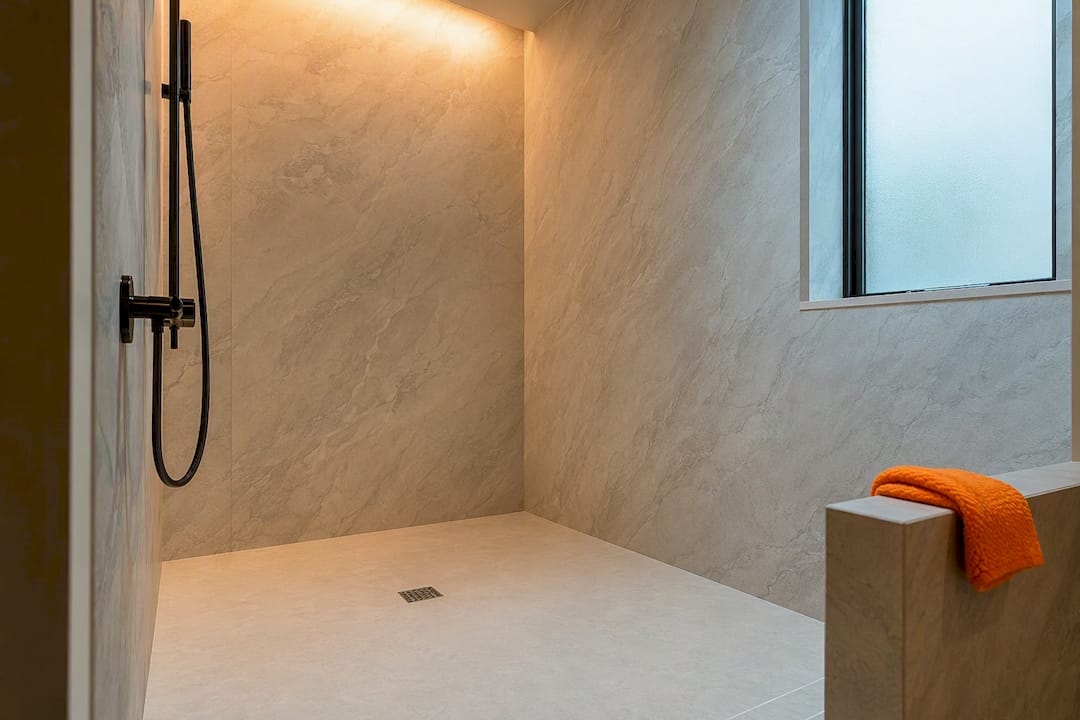
A digital shower lets you set water temperature, flow, and duration once, then recall it with a tap. Systems like the SensoriPlus digital shower support multi-outlet control, personal presets, chromatherapy, and audiotherapy, all managed through a connected app. Delta’s ShowerSense adds TempAssure thermostatic control and firmware-updateable software, so the interface can gain features after installation.
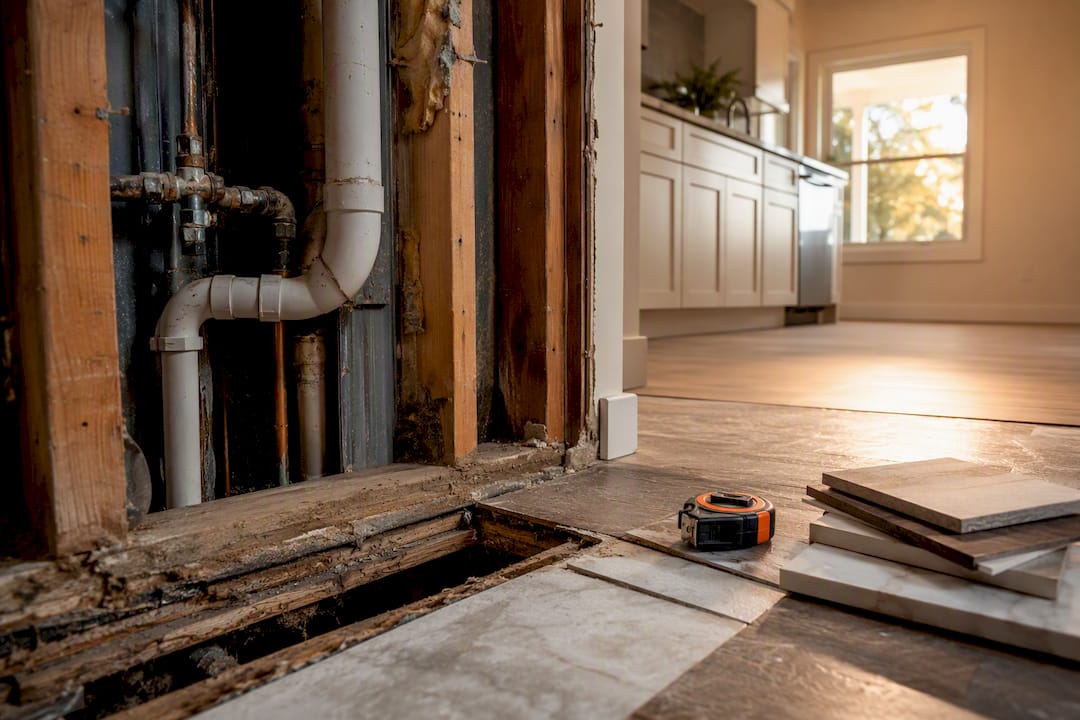
The catch: these systems depend on a specific rough-in valve installed before drywall and tile go up. You cannot swap brands later without opening the wall.
- Presets store temperature, flow, and duration per household member.
- Moen’s smart shower lets you start or pause water remotely through voice assistants.
- Warm-up and pause features cut the water wasted while you wait for hot water to arrive.
Pro Tip: Pick your shower valve brand during the design phase, not after demolition. Once the wall is closed, changing systems means cutting tile again.
Smart Toilets and Integrated Bidets: Hygiene and Water Efficiency
Smart toilets bundle several conveniences that used to be separate products. Common features include an auto-opening lid, integrated bidet with adjustable settings, warm-air drying, and self-cleaning UV or electrolyzed water functions.
- Auto lid open/close on approach or via remote
- Heated bidet seat with adjustable spray settings
- Warm-air dryer, eliminating toilet paper for most uses
- Self-cleaning UV or antimicrobial coating
Kohler’s Innate smart toilet lists dual-flush options at 1.0 and 1.28 gallons per flush, aligned with EPA WaterSense goals for reduced water use. Most smart toilets require a dedicated 120V GFCI circuit near the fixture, so plan the outlet location before the electrician finishes rough-in. Leave clearance behind the tank for service access, since some components need periodic filter or nozzle maintenance.
Smart Mirrors, Integrated Audio, and Vanity Tech
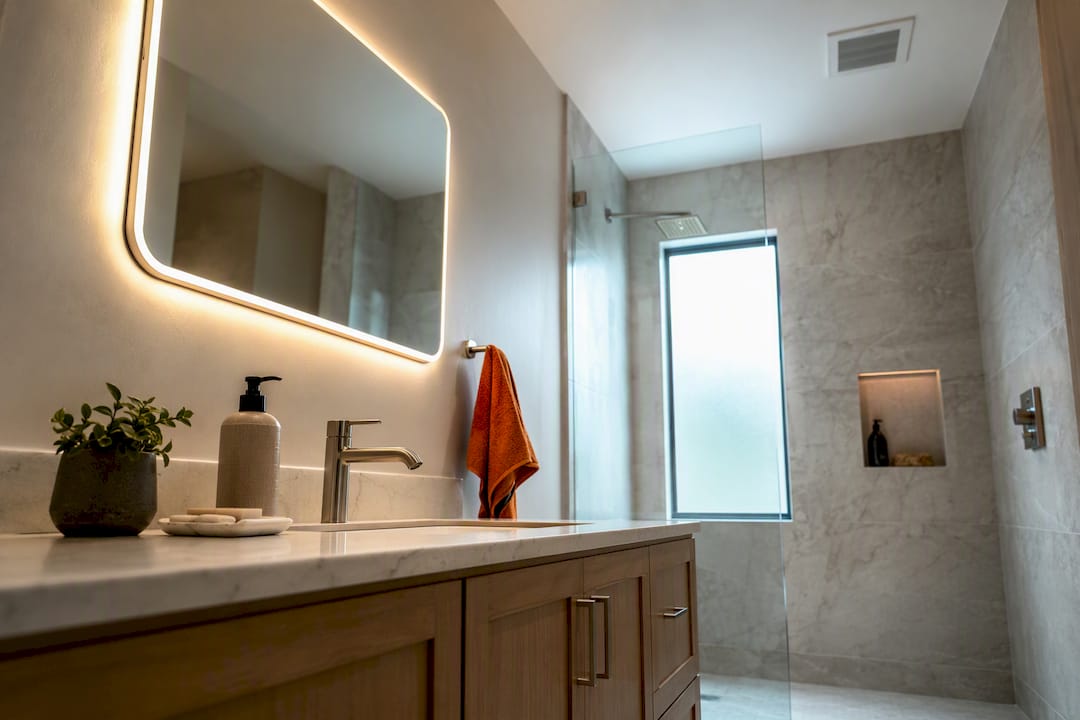
A smart mirror does more than reflect. Most combine adjustable task lighting around the frame with softer ambient lighting for the rest of the room, plus anti-fog backing so you’re not wiping condensation before your first cup of coffee. Higher-end models embed small displays for weather, time, or notifications, and some include Bluetooth speakers built into the frame.
Hardwired mirrors need an electrician to run power behind the wall during rough-in, while plug-in models install almost anywhere with an outlet. If accessibility is a priority, look for mirrors with adjustable-height mounts or voice-controlled lighting presets, since these details are far easier to spec now than retrofit later.
Smart Lighting, Ventilation, and Fans: Mood, Safety, and Mold Prevention
Smart switches and tunable bulbs let you set a bright, energizing scene for mornings and a dim, warm one for nighttime trips, all without touching a physical dimmer. Occupancy sensors and touchless switches add a safety layer for kids, guests, or anyone with wet hands.
The upgrade with the biggest long-term payoff might be the exhaust fan. A humidity-controlled fan turns on automatically when moisture rises after a shower, running only as long as needed to clear it. That single habit does more to prevent mold growth behind tile and drywall than almost any surface-level bathroom upgrade.
Water Monitoring and Leak Detection: Protect Your Remodel
A finished bathroom is expensive to redo, which makes leak detection one of the cheapest insurance policies you can add. Spot sensors sit under sinks, behind tubs, and near supply valves, sending an app alert the moment they detect moisture. Whole-home monitors track flow patterns and can flag a running toilet or a slow pipe leak before it shows up on your water bill.
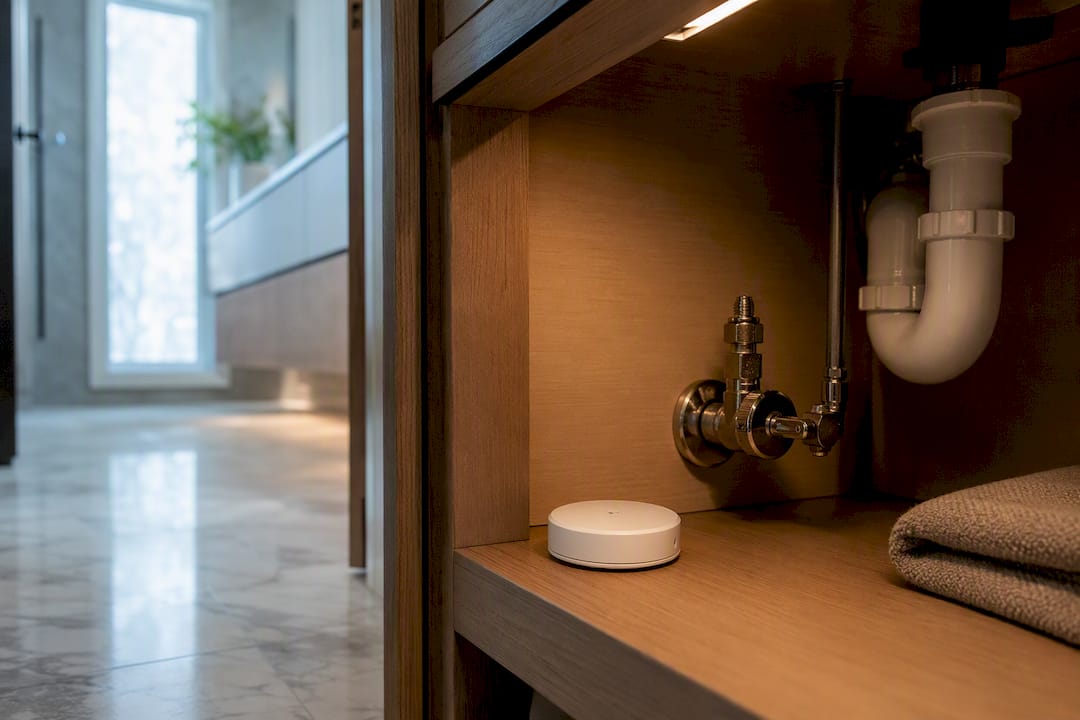
Auto-shutoff valves take it a step further, cutting water supply automatically when they detect an anomaly. The remote monitoring concept behind products like Jacuzzi’s SmartTub system shows the same principle: tracking system health remotely catches small problems before they become expensive repairs. Spot sensors are DIY-friendly; whole-home shutoff valves usually need a plumber to hardwire into the main line.
Touchless Faucets, Smart Water Heaters, and Small Convenience Upgrades
Not every upgrade needs to open a wall. Touchless faucets use a motion sensor to start and stop water flow, cutting down on germ transfer and typically using less water than a standard handle left running while you brush your teeth or wash up.
Smart water heater controllers let you schedule heating around your household’s actual routine, reducing the standby energy loss of keeping a full tank hot around the clock. Heated towel racks and electric floor warming add comfort without any plumbing changes, though floor heating is easiest to add during a full remodel when the subfloor is already exposed.
Integration and Control: Hubs, Voice Assistants, and Firmware Updates
Most smart bathroom devices now connect to Alexa, Google Home, or Apple HomeKit, letting you control lighting, showers, and fans from one app instead of five. Firmware-updateable fixtures, like Kohler’s Numi 2.0 toilet, can gain new features over Wi-Fi without a hardware swap.
Before committing to a single ecosystem, check how much of it depends on one manufacturer’s app, since heavy vendor lock-in makes future upgrades harder. Turn on automatic updates, set strong unique passwords for each device, and limit guest network access to anything connected to your plumbing or door locks.
Installation Realities: Electrical, Rough-In Plumbing, and Sequencing
Smart fixtures fail more often from bad sequencing than bad hardware. Get the order right and most installation headaches disappear.
- Finalize which digital shower valve and smart toilet model you’re using before the plumber starts rough-in.
- Install concealed valves, mounting brackets, and in-wall power supplies before tile or drywall closes the wall.
- Confirm dedicated 120V GFCI circuits are run for the toilet and shower controller during electrical rough-in.
- Put every decision in writing in the project scope, so the electrician and plumber are working from the same document.
Pro Tip: Ask your contractor to walk the rough-in stage with you in person before it’s covered. It’s the last chance to catch a placement mistake for free.
Budgeting and Timeline: What Smart Upgrades Really Cost
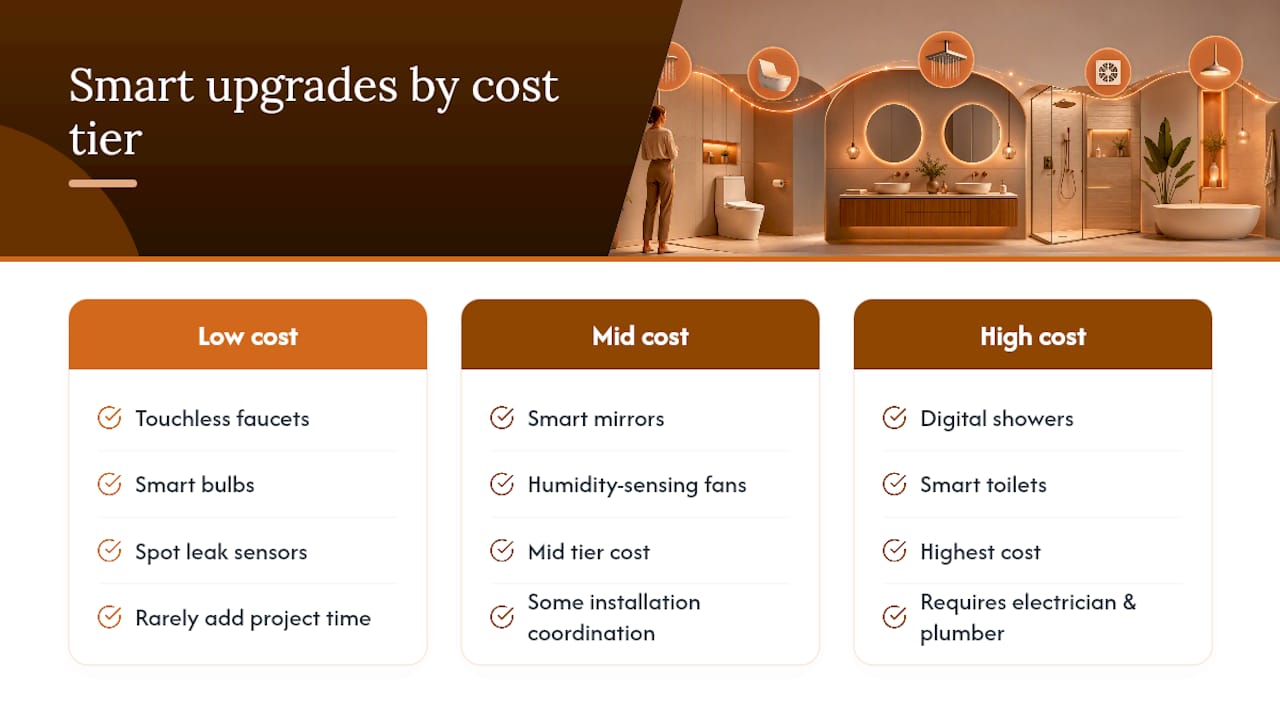
Touchless faucets, smart bulbs, and spot leak sensors sit in the low-cost tier and rarely add time to a project. Smart mirrors and humidity-sensing fans land in the mid tier. Digital showers and smart toilets sit highest, both in price and in the coordination they demand from your electrician and plumber.
Retrofitting into an existing bathroom without opening walls limits you to plug-in or battery-powered options. A full remodel timeline absorbs rough-in work more efficiently, since the trades are already scheduled. Prioritize by what you’ll actually notice daily: a shower you use every morning outranks a mirror display you’ll glance at twice a week.
How a Professional Remodeler Handles Smart Upgrades
Coordinating an electrician, plumber, and tile setter around a digital shower valve or a smart toilet’s power needs is where remodels usually go sideways. Tampakitchenandbath assigns a dedicated Lead Carpenter to each project and provides up-front pricing with itemized lists, so homeowners see exactly what a smart-fixture install costs before demolition starts. The company’s Work Clean System also keeps dust and debris contained while trades move through rough-in stages.
Before you sign a contract for smart upgrades, ask your remodeler:
- Where will the dedicated electrical outlets and GFCI circuits sit?
- What’s the firmware update and warranty policy for the fixtures you’re installing?
- How will you access the toilet or shower controller for future service?
When to Hire a Pro vs. What a Capable DIYer Can Handle
Any work touching rough-in plumbing, in-wall valves, or a dedicated circuit belongs to a licensed contractor. Hire out digital showers and smart toilets. Smart bulbs, plug-in mirrors, and battery-powered spot leak sensors are fair game for a confident DIYer with a screwdriver and an afternoon.
— MediaBeast
Add Smart Upgrades the Right Way During Your Remodel
Buying a smart shower or toilet online is easy. Getting it installed correctly, on schedule, without a plumber and electrician working from two different plans, is the part most homeowners underestimate. Some remodeling firms build smart fixture coordination into the remodel from the design phase, providing up-front pricing that outlines electrical and rough-in costs before commitment, and assign a Lead Carpenter who remains on the project to ensure continuity.
If you’re weighing a digital shower, a smart toilet, or a full bathroom overhaul, get a real number to plan around at the bathroom remodel cost page, or browse finished installs in the Tampa bathroom remodeling gallery before your first design meeting.
Where to Check Specs and Installation Details
For exact wiring diagrams and valve compatibility, go straight to the manufacturer. Kohler’s Innate and Numi 2.0 pages cover dual-flush ratings and electrical needs. Delta’s ShowerSense page details thermostatic rough-in valves. For a broader look at compact-space applications, this condo smart-bathroom breakdown covers retrofit-friendly picks.
Sources
- SensoriPlus digital shower (Brizo)
- Moen Smart Home Smart Shower | Moen
- Jacuzzi SmartTub integration page
FAQ
What Does a $10,000 Bathroom Remodel Look Like?
A modest budget typically covers fixture and finish updates rather than moving plumbing walls, so it fits touchless faucets, a smart mirror, or a humidity-sensing fan more comfortably than a full digital shower system. For a fixture-count remodel with new plumbing, Tampakitchenandbath’s 3-Fixture Bath with Shower starts around 22100-30000 USD, which reflects why smart upgrades usually get folded into a larger project rather than a standalone budget.
Can AI Help Me Redesign My Bathroom?
AI design tools can generate layout mockups and color palettes to visualize options before construction starts. They can’t tell you whether your electrical panel supports a dedicated GFCI circuit for a smart toilet or whether your wall cavity fits a specific shower valve, which still requires an in-person walkthrough with a contractor.
What Are 2026 Bathroom Trends?
Smart lighting scenes, humidity-controlled ventilation, and integrated bidets are showing up in more remodels as homeowners prioritize daily comfort over one-time luxury features. Water efficiency is also driving interest in dual-flush smart toilets and touchless faucets, both of which pair function with lower utility bills.
What Are the Downsides of Smart Toilets?
Smart toilets need a dedicated electrical circuit near the fixture, which adds installation cost if your bathroom doesn’t already have one. They also require occasional maintenance, like replacing nozzles or filters, and a power outage can disable bidet and heating functions until electricity returns.
Do Smart Bathroom Upgrades Require a Full Remodel?
Not always. Touchless faucets, smart bulbs, and plug-in leak sensors retrofit into an existing bathroom with little disruption. Digital showers and smart toilets need rough-in plumbing or a dedicated circuit, which is far more cost-effective to add during a planned remodel than after the fact.