
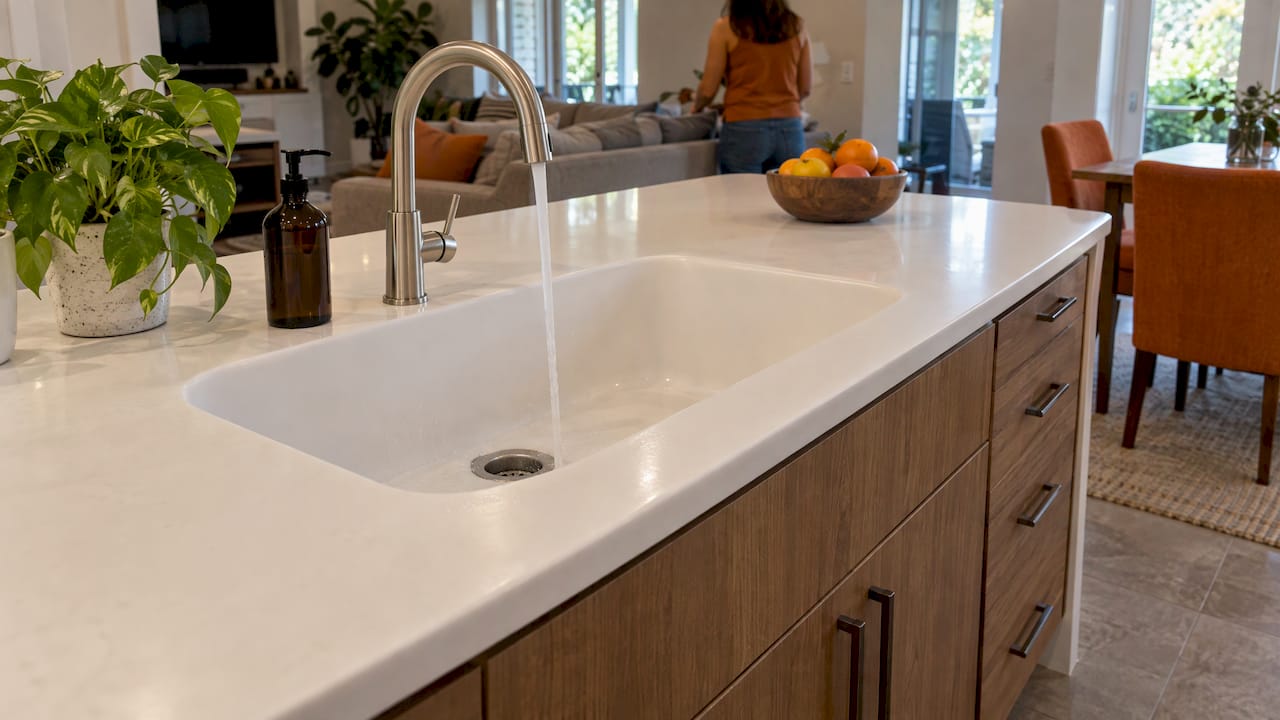
An integrated sink countertop is a countertop whose basin is formed from, or bonded into, the same surface, so there is no rim, lip or visible seam between counter and bowl. It is a good fit when you want a clean, modern look and quick wipe-downs. The choices that decide how it looks and lasts are the material, the basin shape and size, and how early you lock in the sink and faucet.
This guide walks through each of those choices in plain terms. It comes from a Tampa design-build team that plans bathroom and kitchen countertops every week.
TL;DR
- An integrated sink is one continuous surface from counter to bowl. An undermount sink is a separate bowl fixed beneath the counter, so a defined edge remains where the two meet.
- Solid surface is the classic material for one-piece tops. Quartz, porcelain, sintered stone, stainless steel and concrete can also work, each through a different fabrication method.
- Basin shape (rectangular, round, sloped, trough, double) and bowl depth change how you use the sink every day, so choose them for your habits as well as your style.
- Settle the sink, faucet holes and drain position before the countertop is fabricated, because the top is made to measure.
- Seamless does not mean maintenance-free: drains, faucet bases and wall joints still need regular cleaning.
Table of Contents
- What an integrated sink countertop actually is
- Which materials work for an integrated sink
- Basin shapes and design details
- Sizing the sink for how you actually use it
- Planning, fabrication and installation
- Cleaning and caring for a seamless sink top
- The trade-off to plan for: replacing the sink later
- Perspective
- Planning an integrated sink top with us
- FAQ
- Sources
What an integrated sink countertop actually is
In an integrated design, the countertop material continues down into the basin. The surface flows from the deck into the bowl with no ridge for crumbs, water or soap scum to collect against. Suppliers describe the effect as one continuous piece, with no visible rim, lip or separate sink edge, and it is most often built from solid surface, quartz, porcelain or, in custom work, stainless steel (Design Surfaces).
Two words come up in almost every shopping search, and they point to the same idea: “integrated” and “integral.” Vanity tops sold as “seamless sink” models are the same family. The label does not tell you how the piece is made. A molded vanity top, a solid-surface bowl bonded into a slab and a basin carved from stone can all be sold as integrated. Ask for the construction drawing or a sample section so you know which one you are getting.
How it differs from undermount and drop-in sinks
- Integrated: the basin and counter are one surface, or joined so closely they read as one. The transition from deck to bowl is smooth.
- Undermount: a separate bowl, typically ceramic or stainless steel, is clipped and sealed beneath a countertop slab. You see a defined edge where counter meets sink.
- Drop-in (self-rimming): a separate bowl drops through a cutout and its rim rests on top of the counter.
The main practical difference is that transition. With an integrated top, you can sweep water and crumbs straight into the bowl. With an undermount, you can wipe into the bowl too, but the joint at the edge needs attention over time.
Which materials work for an integrated sink
Not every countertop material can be shaped into a basin. Some bend or mold, some must be carved, and some must be bonded. Here is how the common options behave.
Solid surface
Solid surface is the material most people picture. It can be thermoformed, so the sink, counter and backsplash can be made as one seamless run. Consumer Reports notes that solid surfacing suits seamless counters, sinks and backsplashes, and that scratches and small nicks can be buffed or repaired (Consumer Reports). That repairability is a real advantage for a sink, which takes the most daily wear of any spot in the room. Plan on using trivets, since hot pans are not friendly to it.
Quartz
Quartz is dense and stain-resistant, but it cannot be thermoformed. An integrated quartz basin is usually carved from thick slab or fabricated separately and bonded in, so a thin junction line can remain. If you love quartz for the rest of the kitchen, ask the fabricator to show you how that joint looks on a finished piece.
Natural stone
Stone can produce striking carved basins, but not every stone suits the job. Marble can etch from acids and may absorb oils or stains if left unsealed, and granite is hard and scratch-resistant but can absorb oil and grease without sealing (InspectAPedia). Carving a bowl also removes a lot of slab, so stone sinks are a premium, made-to-order choice.
Stainless steel
Stainless can be formed from a single sheet with a welded, polished bowl. It is heat-resistant and hygienic, and it suits a professional-kitchen look. It shows water spots and fine scratches, and it reads as industrial, so it fits some homes better than others.
Concrete
Concrete can be cast with the sink, backsplash and even a drainboard in one customized piece. It needs sealing, and hairline cracks can develop, which many owners accept as part of its character. We cover our approach on our page about concrete countertops for bathroom remodeling.
Porcelain, ceramic and sintered stone
Ceramic and porcelain tops are easy to clean and can be formed into integrated bowls, particularly in vanity tops. Sintered stone is a newer option that suppliers describe as heat-resistant and UV-stable. As with all hard, brittle materials, a hard impact on the rim of the bowl is the thing to guard against.
| Material | Typical strengths | Things to plan around |
|---|---|---|
| Solid surface | Seamless, non-porous, scratches can be buffed out | Scratches and scorches more easily than stone |
| Quartz | Durable, stain-resistant | Bowl is carved or bonded, so a faint joint may show |
| Natural stone | High-end, one of a kind | Needs sealing, some stones etch or stain, premium cost |
| Stainless steel | Heat-resistant, hygienic | Water spots, scratches, industrial look |
| Concrete | Fully custom, can include a drainboard | Sealing and possible hairline cracks |
| Porcelain / ceramic | Easy to clean | Can chip with hard impact |
Basin shapes and design details
Once you pick a material, the shape of the bowl is the next big decision, and it matters more than people expect.
Bathroom vanity tops
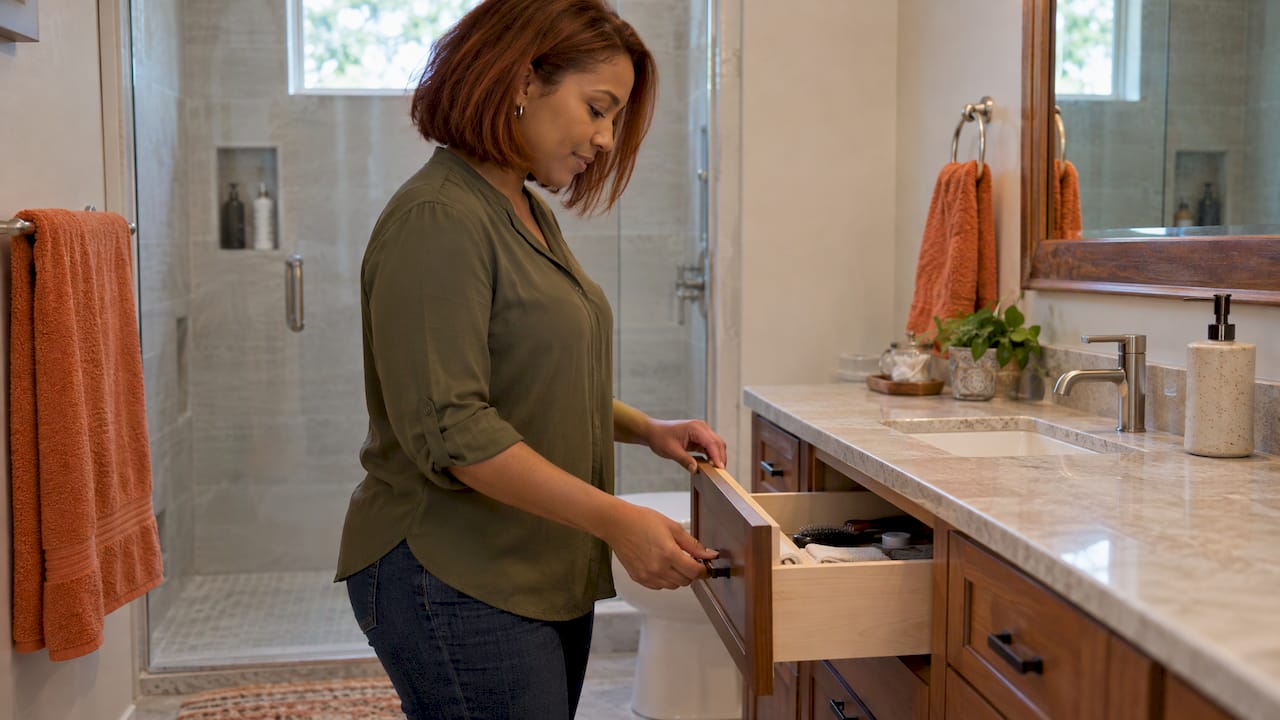
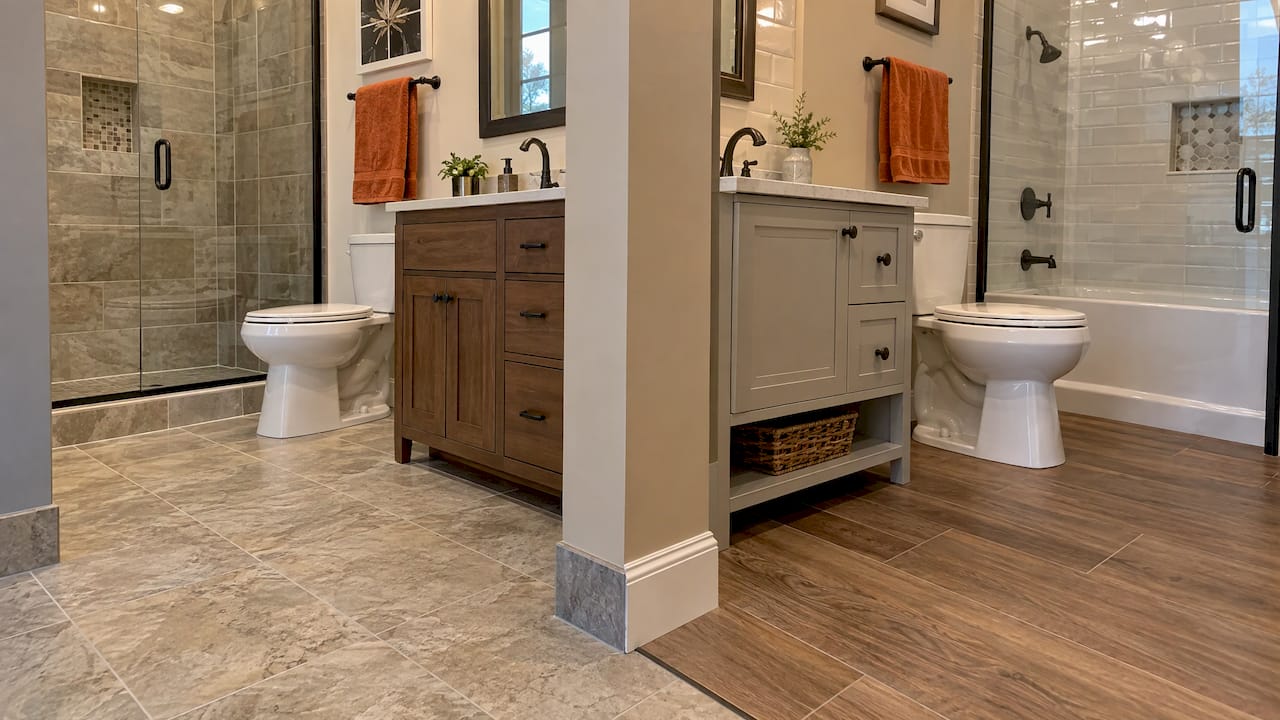
For bathrooms, the main formats are a single basin, a double basin, a long trough with two faucets, compact wall-mounted units and raised vessel-style bowls. Rectangular bowls maximize usable area, round and oval bowls have no corners and suit traditional rooms, and trough or double layouts work well for shared, busy bathrooms (Architecture Lab).
A few practical notes from the remodels we plan:
- Shared bathroom: a trough or double basin keeps two people from crowding one bowl on school mornings.
- Powder room: a compact single basin with a wall-mounted faucet frees up the counter.
- Small guest bath: a shallow rectangular bowl keeps the vanity cabinet usable underneath.
We show finished examples and layouts on our page about bathroom vanity countertop ideas, and our page on sink options for a bathroom remodel goes through the bowl choices in more detail.
Kitchen countertops
In a kitchen, integration usually means more than a bowl. Design options include a single or double bowl, a drainboard molded into the counter, a smaller prep basin, a sloped surface that channels water to the drain and accessory grooves for rails or cutting boards. A farmhouse (apron) front is also possible, though it changes how the cabinet is built; we explain that in our guide to apron sinks and why to finalize your sink before cabinets.
If your kitchen includes an island, think about whether the sink will live there. Putting a prep sink in the island is a layout decision, and it affects plumbing, seating and counter depth. Our page on adding an island to a kitchen remodel covers the planning side.
Sizing the sink for how you actually use it
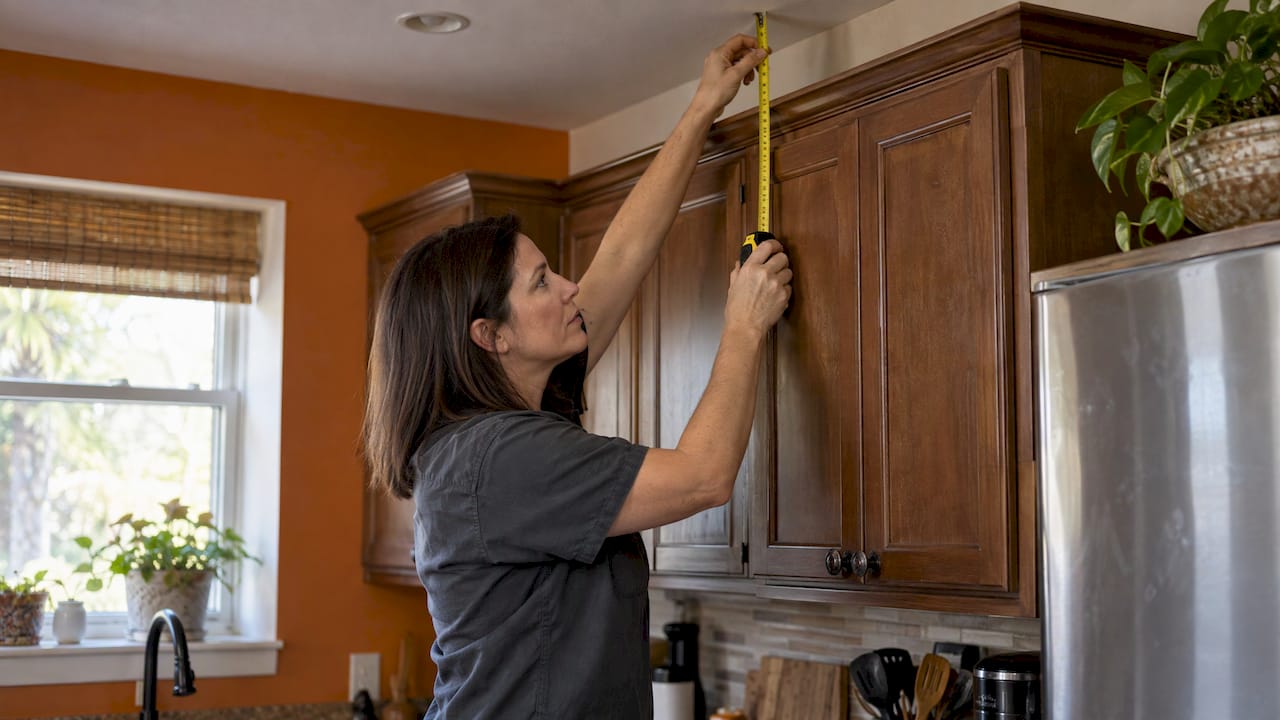
With an integrated top the bowl is made to order, so it is easy to over-focus on looks and under-think dimensions. Start with the base cabinet: measure it and make sure the sink fits. Elkay’s sink guide also points out that a wider sink takes usable counter space, while a deeper bowl takes cabinet space and can mean more bending (Elkay).
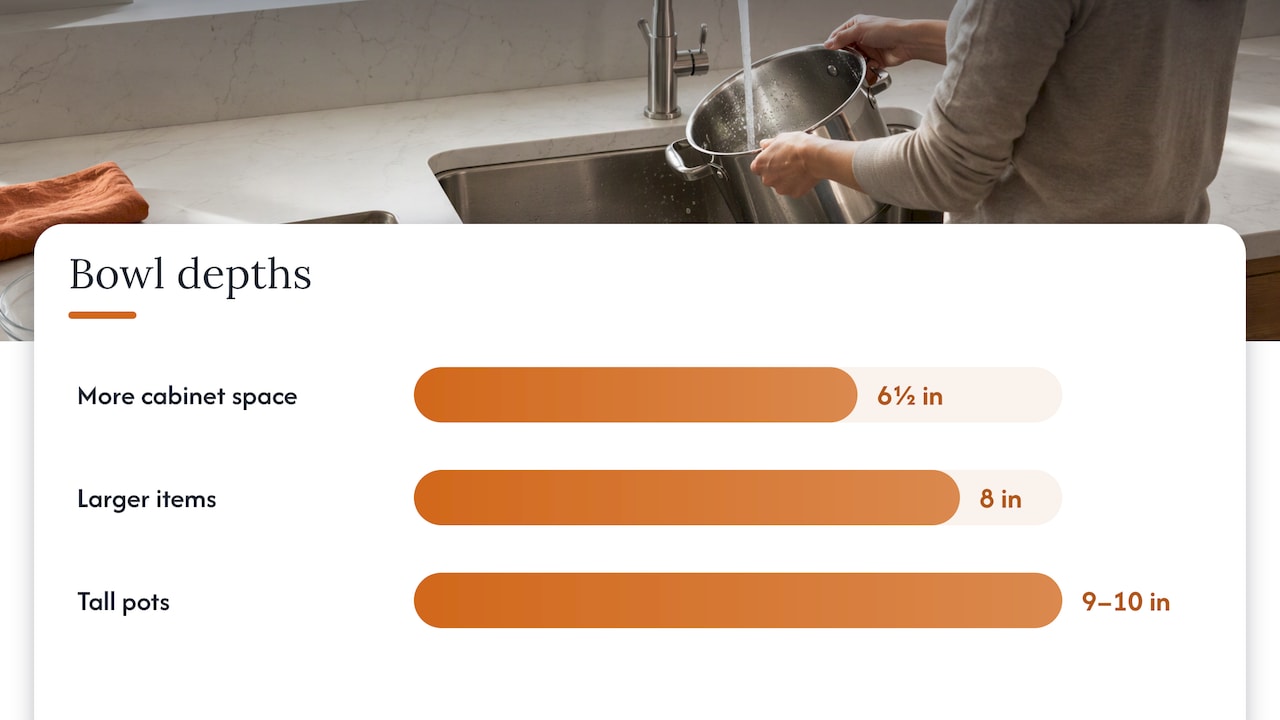
For bowl depth, the same guide gives a useful range: a 6½-inch bowl holds less but leaves more cabinet space, an 8-inch bowl handles larger items, and 9- or 10-inch bowls take tall pots but cut into the cabinet and require more bending.
Some questions to answer before you order:
- Who uses it? A tall household and a household with kids on a step stool want different bowl depths.
- What goes in it? Sheet pans and stockpots need width. Hand washing and brushing teeth do not.
- Where does the faucet go? Deck-mounted, wall-mounted and widespread faucets need different hole layouts and clearances.
- Where is the drain? A drain pushed toward the back leaves room for the cabinet’s plumbing and for storage underneath.
- What is under the sink? The garbage disposal, a filtration unit and shut-off valves all need space.
Planning, fabrication and installation
An integrated sink countertop is not a catalog item you pick up and drop in. It is measured, cut and finished for your cabinets, so precision matters. Fabrication typically involves a detailed template of the cabinets, selection of slab or sheet material and thickness, then CNC cutting or forming and professional installation. Drain placement and faucet holes are tailored during fabrication.
That has two consequences for your schedule:
- Lead time: custom fabrication takes longer than a stock top, so order timing should be built into the remodel plan rather than discovered halfway through.
- Decisions up front: the sink, faucet and drain are locked in before the top is made. Changing your mind afterward can mean a new top.
This is also why we prefer to finalize sinks before cabinets. The cabinet base, the plumbing rough-in and the countertop all depend on the basin, so one early decision keeps the rest of the job moving.
On cost, integrated tops are usually priced as specialty fabrication, above a standard top with a separate sink, and the difference depends on the material, the basin and the complexity. We don’t quote a countertop price in a general article. A firm number comes from your layout, your material and the scope of the room.
Cleaning and caring for a seamless sink top
The smooth transition is the main practical payoff: no ledge, no caulk line at the rim, nothing for crumbs and residue to settle against. Water and debris move directly from the counter into the basin.
A few habits keep it looking new:
- Wipe the surface and rinse the bowl daily with mild soap and water.
- Clean around the drain, faucet base and wall joint, where soap residue and mineral deposits still collect.
- Use a cutting board and a trivet. Even tough surfaces are best protected from knives and hot cookware.
- Follow the sealing schedule if your material is stone or concrete.
- For solid surface, have minor scratches buffed out rather than living with them, as noted earlier.
If your top is made of solid surface, a light scuff pad and a non-abrasive cleaner can usually take care of everyday marks, but follow the fabricator’s care sheet for your exact product.
The trade-off to plan for: replacing the sink later
Because the bowl and counter are one surface, you can’t swap the sink on its own later. The upside is that the counter runs unbroken from the backsplash to the drain. This is why we encourage homeowners to choose a material and finish they will still like in ten years, and to lock the bowl size and shape to how they cook and live. Choosing well up front is the whole strategy.
Perspective
Most homeowners come to us picturing the counter and sink separately. We think of them as one decision, because that is how they live with it. The surface they wipe every night, the bowl they fill, the faucet height and the cabinet underneath all affect each other.
Because we handle design and construction in-house, the sink, cabinets, countertop and plumbing are planned together with one team and one lead carpenter. That helps us catch problems on paper that would otherwise show up on installation day, such as a faucet hole that collides with a backsplash or a drain that lands on a cabinet brace.
Our advice is to pick the material first, then the basin, then the faucet, and to settle all three before cabinets are ordered. An integrated sink top rewards that kind of planning with a clean, calm surface that is easy to live with. Our up-front pricing with detailed item lists means you see what each choice adds before you commit.
MediaBeast
Planning an integrated sink top with us
If you are remodeling a bathroom or kitchen in the Tampa area, we can help you choose the material, basin and layout as part of one design-build plan. We offer a local showroom for material selection, custom cabinetry, countertops, tile and fixture upgrades, with a dedicated Lead Carpenter on each project and our Work Clean System to keep dust and disruption down.
For budgeting, our published ranges give a realistic starting point. Our bathroom remodel cost page lists a Small 3-Fixture Bath with Shower at $22,100 to $30,000 and a Large 3-Fixture Bath with Shower at $26,700 to $34,000. Our kitchen remodel costs page lists a Small U-Shaped Kitchen with Island at $41,200 to $52,050 and a Large Kitchen with Island at $74,100 to $93,600. Final cost depends on scope and materials. To start planning, see our bathroom remodeling services in Tampa or our kitchen remodeling services. Our guides to choosing the best bathroom countertop and how to choose kitchen countertops are good next reads.
FAQ
Is an integrated sink the same as an integral sink or a seamless sink?
In everyday shopping, yes. Integrated, integral and seamless all describe a sink that is part of the countertop surface. The way it is built can still vary, from a single molded piece to a bowl bonded in, so ask how the specific product is made.
Is an integrated sink easier to clean than an undermount sink?
Generally, yes, because there is no joint at the rim for debris to collect. You still need to clean the drain, faucet base and wall joints, and to follow your material’s care instructions.
Which countertop material is best for an integrated sink?
Solid surface is the most common choice because it can be formed into one seamless piece and minor scratches can be buffed out. Quartz, stainless steel, concrete, porcelain and stone can also work, with different looks and care needs. The right pick depends on your style, budget and how hard the sink is used.
Can I replace just the sink later?
Usually not. Since the bowl and counter are one surface, a change to the sink often means changing the top. That is why we recommend settling bowl size, shape, faucet and drain position before fabrication.
What should I measure before ordering?
Start with the sink base cabinet, then decide on bowl width and depth based on what you wash and who uses the sink. Confirm faucet type and hole positions, and drain location, with your contractor so the fabricator can build to those exact specifications.
Sources
- Integrated Sinks vs Undermount Sinks, Design Surfaces
- Best Countertop Buying Guide, Consumer Reports
- Kitchen and Bath Countertop Materials Guide, InspectAPedia
- Types of Bathroom Sinks and Lavatories, Architecture Lab
- Sink Buying Guide, Elkay