
Most homes have one of two shower valves behind the wall: a pressure-balancing valve or a thermostatic valve. Pressure-balancing valves are the common, practical choice. They keep the water from turning scalding when someone flushes a toilet. Thermostatic valves hold a set temperature more precisely and let you run several outlets, such as a rain head and a hand shower, with separate volume controls. Diverters and transfer valves are a different job: they decide where the water goes, not how hot it is.
Below, we explain each type in plain terms, show how to tell which one you have, and cover what changes when you remodel.
TL;DR
- Pressure-balancing valves react to pressure swings in the hot and cold lines. Thermostatic valves hold the temperature you set. Both are built for scald protection.
- A basic manual or mixing valve blends hot and cold but does not compensate for pressure changes, so a flushed toilet can change your shower temperature.
- Diverters and transfer valves route water to outlets. They do not set temperature.
- Trim must match the valve behind the wall. Similar-looking trims are often not interchangeable.
- The valve does not create water pressure. Weak flow usually traces to the showerhead, the supply or a pressure regulator.
Table of Contents
- What a shower valve does
- The main shower valve types
- Pressure-balancing vs. thermostatic: which one fits your bathroom
- How to identify the valve you already have
- Low shower pressure: is it the valve?
- What changes when you remodel
- Our perspective on shower valves
- Planning a shower or bathroom remodel in Tampa?
- FAQ
- Sources
What a shower valve does
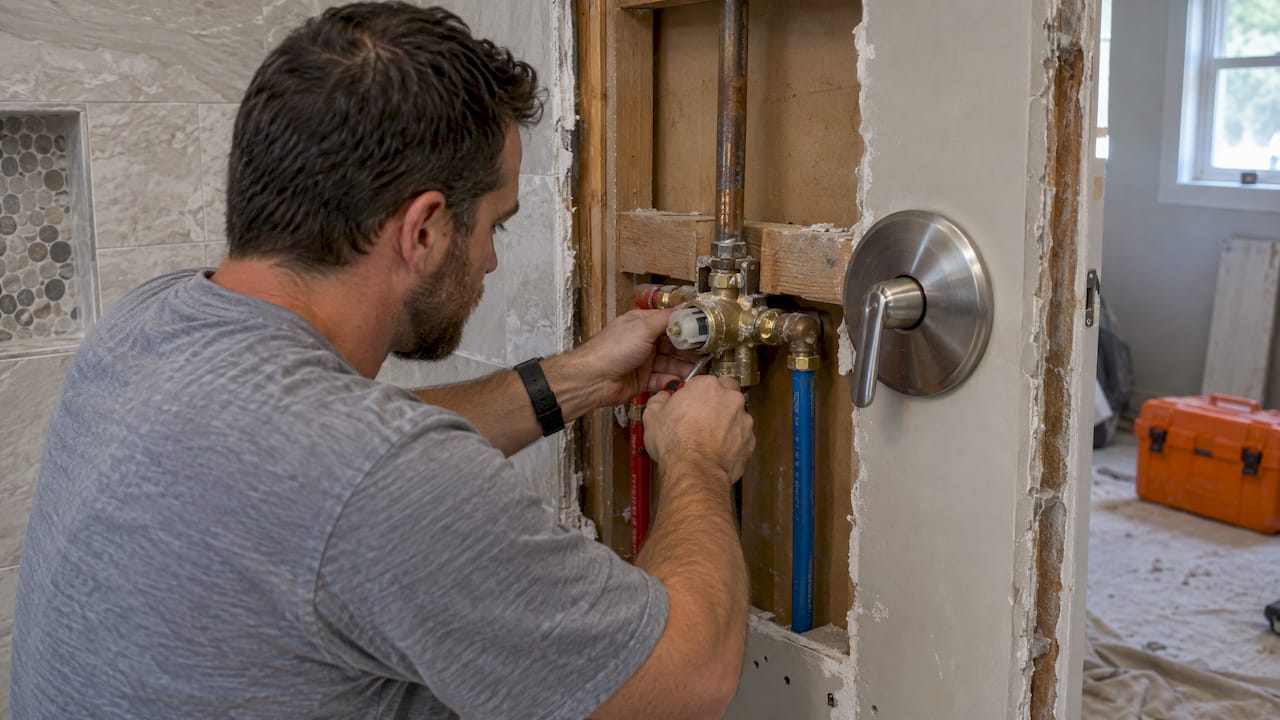
The valve is the hidden part behind the handle. It mixes hot and cold water, sets how much flows and, in better designs, protects you from sudden temperature changes. The handle, plate and spout you see are the trim.
This matters in a remodel because the valve sits inside the wall, usually soldered or connected to the supply pipes. Changing the trim is easy. Changing the valve type often means opening the wall. We cover that below.
Home improvement retailers group shower valves by how they mix and route water: manual, mixing, pressure-balancing, thermostatic, diverter and transfer types. Lowe’s buying guide describes them this way, and it is a useful way to sort a confusing market.
The main shower valve types
Manual and mixing valves
A manual or mixing valve is the simplest design. You turn or pull a handle, and hot and cold water combine. According to Lowe’s, this kind does not compensate for pressure changes, so another fixture drawing water can make the temperature fluctuate.
If you have lived with a shower that surges hot or cold when the dishwasher starts, this is likely the type you have. Many older homes still have them.
Plumbing guidance has moved away from this design. The plumbing industry’s ASSE guidelines for temperature control devices say shower valves should be automatic temperature- and/or pressure-compensating. In a remodel, that is why we rarely recommend keeping a plain mixing valve.
Pressure-balancing valves
A pressure-balancing valve senses changes in the relative pressure of the hot and cold supply. When one side drops, it restricts the other so the mix stays steady. The usual mechanism is a piston, spool or diaphragm inside the valve body.
It does not hold an exact temperature. It holds the ratio of hot to cold. If your water heater output changes, the shower can still shift. What it prevents is the sudden spike when a toilet flushes or the washing machine fills.
For most households, this is the right balance of cost, reliability and protection. It usually has a single handle: turn for temperature, push or pull for on and off, though some models have separate controls.
The valve reacts to pressure differences, so the supply itself has to be healthy. If the water heater’s relief valve drips, that is a separate issue to sort out; here is a guide on why a water heater valve drips and what to do about it.
Thermostatic valves
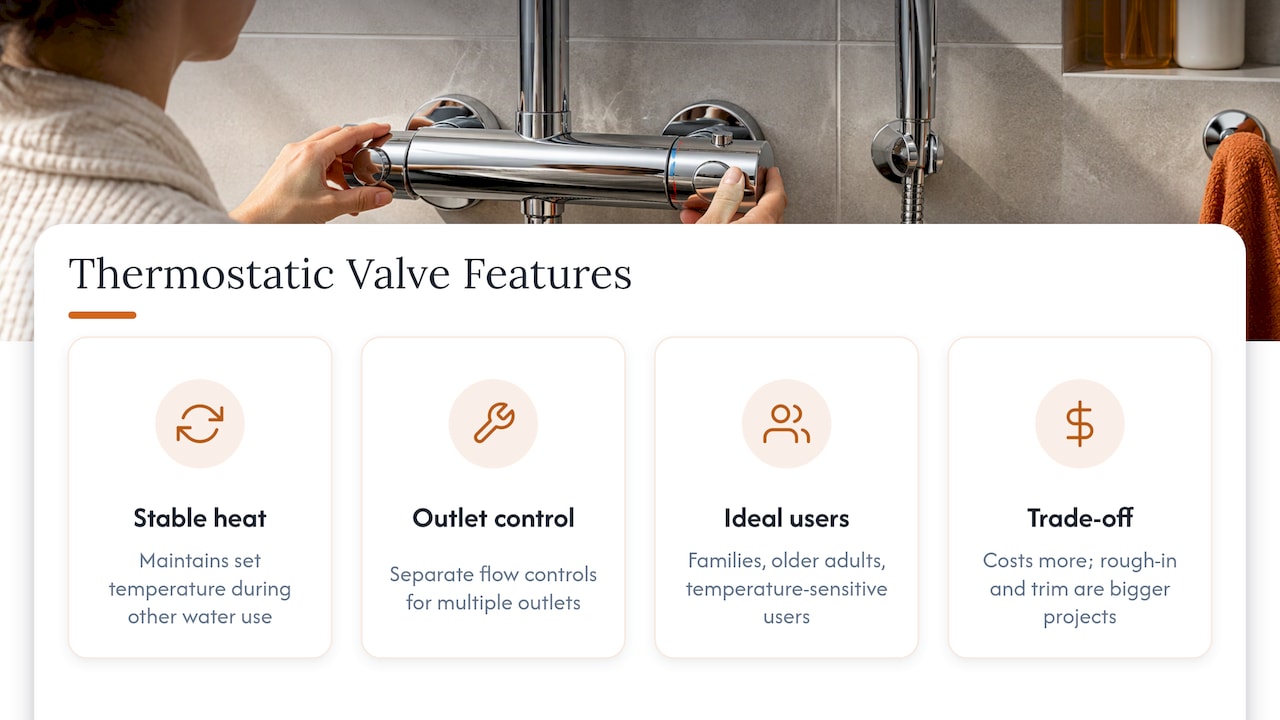
A thermostatic valve adjusts the hot and cold flow to hold a temperature you set. GROHE explains that once you set the temperature, a thermostatic valve maintains it, whether a toilet flushes or the laundry runs. A pressure-balance valve, by contrast, controls hot- and cold-water pressure.
The other big difference is volume control. Kohler’s shower buying guide notes that thermostatic valves can support multiple volume controls, so you can adjust flow separately for a showerhead, hand shower and body sprays. That makes them the natural fit for a larger, multi-outlet shower.
They also tend to be a better match for a shower where temperature matters to the people using it: families with young children, older adults or anyone who likes to step in and have the temperature already right. They cost more than pressure-balancing valves, and the rough-in and trim are usually a bigger project, which we get to below.
Combination valves
Some valves combine both technologies. The ASSE guidance identifies three categories covered by its individual-shower standard: pressure-balancing, thermostatic (mechanical or electronic), and combination pressure-balancing/thermostatic valves. It states that these devices provide scald and thermal-shock protection.
That last point is the useful takeaway. Whichever of the three you pick, you are choosing a protected valve. The decision is about features and budget, not safety versus no safety.
Diverter valves
A diverter sends water from one outlet to another. The Home Depot describes the typical job as redirecting water from the tub spout to the showerhead. The common tub-shower combination has a small pull-up knob on the spout. A tee diverter is a pull arm on the tap that blocks the tap and redirects water to the showerhead.
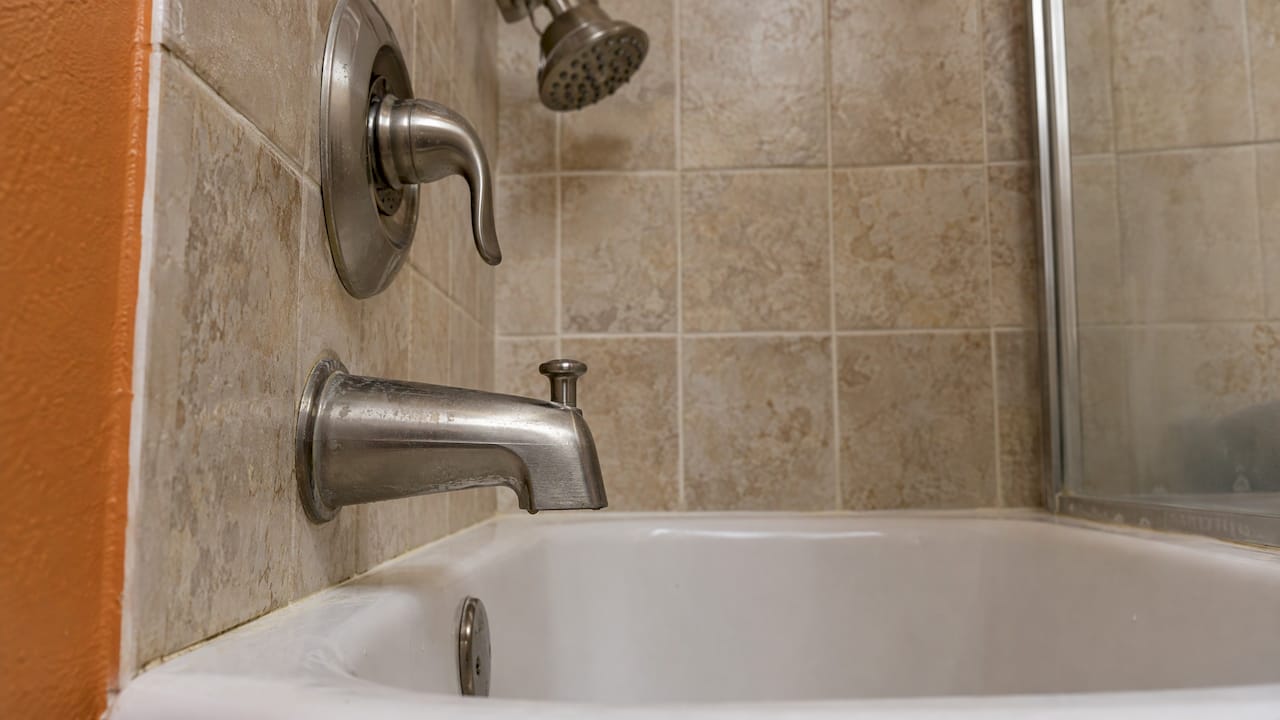
A diverter does not normally control temperature. As one manufacturer guide explains, the mixing, pressure-balancing or thermostatic valve sets the temperature first, and the diverter routes that mixed water onward.
Transfer valves
A transfer valve serves multiple outlets, such as a fixed showerhead, a hand shower and body sprays. Depending on the model, it may let more than one outlet run at once, while a diverter is typically one or the other.
A caution on labels: terms like 2-way, 3-way and 3-function are not standardized. One manufacturer guide points out that they can refer to outlets, handle positions or permitted combinations, so the operating diagram is more reliable than the marketing name. Read the diagram before you buy.
Pressure-balancing vs. thermostatic: which one fits your bathroom
Here is a quick side-by-side.
| Feature | Pressure-balancing | Thermostatic |
|---|---|---|
| What it controls | Relative hot and cold pressure | Mixed water temperature |
| Reaction to a flushing toilet | Compensates for the pressure change | Holds the set temperature |
| Volume control | Often combined with temperature | Often separate, with several outlets possible |
| Best for | Standard single-showerhead showers | Multi-outlet or luxury showers, households wanting a precise setting |
| Typical cost | Lower | Higher |
A few ways to decide:
- One showerhead, a budget to protect: a pressure-balancing valve gives you the scald protection that matters.
- Rain head plus hand shower or body sprays: a thermostatic valve with separate volume controls gives each outlet its own setting.
- Replacing an old dual-handle valve: expect more than a trim swap. Changing valve types can mean opening the wall and re-tiling the area. Plan for that in the budget before you pick a style.
- A shared household with varying hot water habits: the thermostatic design’s steadier temperature is the more comfortable pick.
Neither type makes pressure. Actual performance still depends on supply pressure, pipe size, restrictions, valve capacity, diverters, number of outlets and showerhead flow rate. A thermostatic valve feeding four body sprays from a small supply line will feel weak however good the valve is.
How to identify the valve you already have
If you are replacing a handle or trim, you have to know what is behind the wall first. Kohler advises making sure the trim kit is compatible with the valve and confirming the pipe type (copper, PEX or CPVC) and fitting method. It also says its trims are designed to work exclusively with its own valves.
To identify an existing valve, Moen recommends checking:
- the brand or markings on the valve or handle
- the number of handles
- the year of installation
- how the handle operates (rotating, push-pull or lever)
- where the escutcheon screws sit
Its guide warns that visually similar trims are not necessarily interchangeable. A manufacturer’s own FAQ shows how specific this gets: one trim line fits a rotating pressure-balanced valve, while another is for a valve with pull-on/push-off volume control, and the two are not interchangeable.
Some rough-in valves are made to be flexible. For example, one universal rough-in accepts single or dual pressure-balancing cartridges or dual thermostatic cartridges, and it is sold without trim, so the trim is a separate decision.
The practical lesson: pick the valve first, then the trim. Falling for a handle style and discovering it does not fit the valve in your wall is one of the most common remodeling frustrations. It is why we settle valve decisions early in design.
Low shower pressure: is it the valve?
People often blame the valve when flow is weak. Usually it is not. Work through this in order:
- Check other fixtures. If only one shower is weak, the problem is specific to that fixture. If the whole house is weak, it points to a main-line issue such as a regulator, a leak or corroded pipes.
- Clean the showerhead. The most common cause of low shower pressure is a blocked showerhead. Other causes include old, corroded or clogged pipes, and valve problems.
- Compare hot and cold. If only the hot side is weak, the water heater or its lines are the likelier suspect.
- Check the regulator. If flow is reduced at every faucet, including outside hose spigots, clean aerator screens and check that the pressure-reducing valve is working.
Some numbers help here. A field guide on plumbing diagnosis says normal residential static pressure runs roughly 40 to 80 psi, with comfortable systems between 45 and 60 psi, and that below about 40 psi fixtures start to feel weak. It also notes that a clog cuts flow, not pressure: low pressure always reduces flow, but low flow does not prove low pressure. For new homes, the EPA’s WaterSense builder manual sets a maximum static service pressure of 60 psi for WaterSense-labeled homes, and says most plumbing codes require pressure-reducing valves where supplied pressure exceeds 80 psi.
When to call a plumber: plumbers advise calling when DIY fixes have not worked, when low pressure affects multiple fixtures, when you have galvanized pipes, when you suspect a hidden leak, when a pressure regulator needs replacing, or when the shower valve is corroded or damaged.
What changes when you remodel
A shower valve is the one part of a bathroom you want to get right once. A few points we keep in mind on every project:
- Valve type affects wall work. Moving from a dual-handle valve to a single-control or thermostatic setup can mean cutting into the wall and re-tiling, so it is best decided before tile is chosen, not after.
- Outlets drive the valve choice. A single showerhead is well served by a pressure-balancing valve. Add a hand shower and body sprays, and a thermostatic valve with a transfer valve starts to make sense.
- Waterproofing and valve placement go together. The valve penetrates the wall, so the waterproofing has to be detailed around it. See our guide to shower waterproofing methods and the 24-hour flood test.
- Water efficiency counts too. Flow rate of the head and fixtures affects the bill. Read our notes on water-efficient fixtures.
- Upgrades beyond the basics. If you are weighing a steam shower, multiple outlets or digital controls, see our high-end shower options and smart bathroom technology.
What bathroom projects cost with us
The valve is one line in a larger scope. Our published ranges for bathroom remodels, with the project scope and materials setting the final figure:
| Bathroom | Published range |
|---|---|
| Small 3-Fixture Bath with Shower | $22,100 to $30,000 |
| Large 3-Fixture Bath with Shower | $26,700 to $34,000 |
| 4-Fixture Bath with Shower | $35,000 to $46,000 |
| 4-Fixture Bath with Steam Shower | $54,625 to $69,000 |
| 5-Fixture Bath with Freestanding Tub | $52,400 to $65,700 |
The steam shower line shows how much a multi-function shower system changes a project. See every option on our bathroom remodel cost page.
Our perspective on shower valves
We design and build in the same company, so valve decisions get made once, early and with the whole bathroom in view.
Our rule is simple: choose the valve around how the shower will be used, then choose trim to match. A family bath with one showerhead is well served by a quality pressure-balancing valve. A larger shower with a hand shower, a rain head and body sprays deserves a thermostatic valve with a transfer valve and separate volume controls.
The mistake we see most is choosing a handle style first. The valve behind the wall decides what trim fits, and changing it later can mean reopening tile. That is why your Lead Carpenter walks through the valve, the outlets and the trim with you before demolition, and why our up-front pricing lists the items in detail.
Our Work Clean System keeps dust and disruption down while the wall is open, so an upgrade to the valve does not turn into a stressful stretch for your household.
MediaBeast
Planning a shower or bathroom remodel in Tampa?
If you are replacing a shower valve as part of a bigger update, we handle design and construction together, with up-front pricing, a dedicated Lead Carpenter and our Work Clean System to minimize dust. Tell us how you use your shower and we will help you choose the valve, outlets and trim that fit.
See our Tampa shower remodeling services or our bathroom remodeling page to start. Planning a bigger project? Our whole home remodeling service covers kitchens and baths together.
FAQ
What is the difference between a thermostatic and a pressure-balancing valve?
A pressure-balancing valve reacts to pressure changes in the hot and cold lines so the mix stays steady. A thermostatic valve holds the temperature you set, even when a toilet flushes or the laundry runs. Thermostatic valves also often allow separate volume controls for several outlets.
Do I need a thermostatic valve?
Not for every shower. A pressure-balancing valve gives scald and thermal-shock protection for a single showerhead. A thermostatic valve is the better match when you have several outlets or want a precise temperature setting.
What does a shower diverter do?
A diverter redirects water between outlets, commonly a tub spout and a showerhead. It does not set temperature. The mixing valve does that first, and the diverter sends the mixed water on.
Can I change the shower trim without changing the valve?
Often, yes, but only with trim designed for the valve already in the wall. Check the brand, number of handles, handle action and escutcheon screw locations, because similar-looking trims may not be interchangeable.
Sources
- Shower Valve 101, Lowe’s
- Guidelines for Temperature Control Devices in Domestic Hot Water Systems, ASSE
- Thermostatic vs. pressure balance, GROHE
- Shower Buying Guide, Kohler
- Types of Shower Valves, The Home Depot
- Types of Shower Valves and Controls, Today’s Homeowner
- Shower Diverter Valve Guide
- Thermostatic vs Pressure Balance Shower Valve Guide
- How to Install a Shower Valve, Kohler
- Can I Replace My Shower Trim?, Moen
- Moen trim compatibility FAQ
- Universal mixing rough-in valve, Ferguson
- Why Does My Shower Have Low Water Pressure?
- 10 Ways to Increase Water Pressure in a Shower, The Spruce
- Troubleshooting water pressure and flow, Portland.gov
- Low water pressure diagnosis and repair field guide, Anvilfield
- WaterSense Resource Manual for Building WaterSense Labeled Homes, EPA
- How to Fix Low Water Pressure in Shower
- Termo eléctrico gotea válvula