
Pick epoxy grout for shower floors and any wet, high-traffic space. It resists mold and staining because it does not absorb water the way cement grout does. Cement grout still earns its place on low-traffic decorative walls and tight-budget projects, provided you seal it and keep up with maintenance. If you’re a first-time DIYer, cement forgives mistakes better; epoxy grout usually rewards paying a professional.
TL;DR:
- Epoxy grout is significantly more water-resistant, absorbing about 50 times less moisture than cement grout, making it ideal for wet areas like showers and kitchens.
- Its durability extends over decades with no sealing needed, whereas cement grout typically lasts 7 to 15 years and requires resealing every 12 to 24 months.
- The cost of epoxy grout is two to five times higher in materials, with labor also 30 to 50% more expensive due to faster working requirements.
- DIY installation of epoxy grout demands precise mixing, quick application, and immediate cleaning, making professional help advisable for large or complex projects.
- Proper maintenance involves routine cleaning with pH-neutral cleaners, with cement grout needing regular reseals and epoxy grout mainly needing cleaning to prevent haze buildup.
Table of Contents
- Epoxy Grout vs Cement Grout: The Quick Comparison
- How Are Epoxy and Cement Grout Different?
- Which Grout Performs Better Over Time?
- Is Epoxy Grout Worth the Extra Cost?
- Can You DIY Epoxy or Cement Grout Installation?
- Where Should You Use Each Grout in Your Home?
- How Do You Maintain and Troubleshoot Each Grout Type?
- When Does Hiring a Pro Make More Sense Than DIY?
- What Homeowners Get Wrong About This Decision
- Ready to Get Your Tile and Grout Installed Right?
- Sources
- FAQ
Epoxy Grout vs Cement Grout: The Quick Comparison
The two materials trade blows on nearly every metric homeowners care about, and the gaps are bigger than most tile aisles let on.
- Sealing: Epoxy never needs it. Cement grout does, typically every 12 to 24 months in a shower.
- Durability: Epoxy holds up for decades. Cement, even sealed, usually runs 7 to 15 years before it needs replacing.
- Cost: Epoxy grout cost runs 2 to 5 times higher on materials, and labor climbs too.
- DIY friendliness: Cement gives you time to work. Epoxy punishes hesitation.
- Best rooms: Epoxy for showers and kitchens; cement for accent walls and dry spaces.
The number that changes most people’s minds: epoxy grout absorbs roughly 50 times less water than cement grout. That single figure explains almost every other difference on this list, from mold resistance to why sealing becomes optional instead of mandatory.
How Are Epoxy and Cement Grout Different?
The two materials don’t just look different when they cure. They’re built from entirely different chemistry, and that’s the root of every trade-off you’ll read about in an epoxy grout vs cement grout comparison.
Epoxy grout is a two-part system: resin, hardener, and filler, mixed on-site and cured through a chemical reaction. The result is a joint so dense that water, mildew, and most household stains simply have nowhere to go. Cement grout, sanded or unsanded, is Portland cement mixed with water. It cures through hydration, a slower, gentler process that leaves microscopic pores throughout the finished joint.
Those pores are the whole story. They let moisture in, which is why cement grout stains, discolors, and eventually harbors mold if it’s not sealed and resealed on schedule. Epoxy’s tight molecular structure blocks that path entirely.
- Epoxy: chemical cure, non-porous, no sealing required.
- Cement: hydration cure, porous, requires periodic sealing.
- Polymer-modified cement and urethane-style grouts split the difference. Adding polymers reduces porosity and can stretch out sealing intervals, without the epoxy grout cost or the tight working time.
If straight epoxy feels like overkill for a dry mudroom floor but plain cement worries you near a tub, a polymer-modified product is worth asking your tile supplier about.
Which Grout Performs Better Over Time?
Manufacturer testing and buyer guides land on the same conclusion: epoxy grout wins the durability argument, especially anywhere water sits for long stretches. That’s why MAPEI and independent buyer guides alike point homeowners toward epoxy for shower floors specifically, not just showers in general.
The water absorption gap does the heavy lifting here. At roughly 50 times less absorption than cement, epoxy simply doesn’t give mold spores the moisture they need to colonize a joint. Cement grout, even sealed well, stays vulnerable in the months after a reseal wears thin, which for many households is most of the year.
- Water resistance: Epoxy is close to waterproof; cement remains porous even sealed.
- Stain resistance: Epoxy shrugs off coffee, wine, and soap scum; cement absorbs and discolors.
- Mechanical strength: Epoxy is reported to be roughly twice as strong as standard cement grout.
- Color stability: Epoxy holds its shade for decades; cement can fade or blotch, especially in sunlit spots.
- Lifespan: Epoxy often lasts the life of the tile installation; cement, resealed diligently, still tends to need attention within 7 to 15 years.
Polymer-modified cement narrows some of these gaps, particularly on staining, but it doesn’t close the water-absorption gap that makes epoxy the default recommendation for wet floors. Practically speaking, that difference shows up as fewer cleaning sessions, no annual mold-check ritual, and less worry about whether last year’s sealant job actually held.
The mechanical strength advantage matters more than it sounds. A stronger joint resists the hairline cracking that lets water sneak behind tile in the first place, which is often the real cause of a “grout failure” homeowners blame on the wrong material.
Is Epoxy Grout Worth the Extra Cost?
Here’s the number that stops most people at the tile counter: epoxy materials run 2 to 5 times more than cement grout, and labor tends to run 30 to 50% higher because installers have to work faster and in smaller batches.
On a standard shower floor, that premium often lands somewhere between $50 and $150 in materials alone, before labor. It sounds steep until you run the other side of the ledger.
- Cement grout needs resealing every 12 to 24 months, and that’s a recurring cost in sealant, time, or a handyman’s invoice.
- Epoxy has zero sealing cost across its entire lifespan.
- Over a 10 to 15 year window, the lifecycle math frequently favors epoxy once you total up sealing supplies and labor.
When epoxy’s premium pays off: you’re staying in the home long term, the space sees heavy daily use, or you simply don’t want a recurring maintenance chore attached to your bathroom. Shower floors are the clearest case, since the small square footage keeps the epoxy grout cost manageable relative to the payoff.
When cement is the smarter call: you’re renovating a rental or a home you’ll sell soon, the surface is a decorative wall with little water exposure, or the budget genuinely can’t stretch. There’s no shame in cement grout on a kitchen backsplash. It’s the right tool for that job.
Can You DIY Epoxy or Cement Grout Installation?
Cement gives beginners room to breathe. You mix it, spread it, and have a workable window measured in tens of minutes before it starts setting up. Wipe-downs are forgiving, and tools are basic: a rubber float, a sponge, a bucket.
Epoxy is a different animal entirely. Its pot life is short, often 30 to 45 minutes depending on the product and room temperature, and it cures through a chemical reaction that doesn’t pause for a coffee break. Mixing ratios have to be exact, or the joint won’t cure properly.
- Mix epoxy in small batches, enough for 4 to 6 square feet at a time, never a whole bathroom floor at once.
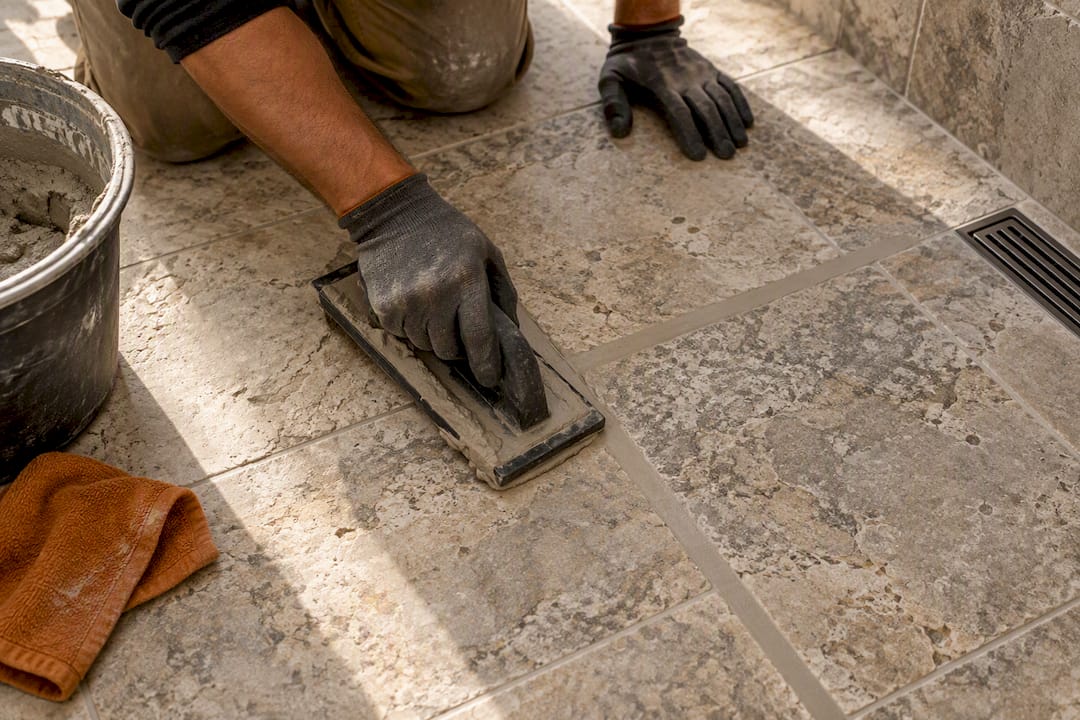
- Apply and pack the joints quickly, working in sections you can realistically clean before the material starts to set.
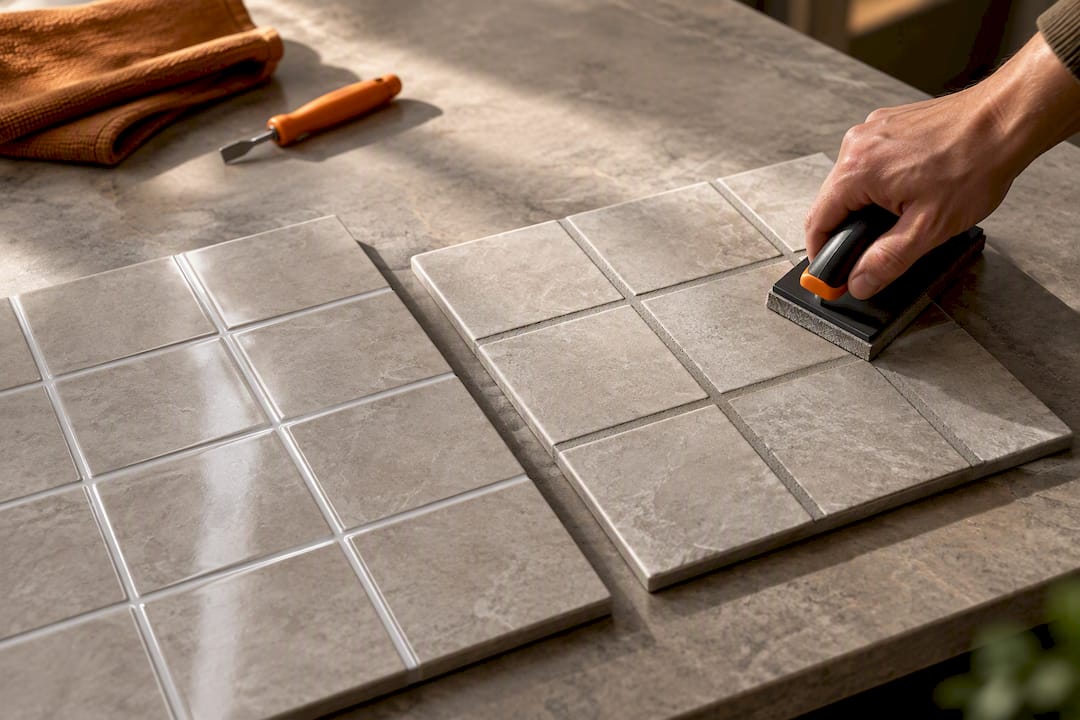
- Clean haze off the tile face within the manufacturer’s window. Waiting even an extra 20 minutes can mean permanent residue that only a specialized haze remover, or a professional, can fix.
- Keep the room ventilated and at a moderate temperature. Epoxy cures faster in heat and slower in cold, which throws off your timing either way.
Pro Tip: Do a test batch on a spare tile scrap before you touch the real floor. It tells you exactly how much working time you have in your specific bathroom’s temperature and humidity, which varies more than most product labels admit.
Hire a professional when you’re working with porous natural stone, a large floor, a steam shower, or any job where the grout color has to match perfectly across a big space. Those are the scenarios where a rushed batch or a missed haze window turns into a redo.
Where Should You Use Each Grout in Your Home?
Room by room, the decision gets easier than the general debate makes it sound.
- Shower floors: Epoxy, without much debate. The professional consensus points here first, and the small square footage keeps cost manageable.
- Shower walls: Epoxy is still ideal, though polymer-modified cement can work if the tile and joint style suit it.
- Kitchen backsplashes: Epoxy near the stove and sink where grease and sauce splatter happen; cement is fine on decorative sections that rarely get touched.
- Natural stone tile: Seal the stone first, always. Epoxy can discolor porous stone that hasn’t been presealed, and that mistake is expensive to correct.
- Outdoor patios and pool surrounds: Epoxy typically performs best against freeze-thaw and moisture cycling, but check the specific product’s UV and thermal tolerance before you commit.
If you’re weighing shower materials more broadly, including glass options that pair well with either grout type, it’s worth looking at what different shower configurations demand from your tile joints before you finalize a plan.
How Do You Maintain and Troubleshoot Each Grout Type?
Routine care is where the two materials really diverge, and where most homeowners either save themselves years of headache or set up a future regrout job.
Clean both types with a pH-neutral cleaner. Acidic cleaners, the kind marketed for hard water stains, can eat away at cement grout over time and dull its sealant. Epoxy doesn’t care either way, though a gentle cleaner still keeps tile grout lines looking sharp.
Cement grout needs resealing on a schedule, generally every 12 to 24 months in a shower environment. Mark it on a calendar. Epoxy grout maintenance, by contrast, is essentially cleaning and nothing else.
- If epoxy haze is still fresh, warm water and a scrub pad usually lift it.
- Cured haze often needs a manufacturer-specific haze remover, or a tile professional with the right solvents.
- Cracked or crumbling cement grout in isolated spots can be patched; widespread cracking or persistent mold usually means a full regrout.
- Discoloration that won’t scrub out of cement, especially near a shower floor, is often the first sign sealant has failed.
Pro Tip: If you notice a musty smell before you see visible mold, check your cement grout’s sealant first. Odor almost always shows up before staining does, and catching it early saves you from tearing out tile later.
When Does Hiring a Pro Make More Sense Than DIY?
Some grout jobs go smoothly with a weekend and a video tutorial. Others turn into a redo the moment porous stone, an oddly shaped shower pan, or a color-match requirement enters the picture. Those are the projects where a combined design-and-construction approach earns its keep.
A combined design and construction approach removes the coordination gap that trips up a lot of DIY-adjacent remodels: a tile setter who isn’t talking to the person who chose the stone, or a grout color decided before anyone checked how it would look against the actual tile batch. A dedicated Lead Carpenter overseeing each project from that first material decision through the final cleanup can prevent these issues.
Complex grout scenarios, sealed natural stone, steam showers, large-format floors, are exactly where that kind of oversight prevents the expensive mistakes this article has walked through. Homeowners who’ve worked with the team point to fewer delays and clearer communication throughout, which matters most when a shower is the only bathroom in the house during the renovation.
What Homeowners Get Wrong About This Decision
Most grout advice treats this as a binary: epoxy is “better,” cement is “cheaper,” pick your side. That framing misses the actual decision most homeowners are making, which is about risk tolerance, not just money.
The conventional wisdom oversells epoxy for spaces where it barely matters, a decorative kitchen backsplash three feet from the sink, and undersells how much sealing discipline cement grout genuinely demands in a shower. Cement isn’t a bad material. It’s a material that requires you to actually follow through on maintenance you’ll be tempted to skip once the bathroom looks finished.
If there’s one thing worth prioritizing first, it’s honesty about your own habits. Will you actually reseal on schedule? If the answer is probably not, the epoxy grout cost premium on a shower floor is buying you out of a maintenance task you were never going to do anyway. That’s not a marketing claim. It’s just math about how bathrooms actually get used, and neglected, over a decade.
— MediaBeast
Ready to Get Your Tile and Grout Installed Right?
Choosing between epoxy and cement is only half the battle. The other half is installation, and a rushed batch, a missed haze window, or an unsealed stone tile can undo even the right material choice. Handling both the design decisions and the hands-on construction ensures the grout you pick gets installed the way it’s supposed to perform, with a Work Clean System that keeps dust and disruption out of the rest of your home.
If a shower is on your list, start with the best interior doors for your bathroom to see finishing touches that perfectly complement your remodel, or check real project numbers on the bathroom remodel cost guide before you budget. Planning a kitchen backsplash instead? The kitchen remodel costs page breaks down what different layouts run. Either way, a quick consultation gets you a firm price and a Lead Carpenter assigned to your project before any tile gets set.
Sources
- Choosing the Right Grout – Cement vs. Epoxy
- Epoxy Grout vs. Cement Grout: Pros and Cons – RUBI
- Best grout for shower tiles (Tilehub)
- Epoxy grout vs cement grout : Tile Doctor
FAQ
What is the downside of epoxy grout?
Epoxy’s short pot life makes it hard to install without leaving haze, and it costs 2 to 5 times more in materials than cement. It’s also less forgiving for first-time DIYers because mixing ratios and cleanup timing have to be precise.
Is epoxy grout better than cement grout?
For wet areas like shower floors, yes: epoxy absorbs roughly 50 times less water and never needs sealing. Cement still holds up fine on low-traffic decorative surfaces where its lower cost and easier installation matter more than moisture resistance.
Can I use epoxy grout over old grout?
Epoxy grout should go over a clean, fully removed old joint, not applied on top of existing grout. Old grout needs to come out first so the new epoxy bonds directly to the tile edges, especially since epoxy’s strength depends on a clean, dry substrate.
Is epoxy grout overkill?
For a decorative wall or a dry space, often yes. For shower floors and other permanently wet areas, it’s the professional consensus recommendation, not overkill, since it removes the mold and staining risk cement carries in that setting.